








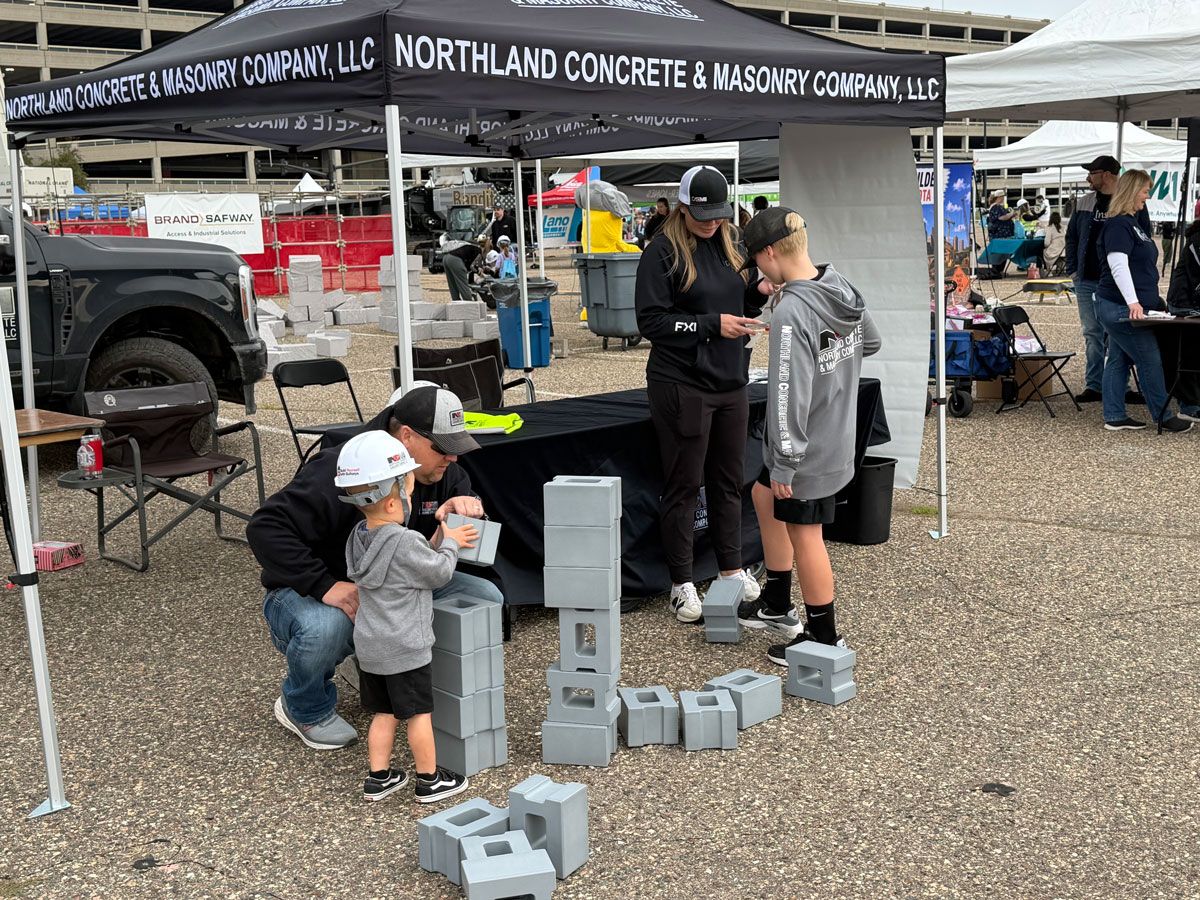
There is no shortage of talk about construction’s workforce challenge. Kids Building Minnesota is taking a different approach: Put the industry in front of children early and let them see what building is all about.
Through construction equipment, hands-on exhibits and direct interaction with industry professionals, the annual event gives kids and their families a closer look at the people, skills and career paths behind the built environment. Free and open to the public, Kids Building Minnesota is designed to make construction approachable, exciting and something young people can picture themselves being part of someday.
Inspired by and supported through a partnership with Kids Building Wisconsin, the organization also has a larger mission. Beyond creating a fun day for families, it hopes to help lay the groundwork for addressing Minnesota’s skilled worker shortage while elevating the image of an industry filled with opportunity.
Leading the effort is Justin Elder, President of Bloomington, Minnesota-based commercial GC Elder-Jones Inc., who believes exposure and education are critical first steps in introducing the next generation to careers in construction.
We spoke with Elder about the inspiration behind Kids Building Minnesota, what children can discover through the event and why introducing young people to construction today could make a difference for the industry tomorrow.
What stands out most from the inaugural Kids Building Minnesota event?
When the day was over, I think what stood out the most was an immense sense of accomplishment, not by me, but by the small team that has worked on this event over the course of the past year.
None of us are event planners, yet this event was an absolute success and it felt really good to realize our initial mission.
What inspired you and the Minnesota team to bring the Kids Building Wisconsin concept to Minnesota?
A few years back, maybe 2021 or 2022, Dave Brown spoke at an RCA (Retail Contractors Association) regional event in Michigan,and explained what they had going with the Kids Building Wisconsin event. I was blown away by the sheer number of attendees and was thinking how those kinds of numbers can have a real impact on bringing people into our industry. From that day, I knew we could do this in Minnesota.
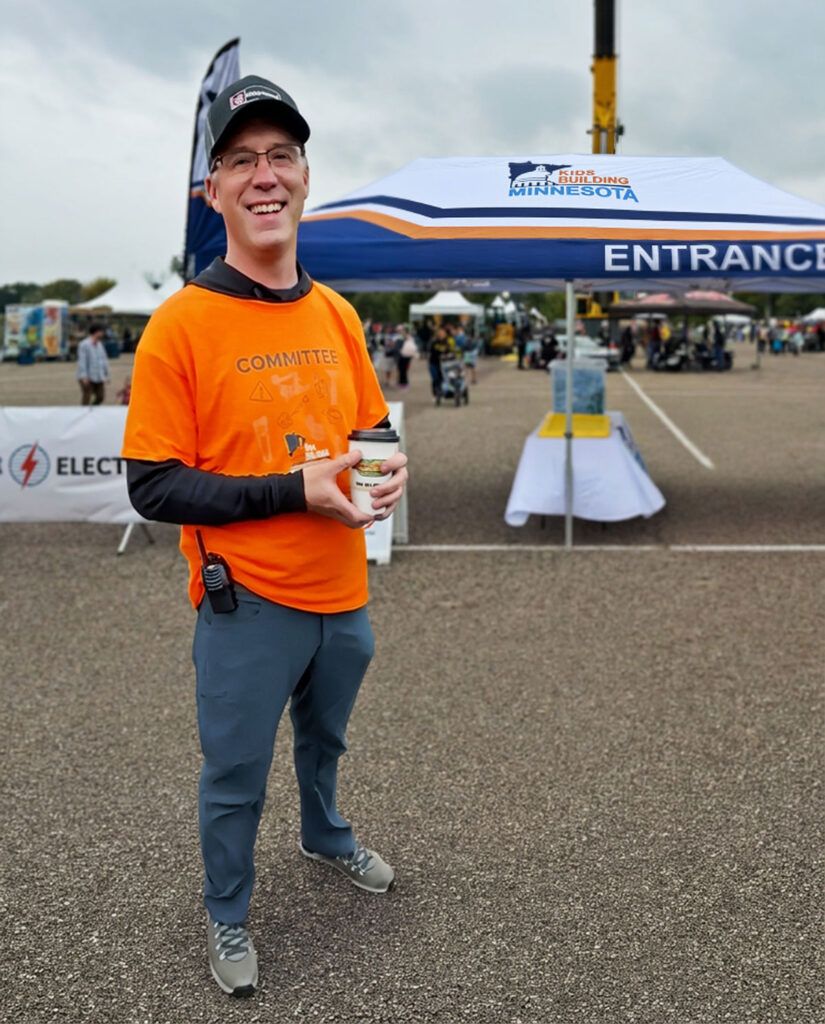 How valuable was the Wisconsin blueprint in helping you organize Minnesota’s first event rather than starting from scratch?
The Wisconsin blueprint, along with the event template the RCA Workforce Development Committe has created, were both extremely helpful. The team at Kids Building Wisconsin wanted our event to be successful and offered their help in many areas. Being able to utilize the ideas and tools they had already built made our event much more efficient to plan and execute.
What was the response from Minnesota’s construction community when you first approached contractors, suppliers and other industry partners about participating?
This was interesting, and not exactly what I had expected. For the most part, it was either “we’re all in,” or we would receive no response at all. I was growing somewhat frustrated by early summer, as we were not meeting our sponsorship goals, but as summer went on and a few more of the larger contractors signed up it seemed to snowball.
By mid-August we were constantly having positive conversations and receiving two to three new sponsor applications per week. This went right up to the event, such that at a given point we had to cut it off and stop accepting new exhibiting sponsors so we could finalize our event layout.
By the end we had over 45 sponsoring partners with just over 30 of those sponsors that participated at the event.
Approximately how many children and families attended the inaugural event? How did that compare with your expectations?
When we started planning this event a year ago, our goal was to attract 500-1000 attendees, of which we figured just over half would be children. When we started running the numbers and seeing the kind of effort and contributions some of the larger sponsors were putting into this, we decided to up our goal to 1,500.
By the day of the event, we had 3,500 pre-registered attendees, and 1700 of those actually showed up for the event. The weather did not fully cooperate, otherwise I really think we certainly could have reached 3,000.
How many contractors, sponsors, exhibitors and volunteers participated?
We ended up with over 45 sponsors, most of which were contractors or industry suppliers. About 30 of those sponsors participated at the event by hosting an activity or bringing in heavy construction equipment. We had a team of around 30 volunteers the day of the event to make it happen.
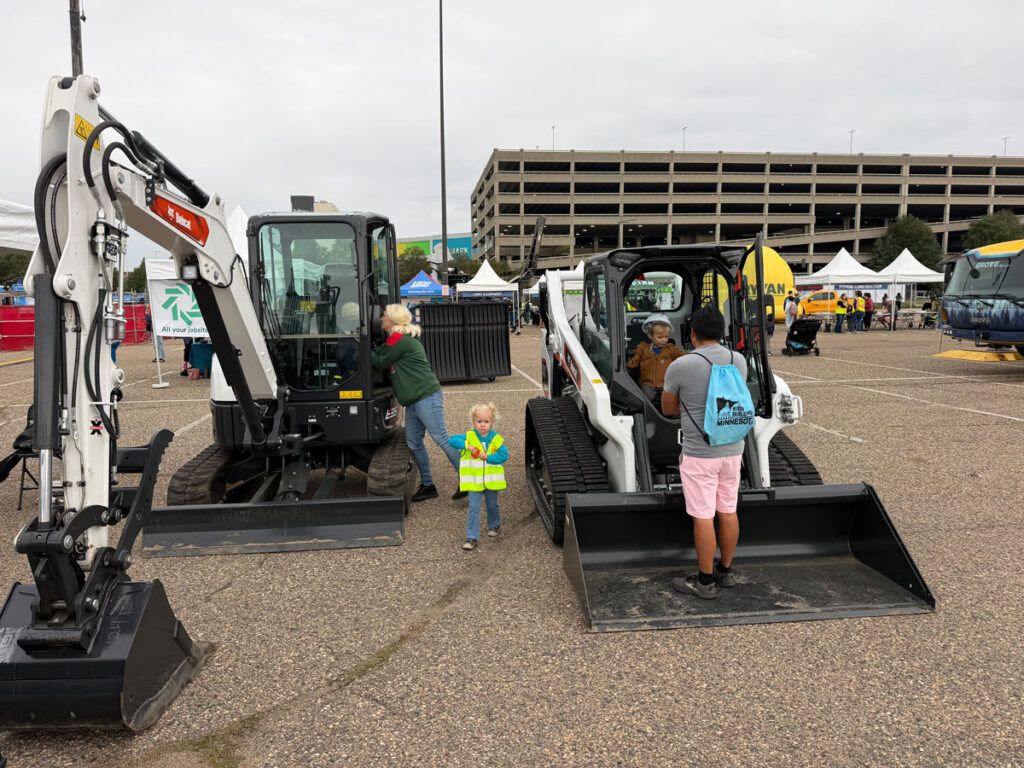
The event was extremely hands-on, with kids using tools, interacting with equipment and experiencing construction activities. Why was that hands-on component so important?
Kids want to be hands-on, but as society moves further towards a digital reality, they don’t get as many opportunities to work with their hands as previous generations did. Having these types of activities for kids lets them explore and see that these types of activities can be fun and rewarding.
What planning, insurance and safety protocols were necessary to make the event possible?
Safety was of course at the forefront of the activities at our event. We limited the amount of moving machinery, and had strict protocols with our exhibitors on assuring any equipment was completely immobilized.
We did have boom lift rides, and in this case the riders were tied-off and wore helmets, and the lifts were only allowed to move vertically. Some of this was driven by our event insurance requirements, but most just common safety sense.
How important were in-kind contributions to making the event work?
The in-kind contributions were immensely helpful. Not just because of the reduced financial burden, but every in-kind contribution to the event was also one less logistical piece our volunteer board did not have to coordinate. The in-kind contributions were every but as important as the financial contributions.
What surprised you most about putting on the first Kids Building Minnesota? What worked particularly well and what would you change for Year 2?
Really there was a sense of surprise when the gate opened and people started flowing in that we actually pulled it off, and with very few hiccups the day of the event. Knowing our board and our group of volunteers, I should have never had a doubt.
As with any event like this, regardless of how many times its been done, we have a list of things we can do better next year.
Other than details here and there, the biggest need would be more volunteers for the day of the event and takedown/cleanup. Our team did great, but there were times we were spread thin.
 What was some of the most positive feedback you received about the event?
One of the things that made me most proud was hearing from member companies in other areas that were interested in creating Kids Building events of their own. Seeing the idea resonate beyond our event showed us there is real potential to introduce even more kids to the construction industry.
How early do you believe the industry needs to begin introducing young people to construction and the skilled trades?
Kids Building Minnesota introduces kids starting as young as preschool to the industry. It could be their first exposure and we hope the positive experience sticks in their minds. Getting the parents to see what we’re about, and have real conversations with those of us in the industry is equally as important.
What would you tell contractors or industry leaders in another city who see what Minnesota and Wisconsin have created and are considering bringing a similar event to their market?
I’d tell them they need to be ready to commit to a lot of work, but it will be one of the most fulfilling things they will ever do.
Where do you hope Kids Building Minnesota is five or 10 years from now?
I hope the event always keeps its roots as a free event planned and put on by volunteers from our industry. It needs to stay authentic, and keeping contractors at the heart of it will help make sure it does. My hope is that Kids Building Minnesota becomes a tradition for families and a well-known annual event across the Twin Cities.
There is also an opportunity to build on that momentum. The RCA is using the success of events in Wisconsin and Minnesota to encourage similar programs across the country, giving more kids an opportunity to experience the construction industry firsthand.
What’s the one thing you hope a child who attended the inaugural Kids Building Minnesota remembers about the experience?
I hope they want to come back every year, and by the time they are old enough to be making choices in their career path, somewhere in their memories they will think about the things they did and the people they met at Kids Building Minnesota.




