







For much of the past century, urban growth was measured by speed and scale: wider roads, faster commutes and higher vehicle throughput. The assumption was simple—if cars moved efficiently, cities would prosper. But decades of experience show that cities designed primarily around vehicles often undermine the economic, social and environmental vitality they aim to create.
A clear illustration can be found in many cities across the Middle East. Urban growth was long pursued through highway expansion and sprawling developments. While wider roads temporarily eased traffic and increased driving speeds, daily life remained fragmented. Residents spent hours commuting between isolated zones, sacrificing time with family, social connections and productive work.
By designing cities around cars, planners unintentionally eroded both quality of life and long-term economic efficiency.
Today, a noticeable shift is underway. Governments and developers across the globe—including the Middle East—increasingly prioritize walkable, mixed-use neighborhoods that integrate pedestrian-friendly streets, parks and everyday amenities within short distances.
Public spaces, retail and residences are arranged in a human-scale grid that puts daily life and social interaction at the center—reclaiming the city from cars and making vibrant, connected communities the foundation for sustainable growth.
Global trends in urban mobility reinforce this approach. Cities are moving away from commuter-focused transport systems toward networks designed to support daily life, leisure and human activity. Micromobility options, pedestrian-first streets and multi-modal transit reduce reliance on private vehicles while increasing access to amenities.
Transport infrastructure is being reimagined as a civic platform, generating economic and social activity rather than just moving people from point A to point B.
Walkable, people-centric neighborhoods outperform car-dependent models because they prioritize proximity over speed. Clustering homes, workplaces, schools, healthcare, and daily amenities within compact areas dramatically reduces commuting time, encourages spontaneous interactions and fosters collaboration—key drivers of productivity.
In contrast, sprawling, car-focused cities quietly tax productivity through congestion, inefficient infrastructure and dispersed economic activity.
The Link Between Pedestrian-First Design, Retail Vitality and Real Estate Value
Designing cities with pedestrians at the center doesn’t just make streets more enjoyable—it directly drives economic performance. Neighborhoods that prioritize walking, cycling and accessible public spaces generate consistent human activity, which benefits local businesses and strengthens the broader economy.
Cafés, shops, restaurants and service providers thrive when people can easily move from home to work to daily errands on foot. Streets that encourage lingering, social interaction and casual encounters create a self-sustaining local economy where wealth circulates within the community.
Pedestrian-first design also enhances real estate value. Properties in walkable neighborhoods consistently command higher demand and long-term appreciation because residents place a premium on convenience, safety and engagement.
At the same time, households spend less on transportation when essential amenities are within walking distance, lowering the overall cost of living even when property prices are higher.
The result is a virtuous cycle: walkable streets increase foot traffic, foot traffic supports local businesses and thriving local economies make neighborhoods more desirable, further boosting property values.
In short, prioritizing pedestrians transforms streets and public spaces into economic engines that benefit both people and investors, proving that thoughtful urban design pays dividends far beyond aesthetics.
 Why Developers and Governments are Rethinking Density, Mobility and Mixed-Use Planning
Urban growth strategies built around sprawling suburbs, single-use zoning and car-focused infrastructure are showing their limits. While these approaches initially eased traffic and accommodated rapid development, the hidden costs have become increasingly clear.
Long commutes drain residents’ time and energy. Neighborhoods remain fragmented and extending roads, utilities and public services to distant areas has proven financially unsustainable.
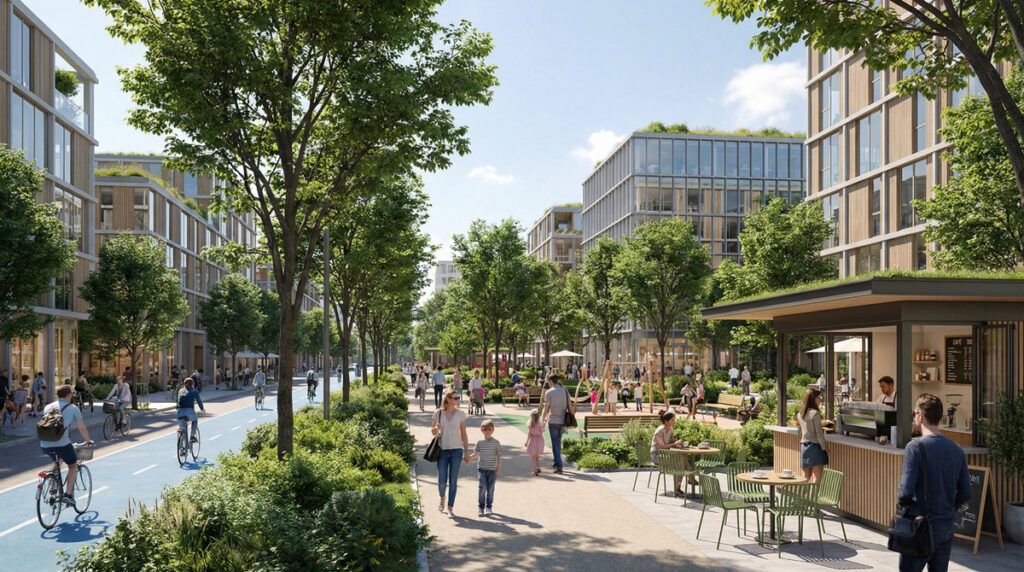
Developers and governments are now embracing a different approach—one that places people at the center of urban design. Dense, mixed-use neighborhoods—where homes, workplaces, schools, parks and shops coexist within walking distance—offer a solution.
By concentrating activity, cities reduce infrastructure costs per resident, support local businesses through consistent foot traffic, and create environments where daily life is convenient, efficient and engaging.
Mobility is also being rethought. Streets are no longer designed solely for cars; walking, cycling, and public transit are integrated into the urban fabric. Residents gain choice in how they move, commuting times shrink, and streets become safer and more inviting.
This human-centric approach aligns with global mobility trends that prioritize lifestyle, accessibility, and sustainable modes over speed and throughput, turning movement itself into a contributor to city life rather than a constraint.
A powerful real world example is Barcelona’s transformation of its urban mobility and public space. Faced with congested streets, the city introduced its Superblock programme, which groups nine city blocks into a “superilla” where motorised traffic is restricted and pedestrians and cyclists are prioritised.
Within these superblocks, streets are reclaimable public space: slower vehicle speeds, wider sidewalks, bicycle infrastructure and new plazas encourage people to walk, cycle, socialise and access daily needs without using a car.
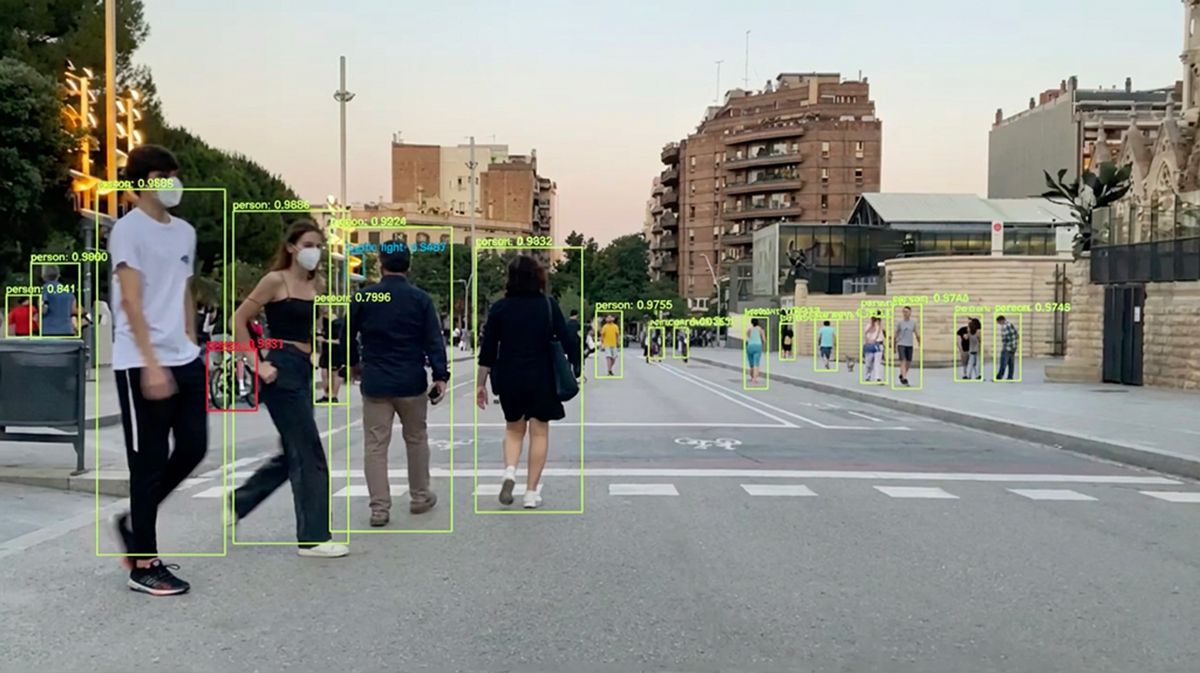
Crucially, local research using high‑resolution pedestrian count data shows how walking patterns vary across the city and respond strongly to urban design features. An extensive study based on data from urban surveillance reveals how footfall increases around pedestrianised streets and areas with strong transit access and commercial activity, while private car presence depresses walking in outer neighbourhoods.
These fine‑grained patterns are invaluable for planning targeted mobility and land‑use policies—illustrating that where people walk, economic interaction and retail activity follow.
Heat‑map style analyses of pedestrian flows, particularly in redevelopment zones and traffic‑calmed streets, vividly illustrate this trend: Areas designed with walking and cycling priority show dense clusters of footfall, contrasting sharply with car‑dominated streets where pedestrian movement is thin.
These kinds of visual studies make clear that shifting public space cues behaviour—encouraging more on‑street activity that supports small businesses and strengthens local economies
The shift toward density, mobility and mixed-use planning is more than a design trend—it is a strategic response to the limits of car-dependent growth. Cities that adopt this approach cultivate vibrant, resilient neighborhoods where economic activity, social interaction, and sustainable infrastructure reinforce one another.
In short, they are building communities that work better for both people and the long-term health of the city.
 How Sustainability and Human-Scale Design Drive Long-Term Investment Returns
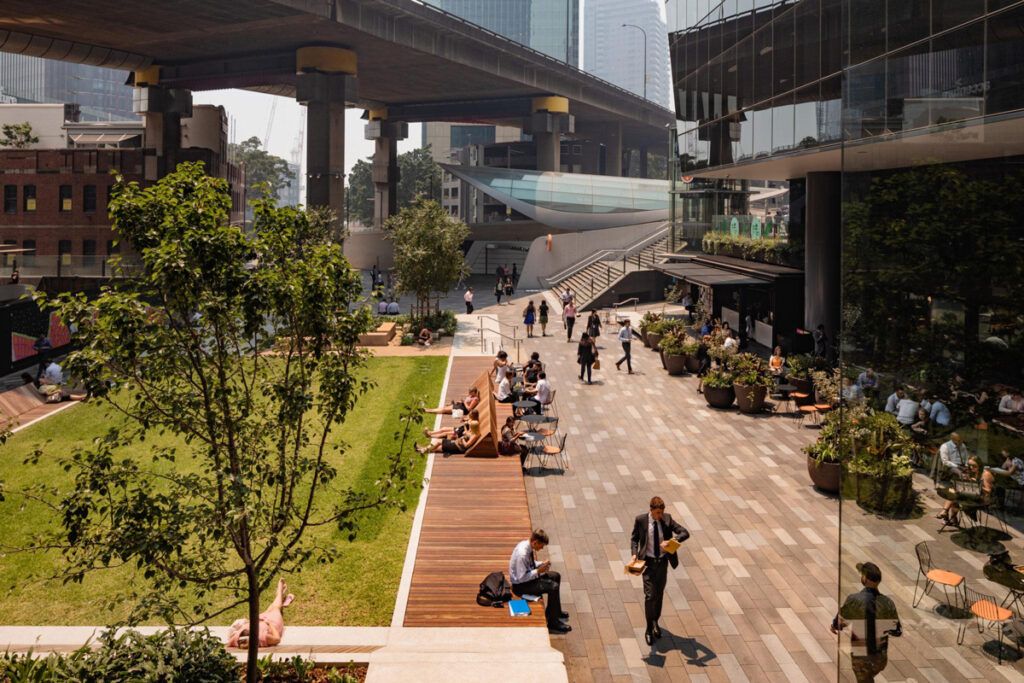
Cities built at a human scale—compact neighborhoods, short blocks, shaded sidewalks, active street fronts and integrated green spaces—offer far more than comfort and convenience. They are also sound long-term investments, combining financial resilience with social and environmental benefits.
Sustainable, walkable neighborhoods consume less energy, require less land, and reduce the ongoing costs of infrastructure maintenance. Roads, utilities and public services are more efficient when concentrated in a dense, mixed-use area rather than spread across sprawling suburbs.
At the same time, streets and public spaces designed for people encourage interaction, safety and consistent foot traffic, which strengthens local businesses and keeps economic activity circulating within the community.
The investment advantages are clear. Properties in human-scale, pedestrian-friendly areas consistently command higher demand and greater long-term value. Residents spend less on transportation and enjoy a higher quality of life, making these neighborhoods attractive to buyers, renters and investors alike.
Furthermore, sustainable, walkable areas are more resilient to market fluctuations, energy cost changes and regulatory shifts. In contrast, sprawling, car-dependent developments often struggle to adapt, making them riskier long-term investments.
By uniting sustainability with human-scale design and mobility built around everyday life, cities create places that work economically while nurturing social life and environmental balance. Walkable, well-planned neighborhoods prove that cities designed for people generate value that endures.
Taras Kashko is the Urban Strategy & Planning (Dubai) Leader at ERA-co, a global place consultancy that harnesses the power of data and analytics to unlock the true potential of neighborhoods, towns and cities.






