









A shop. That’s all it was meant to be.
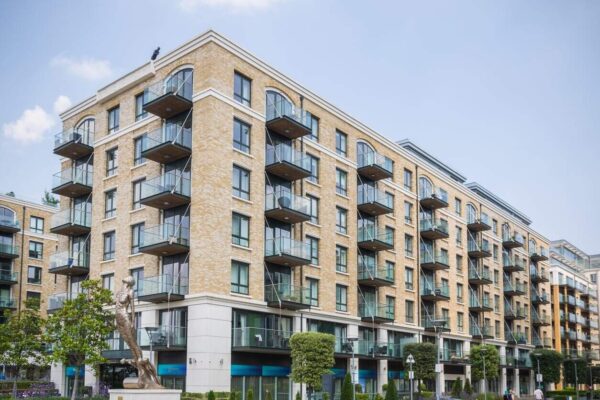
A private investor had taken a ground-floor unit in a newly finished mixed-use development in SE10, south-east London, and wanted to turn it into a convenience store and off-licence. Shelving, a counter, chillers, a bit of lighting. Nothing anyone would call ambitious.
By the time they came to us at Payte Architects London they’d already lost months to it, bounced between consultants who each had a different answer, and still didn’t know whether they could start.
The problem wasn’t the shop at all. It was what sat above it.
The building upstairs
If you’re reading this outside the UK, a little context helps.
After the Grenfell Tower fire in 2017, England rebuilt the way it regulates tall residential buildings, and the Building Safety Act 2022 created a category called the higher-risk building: at least 18 metres or seven storeys tall, with at least two homes inside. Most building work in one of those now needs sign-off from a national Building Safety Regulator before anything happens on site, a stage everyone in the industry calls Gateway 2, and it isn’t quick.
This development had a registered higher-risk residential block in it.
So the client had been told, more than once, that their little fit-out might get swept into a full Gateway 2 application. Months more. Fees nobody had budgeted for.
American readers will know the feeling, we suspect. Small tenant job, big, complicated building, and nobody willing to say for certain which rules apply.
Looking properly
We went back to the unit itself.
It had its own front door. Its own services. It didn’t share a single escape route with the flats.
When you’ve actually looked at how a space connects (or doesn’t) to the building around it, the answer often gets a lot clearer, and here it did: the shop didn’t need to go through the Building Safety Regulator at all. That was specific to this unit, and a different layout could easily have tipped it the other way. Still, it’s the bit of the job that stays with us, because none of the client’s lost months had gone on design or building. They’d gone on uncertainty.
Then the landlord
Regulation was one layer. The lease was another.
Because the unit was leased, the works needed a licence to alter, which is the landlord’s formal, solicitor-drafted consent to change the space; in the US you’d probably think of it as landlord approval for tenant improvements, with lawyers on both sides. In a higher-risk building that means a lot of careful back and forth with the landlord and their legal team.
We were appointed Principal Designer under the Construction (Design and Management) Regulations 2015. In plain terms, we coordinate health and safety through design, and we put our name to the compliance pack.
We don’t sign that lightly.
The licence went off to the landlord’s solicitors for final sign-off, with works lined up to start the moment it came back.
Same care, different floor
It isn’t only shops. We were once asked to open up the plan of a 3,000 sq ft lower-ground-floor apartment in a managed higher-risk building. Sounds simple. Except there were eight-plus storeys sitting on top of it, so every wall we touched mattered, and our structural engineer did the sums by hand, no templates, then went through them again.
Slow? Yes. Worth it.
The wider picture
Most commercial jobs in London aren’t this knotted, thankfully. Our work runs from retail interiors and refurbishments of commercial buildings with plenty of history in them, to workspaces planned around how businesses actually operate now, and hybrid sites mixing shops with hospitality, wellness or co-working. In Soho that tends to mean retail and hospitality in conservation areas. In Camden, it’s often commercial conversions of listed and heritage buildings.
The idea of a great commercial building has moved on, too. It used to be about square footage and a good postcode. Now it’s just as much about how a place works, how it feels, how sustainable it is and what it’s like to be in.
About us
Payte Architects London is a RIBA chartered practice, set up in 2013, working across architecture, interior design and construction from our studio on Shepherds Bush Road.
If you have any questions around this topic, our London team can assist you. Just email info@paytearchitects-london.co.uk.




