






Generators are critical during severe weather events, when the power can go out. They can bring power to remote job sites, aid in disaster recovery and assist homeowners in emergencies. The Outdoor Power Equipment Institute (OPEI), an international trade association representing power equipment, small engine, utility vehicle, golf car and personal transport vehicle manufacturers and suppliers, reminds home and business owners to keep safety in mind when using generators.
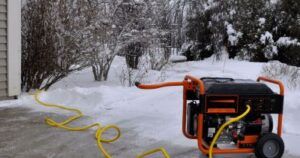
Image Courtesy of: OPEI
“Not having power when you need it is frustrating, so a generator can provide emergency backup power at a reasonable cost,” says Kris Kiser, President and CEO of OPEI. “It’s important to follow all manufacturer’s instructions and never place a generator in your garage or inside your home or building. It should be a safe distance from the structure and not near an air intake.”
Additional tips include:
#1 – Take stock of your generator. Make sure equipment is in good working order before starting and using it. Do this before a storm hits.
#2 – Review the directions. Follow all manufacturer’s instructions. Review the owner’s manuals (look manuals up online if you cannot find them) so equipment is operated safely.
#3 – Install a battery-operated carbon monoxide detector in your home. This alarm will sound if dangerous levels of carbon monoxide enter the building.
#4 – Have the right fuel on hand. Use the type of fuel recommended by the generator manufacturer to protect this important investment. It is illegal to use any fuel with more than 10% ethanol in outdoor power equipment. (For more information on proper fueling for outdoor power equipment visit https://www.opei.org/programs/ethanolwarning/.) It’s best to use fresh fuel, but if you are using fuel that has been sitting in a gas can for more than 30 days, add fuel stabilizer to it. Store gas only in an approved container and away from heat sources.
#5 – Ensure portable generators have plenty of ventilation. Generators should NEVER be used in an enclosed area or placed inside a home, a building, or a garage, even if the windows or doors are open. Place the generator outside and away from windows, doors, and vents that could allow carbon monoxide to drift indoors.
#6 – Keep the generator dry. Do not use a generator in wet conditions. Cover and vent a generator. Model-specific tents or generator covers can be found online for purchase and at home centers and hardware stores.
#7 – Only add fuel to a cool generator. Before refueling, turn the generator off and let it cool down.
#8 -Plug in safely. If you don’t yet have a transfer switch, you can use the outlets on the generator. It’s best to plug in appliances directly to the generator. If you must use an extension cord, it should be heavy-duty and designed for outdoor use. It should be rated (in watts or amps) at least equal to the sum of the connected appliance loads. Make sure the cord is free of cuts, and the plug has all three prongs.
#9 – Install a transfer switch. A transfer switch connects the generator to the circuit panel and lets you power hardwired appliances. Most transfer switches also help avoid overload by displaying wattage usage levels.
#10 – Do not use the generator to “backfeed” power into your home electrical system. Trying to power your home’s electrical wiring by “backfeeding” – where you plug the generator into a wall outlet – is dangerous. You could hurt utility workers and neighbors served by the same transformer. Backfeeding bypasses built-in circuit protection devices, so you could damage your electronics or start an electrical fire.
For more information about outdoor power equipment visit www.opei.org




