










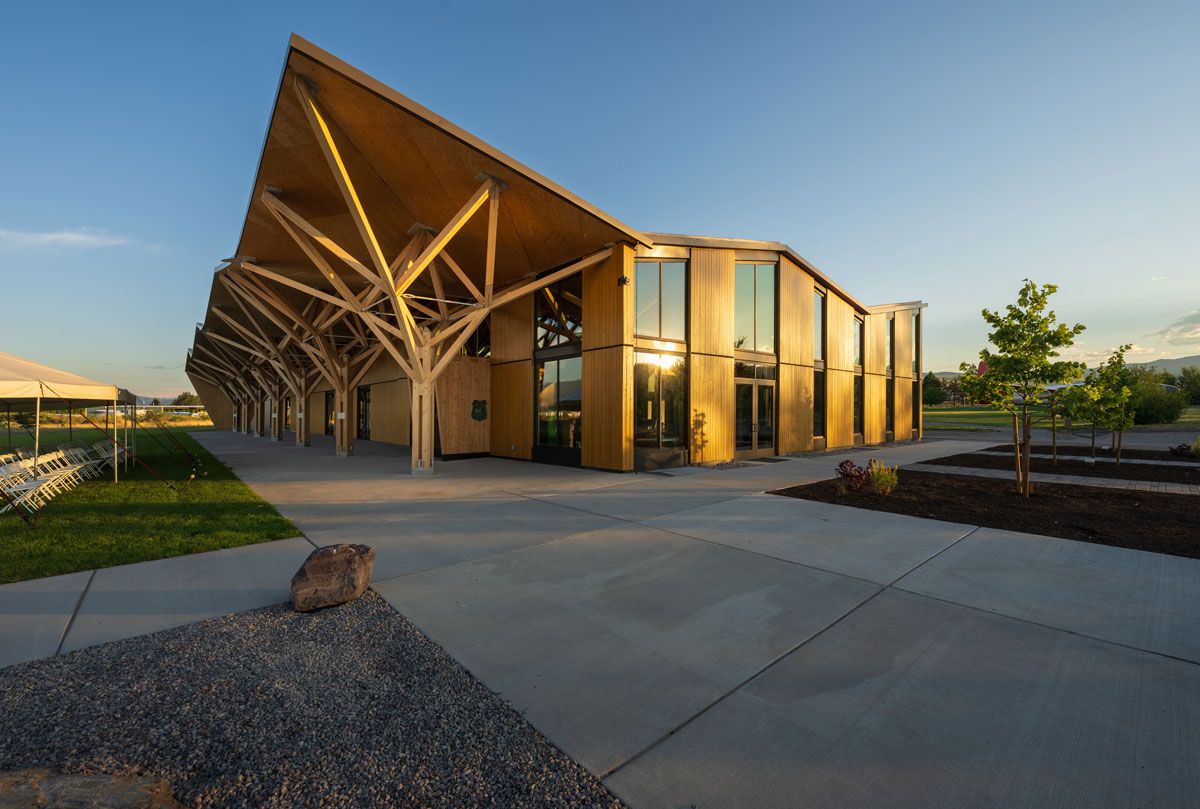
In Missoula, Montana, a new museum is bringing more than a century of American conservation history to life—and wood is at the heart of the story. The National Conservation Legacy Center opened to the public in July 2026 following a decades-long effort to preserve and share the history of forest conservation in the U.S.
Designed as a learning center for forest stewardship, the museum—which houses more than 55,000 conservation artifacts—is expected to welcome between 80,000 and 100,000 visitors each year.
The center was designed to promote a deeper understanding of forests and forest stewardship, with wood playing a central role in both the building and its story. More than a dozen wood products companies contributed materials and support to the project. Among them was Oregon-based Freres Engineered Wood, which contributed its Mass Ply CLT to the museum’s mass timber construction.
 The National Museum of Forest Service History has preserved the history of the U.S. Forest Service since 1988. Operating independently of the U.S. Forest Service, the nonprofit organization documents the people, policies and practices that have shaped the nation’s approach to public lands and natural resource management.
The new center expands that mission, giving visitors a place to explore the complexities of conservation and the evolution of forest management. “We’re the only museum that has the full breadth of conservation history under our wing,” says Lisa Tate, Executive Director of the National Museum of Forest Service History. “This new building will help people understand how public lands are managed, including the controversies behind those decisions and why collaboration is what makes conservation work.”
The decision to use mass timber was also rooted in the museum’s desire to look toward the future of forestry and wood construction. That vision began taking shape early in the design process, when Tom Chung, principal of Leers Weinzapfel Associates, became involved and began conversations with the museum about the possibilities of contemporary wood construction.
“We started talking about the benefits of mass timber—why I thought it made sense to build with contemporary materials rather than looking back at the past,” Chung says. “We understood each other’s goals and priorities, and that conversation led to a larger one with the board of directors, and it started from there.”
The project ultimately took shape through the contributions of wood manufacturers involved in its construction. Freres Wood, a manufacturer with more than a century of experience in the timber industry, was among the project’s suppliers and made one of its largest contributions.
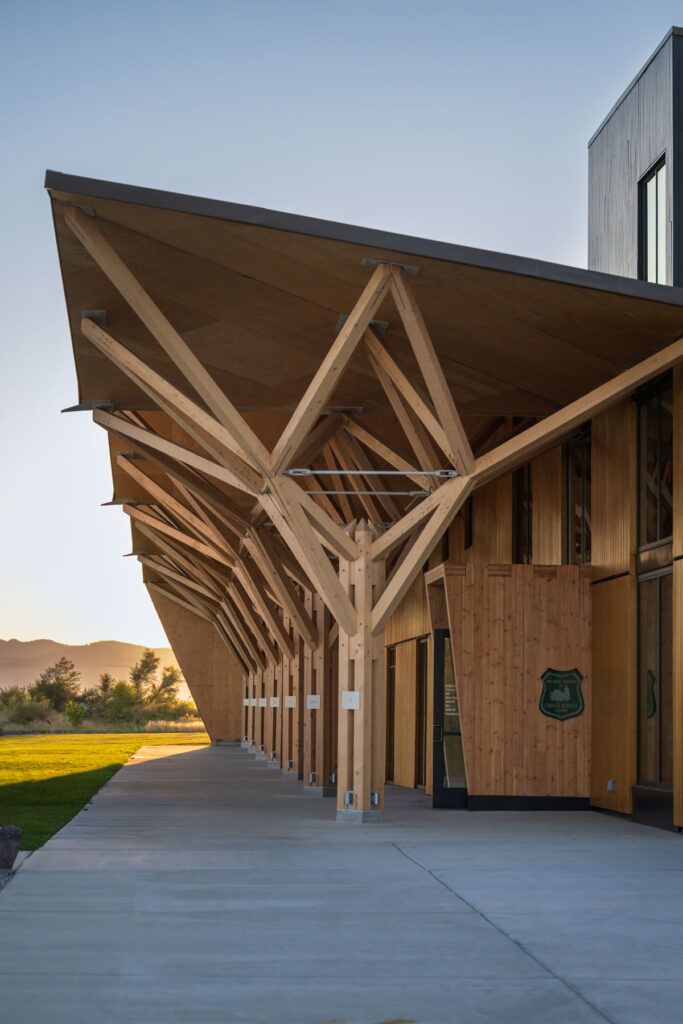
The company supplied 8,520 cubic feet of its innovative Mass Ply CLT for the building’s folded roof, exterior decks and staircase treads, along with laminated veneer lumber used to frame the exterior shear walls.
Leaning in on Prominent Architectural Elements
Rather than keeping the wood hidden behind finishes, the building incorporates it into prominent architectural elements that visitors encounter throughout the museum. The folded roof creates a distinctive form overhead, while wood decks and stair treads carry the material throughout the visitor experience.
The result is a physical connection between the building and the story it was designed to tell. A museum dedicated to the history of forests and conservation is itself built, in part, from wood products that demonstrate how timber can be transformed into modern building materials.
 The museum has been decades in the making, and we’re glad to be part of this. After more than 100 years in the timber industry, we have learned that good conservation work takes a lot of partners.
The National Conservation Legacy Center arrives at a time when conversations around forests, wildfire, public lands and natural resource management continue to evolve. Its exhibits explore not only the accomplishments of forest conservation, but also the disagreements and challenges that have shaped land management.
The building offers another perspective on those conversations. By incorporating Mass Ply CLT and other mass timber products into its architecture, the center demonstrates how timber can move from the forest into contemporary civic design—giving wood a visible role in a building dedicated to understanding the past while looking toward the future of forest stewardship.
The National Conservation Legacy Center is expected to become a significant educational and cultural destination in Missoula, introducing a new generation to the history of forest management and the people who have shaped it.
Rob Freres is President of Freres Engineered Wood, an Oregon-based, family-owned manufacturer specializing in innovative mass timber and engineered wood products, including Mass Ply CLT and laminated veneer lumber (LVL).






