









In celebrating 120 years, NIBCO Inc. is not just looking back—it is bringing its story to life. The company has unveiled the Rex Martin NIBCO Interactive Museum in Elkhart, Indiana, a hands-on, high-tech space that transforms its legacy into an experience designed to engage, educate and inspire what comes next.
Privately held by the Martin family and NIBCO associates since its founding in 1904, NIBCO has grown across five generations into a global leader in flow-control solutions, serving residential, commercial, industrial, marine, irrigation and waterworks markets. Today, the company employs 2,300 associates worldwide, supported by 15 manufacturing plants and 13 distribution centers.
The museum—named in honor of Rex Martin, former chairman and CEO—represents a powerful tribute to the five generations of family leadership and innovation in plumbing and flow control.
“Our decision to build the NIBCO Interactive Museum and name it after my father is a tribute to his remarkable contributions to the plumbing industry and a continuation of a legacy that began with my great-great-grandfather in 1904,” says Ashley Martin, NIBCO’s President and CEO.
Spanning 3,254 square feet of interactive exhibits and educational displays within a nearly 5,000-square-foot building, the museum officially opened its doors on November 12, 2024—exactly 120 years to the day since NIBCO’s founding.
 From Vision to Reality
The idea of a museum first flickered to life in 2018 when NIBCO regained possession of a building it had owned for over a decade that had been leased by the American Red Cross. “It was just an idea back then,” says Steve Yaw, NIBCO’s Building Services Manager. “Rex had mentioned the idea of creating a museum someday, but it took time before it really started to happen.”
Fast forward to late 2023: Yaw, a seasoned facilities manager with a background in higher education construction, was tapped as the project manager. Partnering in tandem with Sally Boyer, NIBCO’s director of marketing communications, and their corresponding teams of associates, the two led the museum’s design and development under an ambitious timeline.
Boyer’s team focused on curating the story and historical content, as well as providing creative direction to ensure everything was on brand; Yaw managed the building renovation and construction logistics. “The whole project was fast-tracked,” Yaw says. “There were days when we were designing in the morning and building in the afternoon.”
With a goal of completing the museum by the company’s 120th anniversary, an initial design and corresponding budget were presented to NIBCO’s board of directors. Upon approval, the team hit the ground running with the anniversary goal looming overhead.
A Building Transformed
The original structure, dating back to 1958, had served various functions—including as Blessings Music Store and in later years the Red Cross—before sitting vacant for several years.
To assist with the transformation, NIBCO tapped a local contractor, Ancon Construction Company, in Goshen, Indiana. Offering commercial design, construction, renovation and building services, Ancon had successfully completed past NIBCO projects and in less than a month, their in-house design team created the initial design along with 3-D models.
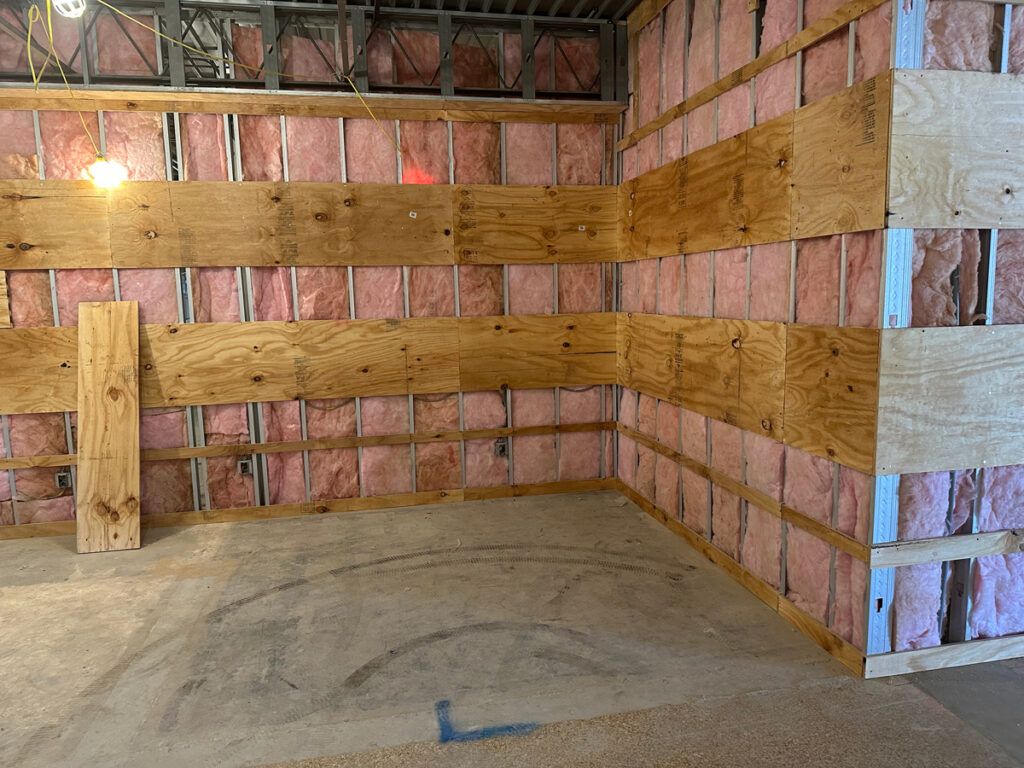
When the full-scale renovation began, every room was touched. Interior walls were removed to open up the space, the exterior received a fresh coat of paint, and the existing shingle roof was replaced with a modern metal roof. New doors were installed and accessibility was improved by relocating the main entrance closer to the parking lot.
Most windows were removed to protect the artifacts from deterioration or degradation caused by natural light. Calling homage to NIBCO’s copper product lines, copper awnings were installed over the windows that remained.
Utility systems were upgraded, sewer lines were repaired, and a new irrigation system and fire sprinkler system also were installed—complete with NIBCO’s own valves and fittings.
All of the original furnaces and air conditioning units, that were nearing the end of their life cycles, were replaced with high-efficiency units. Wherever possible, NIBCO’s mechanical contractor for the project, North Central Mechanical, Indianapolis, installed systems using NIBCO Press in copper; NIBCO valves and shut-offs for the gas furnace lines and water lines in the lavatories and kitchen area; and Matco-Norca®, a subsidiary of NIBCO, faucets in the lavatories.
NIBCO’s IT department brought the building up to speed with technology. A newly installed building automation system from Johnson Controls was extended from the corporate headquarters to the museum building, enabling temperature and humidity notifications and security alarms to be monitored off-site. “Everything was designed for efficiency and low maintenance,” Yaw says. “We didn’t need to add any staff to maintain it.”
In addition to the museum, the building also houses an 1,100-square-foot training center that incorporates the “Founders Room,” a training and meeting room, and a 715-square-foot archive area containing an estimated 7,500 archived artifacts, complete with high-density rolling storage racks and a dedicated intake room for new artifacts.
Ashley Martin was closely involved throughout the process. “Ashley had a strong vision,” Yaw says. “She knew what she wanted and she helped guide our choices—from color palettes to layout.”
An Interactive Experience
While the building’s transformation was a feat in itself, what lies within its walls is what truly sets this museum apart. Drawing on inspiration that was received from a behind-the-scenes tour of the Field Museum in Chicago, along with visiting other museums, the NIBCO marketing team set out to completely reimagine the interior space.
“None of us had any previous experience in creating a museum,” Boyer says. “It was instrumental to have that knowledge and the contacts from the Field Museum visit.”
While the construction teams were renovating the physical building, Boyer’s team spent the months gathering, researching and cataloging artifacts that would tell the NIBCO story.
Early in the process, NIBCO also enlisted the help of long-time partner WRX, a full-service exhibit and event fabrication team, that assists brands in telling their stories. With NIBCO’s guidance, WRX built all the displays to showcase the artifacts—approximately 530 artifacts in total. The artifacts included everything from pictures and posters to documents and objects.
Entering the museum, visitors are greeted by a striking 14-inch copper-fitting water fountain pumping 50 gallons through its reservoir. Next, a hologram display welcomes visitors and provides insights into what the museum offers.
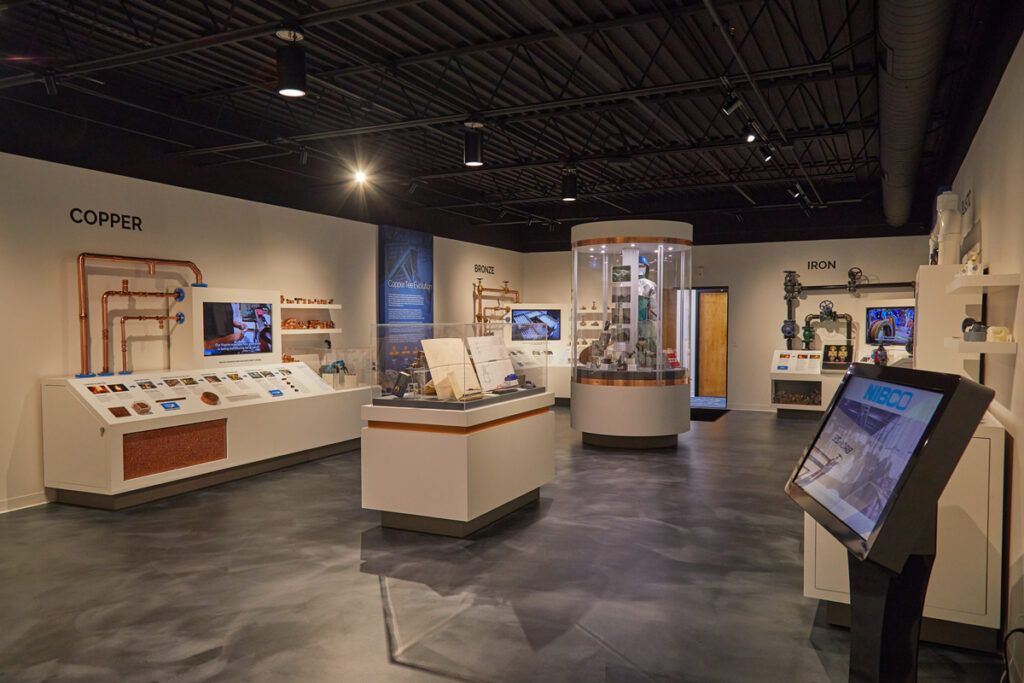
Manufacturing displays with interactive features allow visitors to learn more about manufacturing processes and how products operate.
 Honoring the Past, Building the Future
Artifacts from NIBCO’s 120-year history line the museum walls, divided into separate areas by the various generations of the Martin family and highlighting the corresponding initiatives.
From early foundry tools and original blueprints from the 1930s, to early valves and fittings, philanthropic mementos and treasured collectibles from the Martin family’s archives, the items weave an educational and inspirational story on the history of plumbing, as well as the history of NIBCO.
“It was our goal to create a space where people could learn—especially younger generations—how water gets to their sink or what happens when they flush a toilet,” Boyer says.
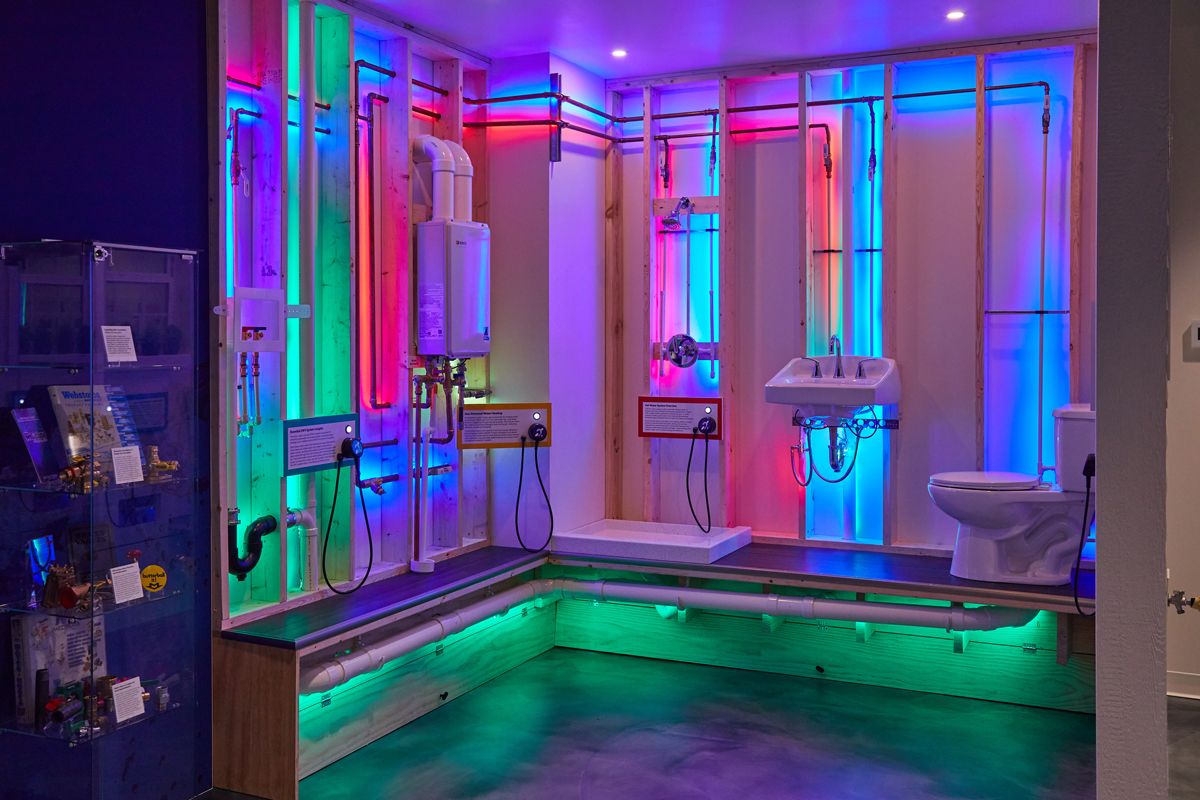
An interactive “Plumbing Discovery House,” reveals the hidden infrastructure of the intricate systems behind the walls that keep homes running smoothly. Those curious about the systems that make modern life possible can use visual and audio displays to better understand plumbing systems.
An interactive educational kiosk features NIBCO trivia, puzzles and entertaining games, designed to engage museum visitors. A theater area provides seating for featured video presentations showcasing NIBCO’s recent acquisitions, including Webstone, Milwaukee Valve Company, Matco-Norca and SVF Flow Controls.
Martin sees the museum as both a celebration of heritage and a tool to spark inspiration. “This project was something I wanted to dedicate on NIBCO’s 120th anniversary to make it extra special. It’s about showcasing the profound impact we’ve had on the evolution of plumbing and our contributions to the community.”
A Model of Teamwork
Despite the tight deadline and the novelty of building a museum from scratch, the team pulled together seamlessly. “There were challenges, but everyone was on the same page,” Yaw says. “I am most proud of the teamwork. The collaboration between construction, marketing and leadership was incredible. No one dropped the ball.”
“It was a huge undertaking,” Boyer says. “We estimated that the marketing team dedicated nearly 10,000 hours creating the museum—all within approximately 12 months.”
A Living Legacy
The Rex Martin NIBCO Interactive Museum stands as a testament to a century of craftsmanship, leadership, and innovation. More than a memorial to the past, it offers a dynamic, immersive experience that invites the next generation to explore the importance—and excitement—of flow control systems.
As the company looks ahead, this museum is not just a reflection of where NIBCO has been, but a statement about where it’s going.






