








Green Building Certifications Decoded: A Contractor’s Guide to What Really Matters
As climate imperatives intensify and building owners pursue more sustainable, resilient projects, green building certifications are no longer niche—they’re part of the new normal. LEED, WELL, and other certifications are increasingly shaping how projects are planned, built, and operated. Contractors who understand the various certifications—and how to meet their requirements efficiently—can differentiate their business, unlock new opportunities, and build trust and loyalty in a rapidly evolving market.

Image Courtesy of: CertainTeed
The Certifications Shaping Construction Today
Today’s certifications are more sophisticated and climate-focused than earlier versions. Many certifications now also incorporate climate resilience, acknowledging the need for buildings to withstand extreme weather events and other disasters.
The most widely pursued certifications in the U.S. today include Leadership in Energy and Environmental Design (LEED), WELL Building Standard (WELL), National Green Building Standard (NGBS), and Living Building Challenge (LBC).
LEED
Still the dominant player, especially in commercial buildings, LEED is known for its focus on energy efficiency and environmental responsibility. LEED v5 emphasizes decarbonization, material optimization, whole-building life cycle assessment, and real-world performance—reflecting industry-wide urgency around climate targets.
WELL
WELL, by contrast, centers on occupant well-being, air and water quality, and human health—a priority that has grown significantly since the pandemic.
NGBS
For residential and multifamily buildings, NGBS is a leading framework, offering performance-based benchmarks for sustainability in homebuilding.
LBC
LBC represents a rigorous approach to regenerative design, guiding projects through seven Petals—energy, water, materials, health, equity, beauty, and site—to deliver buildings that produce more energy than they consume and support human well-being.
Trends Driving Demand for Certification
Green certification isn’t slowing down—it’s expanding. In many markets, certified buildings are seen as more competitive, offering reduced operational costs and an enhanced reputation. Two current trends are key drivers of the growing momentum for green building certification today.
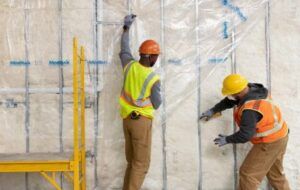
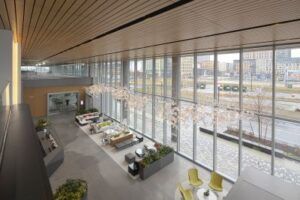
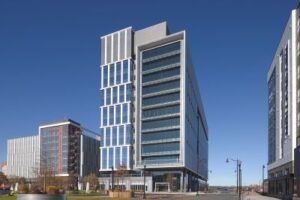

Images Courtesy of: CertainTeed
Organizational Targets
More organizations are embedding certifications into their standard building requirements. Owners and developers pursuing environmental, social, and governance (ESG) strategies often require third-party certifications to validate their sustainability claims. These certifications also support compliance with science-based targets, Scope 3 emissions tracking, and investor-driven transparency.
Resilience
Certification isn’t only about high-performance design. It’s also about risk management—ensuring that buildings are healthier, more durable, more energy efficient, and more adaptive for years to come. With increasing concern about the durability of structures in the face of changing conditions and natural disasters, resilient design principles are becoming the standard. For example, WELL has added a +Resilience feature and the Global Real Estate Sustainability Benchmark (GRESB) added a Resilience Module, designed to help investors and others assess the resilience of real estate assets.
Common Challenges of Green Building
Green building certifications place a higher demand on contractors—though the rewards can be higher as well. Due to the rigor and complexity of compliance, certified projects require better planning and documentation, closer alignment between trades, and careful attention to quality control. Here are some common barriers to success that contractors should be aware of before undertaking a certified project.
The Myth of High Costs
A common misperception that may discourage builders from pursuing certified construction is that it dramatically increases material costs. In reality, the price of sustainable materials has dropped significantly over the last two decades, and there are more competitively priced recycled materials, low-VOC solutions, and products manufactured with renewable energy than ever before. If the cost of certified construction is higher, it’s generally not because of materials, but because of the need for more intensive coordination.
Subcontractor Management
Subcontractors can make or break your certification goals. The sooner they’re engaged in the project’s objectives and trained on the requirements, the more empowered they are to contribute to success. Educated and aligned subcontractors become key partners in achieving certification.
MEP Documentation
Mechanical, electrical, and plumbing trades may also need education on certification requirements. Delays often occur when MEP contractors fail to complete required testing and documentation for building systems.
Value Engineering
Cutting costs without understanding the implications can inadvertently eliminate critical certification elements, such as low-emitting materials or product transparency documents like HPDs and EPDs that help promote healthy indoor environments and decarbonized buildings.
Spec Shortcuts
Sustainability requirements in Division 01: General Requirements can be easy to overlook, as they’re often grouped with broader project details. Start by reviewing this section for performance targets—like LEED goals—and submittal requirements. Then check the specific material sections, which may include additional, material-specific sustainability requirements.
How to Avoid Certification Pitfalls
Fortunately, there are effective strategies contractors can use to manage the complexity of certified projects and reach approval efficiently—and with confidence.
Engage Early
Join the design team as soon as possible to ensure constructability and certification goals are aligned. Join the integrated design process from Day 1. Your practical knowledge matters.
Invest in Training
Provide education for field teams and subcontractors to prevent costly rework or missed documentation. Use CEUs, industry newsletters, and resources from certification bodies. Manufacturers can also be a resource for education. For example, CertainTeed LEARN offers free online training and courses, and our technical experts are available for guidance.
Leverage Specs
Work with the design team and use specifications to clearly communicate sustainability requirements across every trade and phase of the project.
Monitor Progress
Use software and third-party consultants to monitor performance from day one. Contractors who track progress from the start can catch issues quickly and help to streamline certification.
Embrace Digital Tools
Platforms like Ecomedes, the EC3 (Embodied Carbon in Construction Calculator) tool, the Common Materials Framework, and emerging AI-assisted tools help contractors identify compliant materials, assess carbon impacts, and manage product documentation.
Learn About Carbon Tracking
Designing decarbonized buildings will continue to grow, meaning more focus will be put on embodied carbon associated with materials and construction processes that contractors will be expected to track.
Get Ahead Now—And Lead
Green building certification isn’t just an owner requirement—it’s a business strategy. Contractors who embrace this shift will boost their reputation and find themselves better positioned to win work. If you’re just starting out, educating and training your crews and subcontractors on certification requirements is a great way to begin differentiating your business. Reach out to us for support to help you achieve your green building project goals, or to learn more about our solutions and training programs.






