






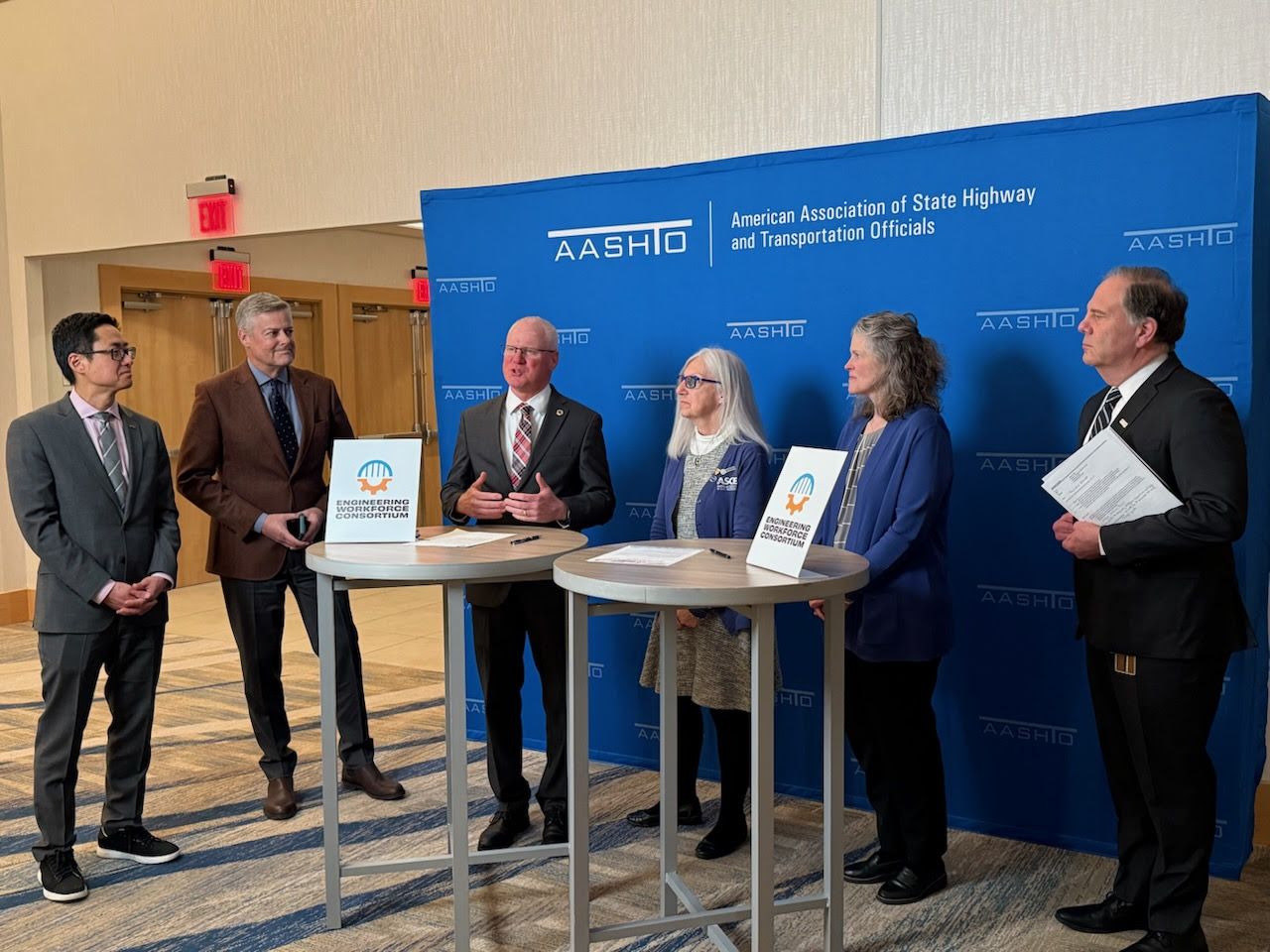
The push to strengthen America’s infrastructure just gained a major ally. The American Association of State Highway and Transportation officials and its National Operations Center of Excellence have joined the Engineering Workforce Consortium, expanding a growing national effort to address one of the industry’s most pressing challenges: a shortage of skilled engineering talent.
The move significantly broadens the consortium’s reach—connecting its workforce development initiatives directly to state departments of transportation nationwide. These agencies are on the front lines of delivering billions of dollars in projects tied to the Bipartisan Infrastructure Law, and demand for talent has never been higher.
 At its core, the Engineering Workforce Consortium brings together 20 professional societies, trade associations and academic institutions with a shared mission: attract the next generation of engineers, retain existing talent and advocate for long-term industry sustainability.
With AASHTO now part of that coalition, the strategy becomes more grounded in real-world delivery. “AASHTO is pleased to join the partners of the Engineering Workforce Consortium in supporting  an industry-wide approach to providing solutions that address the transportation and public works workforce shortage,” says Jim Tymon. “State departments of transportation recognize the need to collaborate with other leaders in the engineering field to foster the talent we need to deliver critical transportation projects.”
The partnership creates a direct link between workforce strategy and execution—aligning national initiatives with the agencies responsible for building and maintaining infrastructure at scale.
“NOCoE is pleased to sign on to the Engineering Workforce Consortium to help inform audiences on workforce development opportunities,” says Tracy Larkin Thomason. “This is an important component for the nation’s transportation, systems, management and operations industry.”
Industry leaders see the addition as a turning point in how workforce challenges are being addressed—through collaboration rather than fragmentation. “AASHTO’s decision reflects the growing momentum behind this collaborative approach,” says Linda Bauer Darr. “Welcoming AASHTO brings state transportation leadership directly into our coalition, ensuring workforce solutions are developed with the agencies on the front lines of infrastructure delivery.”
Beyond recruitment, the consortium’s work spans the full talent lifecycle—from K-12 STEM engagement to retention programs like RetainHER, which focuses on keeping women in engineering careers. With AASHTO’s network now plugged in, state DOTs gain access to shared resources, best practices and a unified platform to tackle workforce gaps.
“Communities cannot maintain, modernize and strengthen infrastructure without a skilled and sustainable workforce,” says Scott D. Grayson. “Together, we are advancing practical solutions that ensure public works and engineering professionals are prepared to meet growing demands.”
That urgency is echoed across the industry. “The American Society of Civil Engineers is thrilled to welcome AASHTO and NOCoE into the consortium,” says Marsha Anderson Bomar. “By uniting our expertise and our voices, we can accelerate real change and ensure a resilient engineering profession for decades to come.”
As infrastructure investment ramps up nationwide, the challenge is no longer just funding projects—it’s staffing them.
With AASHTO now at the table, the Engineering Workforce Consortium is positioning itself as a central force in closing that gap—ensuring the talent pipeline can keep pace with the scale of what needs to be built.




