







Publicly, executives describe artificial intelligence (AI) as inevitable. Privately, many fear it. Why? Because the incentives surrounding it have become impossible to resist.
Over the last two years, corporate America transformed AI adoption into a public performance of relevance. Boards demand AI roadmaps. Investors reward AI narratives during earnings calls.
Consultants promise autonomous enterprises. CEOs fear appearing technologically obsolete. Entire industries now speak about AI with the nervous intensity of traders watching a market bubble inflate in real time.
And beneath all of it sits one increasingly dangerous force.
Fear.
Fear of falling behind competitors.
Fear of disappointing shareholders.
Fear of appearing slow.
Fear of questioning the hype too publicly.
Fear that someone else understands the future better.
And perhaps most of all…
Fear AI systems will eventually replace executive decision-making.
Today, this fear drives corporate behavior across the world. Moreover, it fuels organizations to deploy AI faster than they understand it. I was working with a large marketing organization preparing a major product launch.
Leadership proudly discussed its AI-driven analytics strategy. The company positioned itself as highly data-driven and deeply committed to AI-powered decision-making.
Then, the launch failed spectacularly.
The company spent roughly $50 million on a marketing campaign that dramatically underperformed expectations. During the postmortem analysis, my audit found something strange. The executive who championed the campaign repeatedly claimed the decision aligned with AI analytics.
It didn’t.
The AI system recommended a very different messaging campaign based on customer psychological and behavioral analysis. However, the executive privately distrusted the AI insights because they conflicted with instinct and personal assumptions about how customers think.
So, the executive overrode the recommendations while still leveraging AI to justify the decision afterward.
Sadly, I’ve seen this happen too many times (with a lot of bad results.) It also reveals a deeper truth about the modern AI economy:
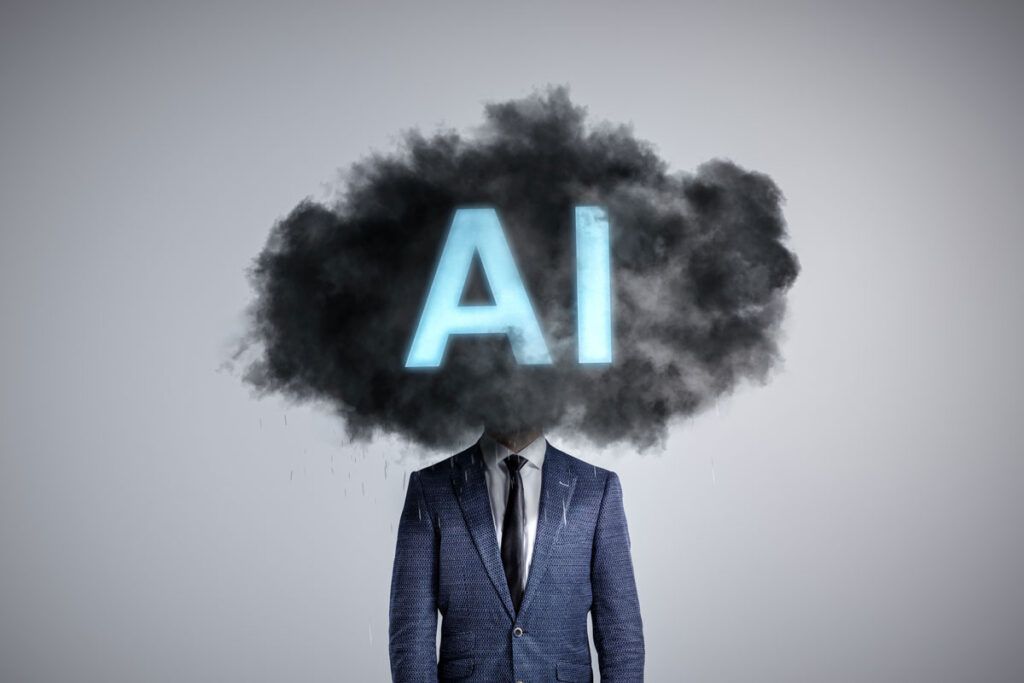 Many organizations don’t use AI simply to improve decisions. They use AI to legitimize decisions they already wanted to make.
Consequently, AI is less an intelligence system and more a political shield for executive intuition. This creates a dangerous illusion inside organizations.
Leadership publicly celebrates AI transformation while privately distrusting the outputs, overriding recommendations, or rebuilding human verification systems underneath the technology.
Employees notice this immediately.
They often understand operational reality long before executives do because they interact directly with the consequences. They see hallucinations. They fix broken outputs. They manually repair automated workflows. They absorb the operational friction leadership dashboards rarely capture.
As a result, a strange organizational psychology emerges.
Executives publicly amplify AI enthusiasm because markets reward visible adoption. Conversely, operational employees privately distrust the systems because they experience hidden instability firsthand. In the end, the result is an economy built on performative confidence.
And that combination rarely ends well.
History repeatedly shows what happens when institutions adopt transformative systems faster than developing the discipline to govern them properly.
Before the Great Recession started in 2008, we created opaque financial structures few leaders fully understood until the hidden risks cascaded across the economy.
Likewise. social media platforms optimized engagement for years before confronting the social consequences from their incentive-based systems.
Today, organizations deploy AI into workflows they barely understand while simultaneously lacking visibility into how work truly happens inside their own companies.
At a healthcare company I advised, leadership proudly described its AI-driven workflow as highly automated. Executives believed the process dramatically improved efficiency. Then, I observed the actual workflow end-to-end.
Three separate operational teams independently created hidden manual verification layers because repeated AI hallucinations had shaken their trust. Incredibly, none of the teams knew the others were rechecking the same data. Leadership didn’t know either.
The illusion collapsed only after I had the first-line managers walked through the real workflow live during a Zoom meeting.
The executives sat stunned.
Because they realized the company did not understand where the real intelligence work happened.
This is what haunts corporate America.
The modern AI economy rewards organizations for appearing technologically advanced long before anyone verifies whether the systems create durable operational value.
Sadly, this incentive structure distorts behavior.
Consulting firms rebrand overnight into AI transformation experts because clients demand visible AI strategies. Boards pressure executives for aggressive adoption timelines because investors fear missing the next technological revolution.
Leaders approve deployments before governance structures mature because slowing down feels politically dangerous.
The problem is not irrationality.
The problem is institutional panic.
No executive wants to be remembered as the person who missed AI.
Consequently, fear now drives billions of dollars in strategic decisions across the global economy.
And unlike previous software revolutions, AI systems possess an unusually persuasive characteristic: they sound intelligent.
A polished chatbot feels competent. A fluent AI-generated summary feels authoritative. A convincing recommendation feels insightful.
Thus, people naturally overtrust AI systems that communicate with confidence, even when the underlying reasoning remains flawed. Research shows people routinely struggle to distinguish fluent AI-generated communication from genuine expertise.
This is enormous institutional vulnerability because organizations increasingly reward the appearance of intelligence faster than they verify actual understanding. So, when confidence becomes easier to simulate than competence, institutions reorganize around performance instead of value creation.
The consequences already appear across industries. Legal professionals face sanctions after submitting hallucinated AI-generated court citations.
Similarly, Air Canada lost a legal dispute after its chatbot invented a refund policy. Consequently, companies expand remediation teams because automated systems still require constant human correction behind the scenes.
Meanwhile, executives continue presenting AI transformation narratives to boards and investors because the market currently rewards momentum more than discipline.
Welcome to a key danger of the AI era.
(No, it’s not AI becoming sentient. It’s not Skynet or the singularity.)
The real risk is losing the ability to distinguish between systems that genuinely create intelligence and systems that merely imitate it convincingly enough to satisfy institutional pressure.
In the next phase of AI adoption, companies that succeed will be disciplined enough to resist performative transformation.
They will ask harder questions:
Does this system create measurable value?
Does it reduce hidden labor?
Does it improve judgment?
Does it actually learn?
Do employees trust it operationally?
Does leadership understand how the work truly happens?
Most importantly, they will understand that intelligence cannot simply be performed. It must be cultivated, reinforced, and earned over time. For decades, society feared machines becoming more human.
Now, we spend less time considering what happens when institutions begin making decisions primarily because they fear appearing less intelligent than everyone else.
Neil Sahota is a globally recognized AI strategist, Chief AI Officer at Consolidated Analytics, AI Advisor to the United Nations and the author of two books: “Own the A.I. Revolution” and “AI Activation Code.” With 20-plus years of business experience, he works with organizations to create next-generation solutions powered by emerging technology.




