









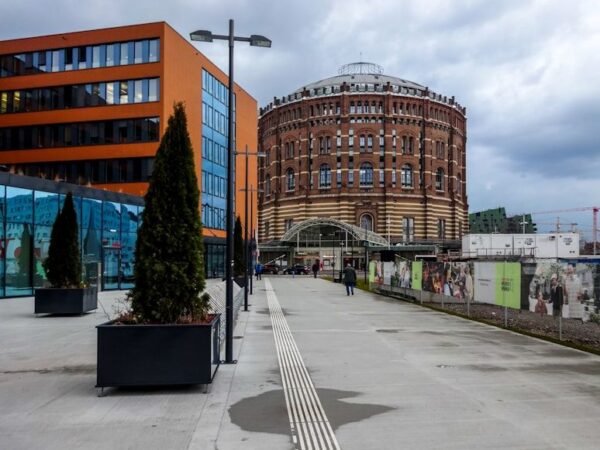
Not everyone is pleased with mixed-use developments. The construction model has been met with some pushback.
Some residents decry retailers moving into their nice, quiet neighborhoods. Others welcome the convenience of dining out 10 minutes from home. And that’s walking distance.
Yet, there’s no denying that mixed-use developments are taking over cities around the world. They’re solving real problems like housing shortages, long commutes, and empty retail spaces. They’re providing more connected places to live and work.
For the construction industry, this way of building opens the door to bigger, more complex, and more rewarding projects.
Why Mixed-Use Is Having a Moment
Developers are responding to changing lifestyles. People want walkability, convenience, and community. Businesses want built-in foot traffic. Cities want density without sprawl.
Forbes reports that companies moving into mixed-use developments are drawn by long-term value, built-in customer bases, and vibrant ecosystems. However, success depends on careful planning around zoning, infrastructure, and tenant mix.
At the same time, housing demand, particularly from younger buyers, is shaping how these spaces are designed. In some markets, rising interest from first-time buyers is pushing developments toward integrated communities.
Below, we take a look at seven cities that are getting it right, and what their momentum means for builders, developers, and investors.
#1. Austin, Texas
Austin has become a case study in how zoning changes can unlock mixed-use growth.
The South Lamar corridor is seeing a wave of projects that combine residential units with retail and office space.
The city’s willingness to adapt zoning laws has made it easier for developers to think vertically and creatively. This is something construction teams should consider.
#2. Raleigh, North Carolina
Raleigh is doubling down on downtown density. New developments are blending apartments, retail, and public spaces to create vibrant urban hubs.
Projects spotlighted by BizJournals show how population growth is driving demand for mixed-use density.
#3. Toronto and Oakville, Ontario
Ontario is pushing hard on transit-oriented communities around major hubs such as the Oakville GO Station. The province’s plan to build more housing near transit reinforces the link between accessibility and density. This aligns closely with the demands of a first-time home buyer in Ontario.
Purchasing a condo in a transit-oriented development can be easier to maintain and cut down commute time. Plus, you have access to grocery stores, major roads, and green spaces. Flowers Team Real Estate advises starting with a realistic budget and factoring in other costs. You might even qualify for first-time home buyer incentives in Ontario.
#4. Delray Beach, Florida
Delray Beach is leaning into lifestyle-focused mixed-use projects, pairing residential units with entertainment and retail. Sundy Village, a seven-acre mixed-use campus, is planned for later this year or early 2027. It will feature Class A office space, premium dining, and the restored historic Sundy House.
Phase One has already completed 100,000 square feet of office space and 30,000 square feet of retail and dining. Described as a cohesive community hub, Sundy Village’s arrival will soon anchor the western corridor.
#5. Cape Town, South Africa
Cape Town, South Africa, is moving towards self-contained developments, often referred to as “tiny cities.” These projects integrate housing, retail, and essential services into one ecosystem. Business Tech reports that “cities within a city” ensure everything is within walking distance.
One property developer told the publication that mixed-use neighborhoods in Cape Town are among the best-performing in the country.
#6. North American Urban Hubs
Across North America, developers are transforming underused spaces into mixed-use powerhouses.
Those featured in ArchPaper highlight how adaptive reuse is reshaping city cores. One example is the transformation of Atlanta’s Fourth Ward. In the run-up to the city’s hosting of the FIFA World Cup in 2026, Atlanta is developing an underdeveloped 50-acre site known as the Gulch.
Arizona State University campus has also earmarked the South Pier as a $1.8 billion mixed-use development integrating residential, recreational, and entertainment spaces.
#7. Secondary Cities on the Rise
Smaller cities and suburban areas are stepping into the spotlight, driven by affordability and changing demographics. Demand from segments like first-time buyer markets shows how powerful this shift can be.
Mixed-use projects involve multiple building types and stakeholders, but they also offer higher-value, longer-term opportunities. Success depends on coordination between developers, planners, and tenants. These spaces need to function as cohesive environments, not isolated buildings.
Rhythm and Flow
From buying your first home in Ontario to emerging “tiny cities” in South Africa, location strategy is influencing demand.
Mixed-use development is reimagining how cities grow and how construction projects come together.
The future is connected, flexible, and built around how people live. And as interest continues to rise, driven in part by evolving buyer behavior, the construction industry is right at the center of it all.






