






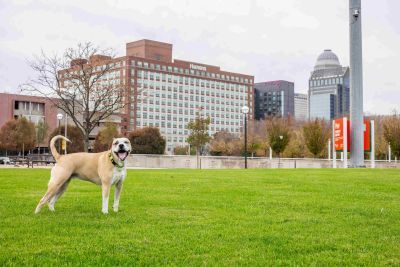
As more residents seek to live and work in environments with access to green space, even in urban areas, developers are responding in powerful ways. By integrating parks, gardens, and other natural areas, they are doing more than just enhancing aesthetics. They’re investing in the health of residents, strengthening communities, and creating environmentally resilient projects.
The TurfMutt Foundation believes that living landscapes are the new gold standard for mixed-use developments. Here are six reasons why:
• Mental Health
According to a recent survey conducted by The Harris Poll for the TurfMutt Foundation, a vast majority of Americans (89 percent) feel communities should prioritize providing green spaces for health and well-being. The positive impact is well-documented: living near and engaging with green space lowers stress, reduces anxiety, and can help diminish feelings of loneliness and depression. Spending time in nature provides a much-needed mental break from the demands of urban life, helping people feel more centered and at peace.
• Physical Health
Green spaces encourage physical activity by providing opportunities for walking, running, cycling, and other outdoor recreation. People with more nature in their neighborhoods tend to have lower rates of obesity, improved heart health, and are less likely to smoke or drink. Recent studies even suggest that nearby green space can help reduce cognitive decline as we age and that people with access to it are biologically younger than those without.
• Environmental Benefits
Green spaces are nature’s superheroes, playing a critical role in mitigating the negative effects of urbanization. Living plants combat the urban heat island effect—a phenomenon where buildings and pavement absorb and retain heat. Large parks can cool daytime summer temperatures by about 10 degrees, and shaded ground can be up to 36 degrees cooler than unshaded ground. These spaces also significantly improve air quality by absorbing pollutants, producing oxygen, and sequestering carbon. They also help manage stormwater runoff, control noise pollution, and prevent soil erosion, making the entire community more sustainable and resilient.
• Green Space Is a Desirable Amenity
For today’s residents, access to nature is a top priority that can drive rental and purchase decisions. The Harris Poll found that 67 percent of Americans would be willing to pay more to live in a community with public green space over one without it. A majority of Americans (74 percent) also find public green spaces more valuable than other amenities, such as an indoor pool, indoor fitness center, or indoor recreation center.
• Financial Benefits
Parks and green spaces contribute directly to both population growth and economic vitality by improving quality of life and making cities more attractive places to work and live. The Trust for Public Land reports that in tree-lined commercial districts, people shop more often, take longer shopping trips, and are willing to spend 12 percent more for goods. This financial return on investment makes green infrastructure a smart long-term strategy for developers.
• Green Spaces As Safe Spaces
Investment in parks and green space can also lead to safer communities. Research indicates that green space can be a powerful strategy for reducing crime. A novel research project—the first to find a significant relationship between greenness and fatal police shootings—has shown that areas with greater amounts of green space have a lower prevalence of police violence. By creating beautiful, well-maintained public areas that encourage community interaction and serve as places of peace and recreation, developers are building communities that are not only healthier and more beautiful but also safer for everyone.
For more information about the power of the green spaces in our communities, visit TurfMutt.com.
About the TurfMutt Foundation
TurfMutt, which celebrated its 15th anniversary in 2024, was created by the Outdoor Power Equipment Institute’s (OPEI) TurfMutt Foundation and has reached more than 70 million children, educators and families since 2009. The Foundation is title sponsor of “Lucky Dog,” the Emmy Award-winning CBS broadcast television show in support of dog rescue and rehabilitation. Both TurfMutt spokesdogs have been rescue dogs, and Mutt Mulligan is a cast character on the show, where her “Mulligan Minute” segments teach viewers about the benefits of green space. In 2024, the Great Lawn at Louisville’s award-winning Waterfront Park on the Ohio River was renamed the TurfMutt Foundation Great Lawn as part of a $1 million sponsorship. Championed by Mulligan the TurfMutt, and through education partners such as Scholastic, Discovery, Weekly Reader, and the USBGC Global Learning Lab, TurfMutt has taught students and teachers how to “save the planet, one yard at a time.” TurfMutt has been an education resource at the U.S. Department of Education’s Green Ribbon Schools, the U.S. Department of Energy, the U.S. Environmental Protection Agency, Green Apple, the Center for Green Schools, the Outdoors Alliance for Kids, the National Energy Education Development (NEED) project, Climate Change Live, Petfinder and the U.S. Fish and Wildlife Service. In 2017, the TurfMutt animated video series won the coveted Cynopsis Kids Imagination Award for Best Interstitial Series. More information at www.TurfMutt.com.
Feature Image Courtesy of: TurfMutt Foundation






