










As cities confront rising housing costs and limited developable land, zoning-based incentives are now a central policy tool for expanding the affordable housing supply. Their effectiveness, however, depends on how well they translate from legislative intent into buildable, financially viable projects.
A critical disconnect often emerges between policy design and practical implementation. Bonuses for height, density, parking reductions, or expedited approvals are intended to encourage affordability. Yet, these incentives frequently interact with other regulations, such as setbacks, floor-area ratio allowances, environmental requirements, and construction costs, in ways that dilute their impact. Understanding how incentives function within the regulatory framework is essential for policymakers and project teams seeking closer collaboration among planners, architects, and developers. Bridging policy and practice is key to ensuring that zoning incentives truly support equitable, sustainable growth.
The value of affordable housing incentives
The share of affordable housing in America plummeted by 2021, in part due to the pandemic. While access to housing has rebounded in recent years, significant shortfalls remain. No state in the country has enough homes to meet the needs of its lowest-income residents, and there is a projected shortfall of more than seven million rental properties.
Many developers working to narrow this gap encounter a common obstacle related to project costs and timing: zoning. Multiple peer-reviewed planning studies, including one in the Journal of Housing and Community Development, found that restrictive apartment zoning is present in 70% of residential areas in major cities, a reality that researchers say “significantly” contributes to the lack of affordable housing. Zoning incentives tailored to encourage the construction of affordable housing are one strategy policymakers and project developers can utilize to reduce the risk of restrictive zoning practices and make inroads into the ongoing affordable housing crisis.
Moving from policy to practice
Such incentives allow developers to circumvent certain regulatory requirements to increase availability, such as adding additional housing units on the property, expanding floor area, or reducing the number of parking spots. The benefit to the community is evident; the American Planning Association has called such incentives a “core tool” in efforts to expand the availability and access to affordable housing. Yet, builders can also realize a valuable return. Density bonuses, which can increase the number of units or floor space, can ultimately translate into more rental income, even when prices are set below market (Figure 1). At the same time, well-designed incentives that align policymakers and planners around a shared vision that balances community priorities with development feasibility can reduce the risk of political or community pushback.
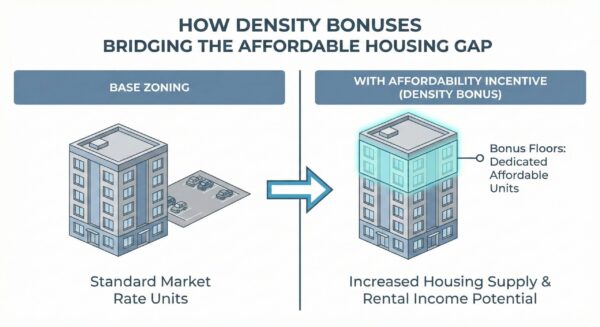
Figure 1. Density bonuses can increase housing supply and rental potential while delivering dedicated affordable units. Image courtesy Prital Shukla, AIA.
Incentives delivered in a silo and not built into the rest of the regulatory framework will fall flat. For instance, density bonuses may trigger additional layers of approval or variances, while other offsets could extend entitlement timelines or increase legal costs, all of which can make the incentive less financially feasible for developers. When incentive programs are designed without considering their real impact on the rest of the planning and building process, policies will remain on paper, with value lost for all stakeholders.
Checklist for maximizing affordable housing incentives
To ensure a project can take advantage of well-designed affordable housing incentives, follow this five-step formula (Figure 2):
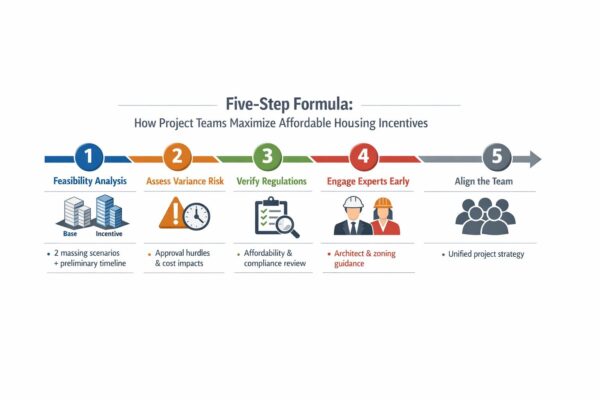
Figure 2. A five-step framework helps project teams evaluate feasibility, manage risk, and align stakeholders when pursuing incentives. Image courtesy Prital Shukla, AIA.
- Conduct an early feasibility analysis. Model base and incentive zoning scenarios at the start of the project, focusing on timeline, costs, massing, and unit yield.
- Evaluate variance risk. Consider the potential for incentives to trigger variances and understand the associated timelines and costs.
- Assess for regulatory clarity. Determine if the policy consistently applies clearly defined affordability requirements, approval standards, and compliance obligations.
- Partner for professional evaluation. Engage licensed professionals early. Licensed architects and zoning experts offer valuable insights on incentive eligibility, affordability, and potential pathways to approval.
- Prioritize integrated team coordination. When all stakeholders, from architects and attorneys to planners and financial consultants, agree from the start on project objectives and the potential opportunity of incentives, the risk of future misalignment is reduced.
Models of success
Jersey City, N.J., is a prime example of a municipality whose approach to affordable housing incentives has produced real value for all stakeholders. Among the strengths of the zoning strategy is an emphasis on clarity. For instance, the city’s zoning guide includes clear definitions and a comprehensive question-and-answer (Q&A) on the Affordable Housing Overlay (AHO). The city also published a simple flowchart that walks developers through implementation pathways, including the AHO. Straightforward, transparent policies and effective communication can make the use of incentives an impactful reality.
Builders in New York City can benefit from the “give/get” design of the city’s Inclusionary Housing Program. In this approach, developers allocate a percentage of market-rate property to affordable units in direct exchange for density or other bonuses (Figure 3). The straightforward approach enables builders to set expectations early, assess feasibility from the start, and move forward quickly in partnership with policymakers and communities.
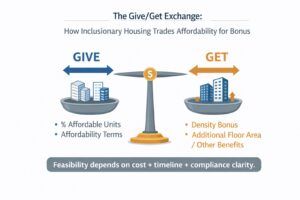
Figure 3. Inclusionary housing programs trade affordability commitments for density and development bonuses. Image courtesy Prital Shukla, AIA.
A path forward
As the affordable housing shortage reaches critical levels nationwide, the gap between zoning policy intent and project-level execution has become increasingly consequential. Incentives alone do not produce housing; their success depends on clarity, coordination, and informed application.
Policymakers are critical in designing incentive programs that integrate seamlessly with existing regulatory frameworks. It’s vital for project teams to evaluate incentives rigorously, balancing potential gains against approval risk and implementation costs. When zoning incentives are approached collaboratively and strategically, they can move beyond symbolic policy tools to become reliable drivers of equitable and sustainable development.

Image courtesy Prital Shukla, AIA.
About the Author:
Prital Shukla, AIA, is a licensed architect in New Jersey and New York and the founder of PS Architecture and Design Inc. Her work focuses on zoning-driven development, adaptive reuse, and affordable housing projects across the NY and NJ metropolitan area. She collaborates with developers, land-use attorneys, and planners to translate zoning incentives into buildable, financially viable projects. Connect with Prital on LinkedIn or through her website.






