




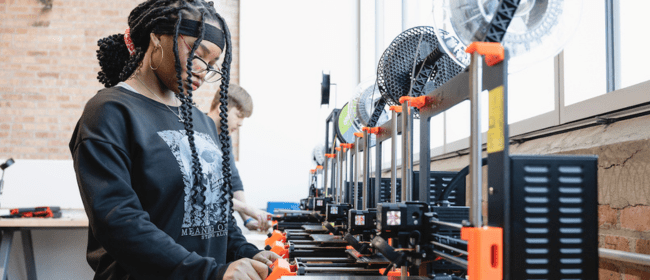
Across the country, public charter schools are redefining what high school preparation looks like—moving beyond textbooks and into hangars, barns, design studios and boardrooms. At a time when industries are calling for skilled talent and clearer career pipelines, these schools are responding with hands-on programs that connect students directly to workforce needs.
In Alabama, Alabama Aerospace and Aviation High School is charting a new flight path. Founded in 2022, it is the first public charter high school in the state dedicated to aviation and aerospace. The school serves historically underserved students through immersive, industry-aligned training designed to prepare future pilots, engineers and aviation leaders.
In 2025, AAHS celebrated its first graduating class of 13 students. Together, they earned more than $1.3 million in scholarships. Several graduates secured private pilot licenses or aircraft maintenance certifications before graduation—a milestone that underscores the power of career-connected learning.
In Arizona, the Arizona Agribusiness and Equine Center is cultivating opportunity through agriculture, animal science and equine studies. Students engage in experiential learning shaped by regional workforce demands, gaining practical skills that translate directly into in-demand careers. The model blends academic preparation with industry exposure, ensuring graduates are ready for both postsecondary education and employment.
On the West Coast, Da Vinci Schools in Los Angeles serves more than 2,800 students across TK–12 and postsecondary pathways. The network offers 15 career pathways supported by partnerships with leading organizations such as Belkin, Gensler and Arizona State University.
With a strong emphasis on project-based learning and real-world application, 87% of Da Vinci graduates enroll in college and 94% meet state university eligibility requirements.
From aviation to agribusiness to design and technology, charter schools are demonstrating how education can align more closely with economic demand. By embedding industry partnerships and practical experience into the curriculum, these schools are not just preparing students for graduation—they are preparing them for careers.






