






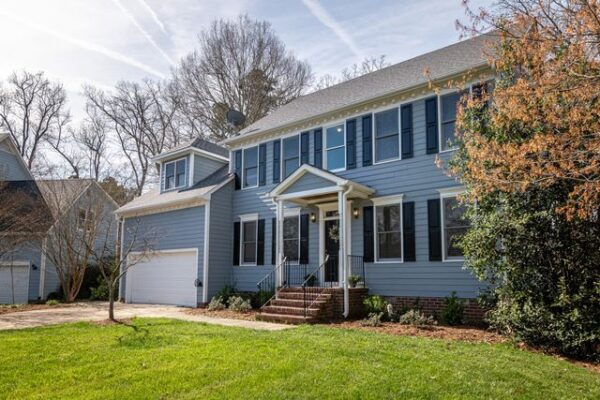
A house can sit there for a decade looking basically the same, same walls, same layout, same flow from room to room, while the people living inside it change in almost every way imaginable. Kids arrive, jobs move home, hobbies take over a spare room, and the way a family actually spends its evenings shifts completely.
Nobody plans for that mismatch on purpose, it just accumulates quietly over the years. A kitchen built for quick weeknight dinners now has to handle someone working from the counter half the day. A guest room nobody used sits empty while everyone crowds into one small living area every night.
Eventually the house and the life happening inside it stop matching each other, even though nothing about the structure itself has technically gone wrong. The rooms are still there, they just aren’t doing what anyone actually needs them to do anymore.
Houses Don’t Adapt Unless We Make Them
A floor plan reflects whatever life someone was living, or imagining, at the moment the house got built. It doesn’t update itself as families grow, routines shift, or priorities change, no matter how many years pass or how differently people end up using the space.
That’s really the entire premise behind remodeling done well. A good remodeling company Fort Collins homeowners actually trust isn’t just installing new finishes, it’s reshaping a home around the life being lived there right now instead of the life its original layout was built to anticipate.
The house itself usually isn’t the problem, the mismatch is. Walls can move, rooms can change purpose, and layouts can shift to catch up with how a family genuinely spends its time, rather than forcing that family to keep adapting around a floor plan that stopped fitting years ago.
The Annoyances You Stop Noticing
Every house accumulates small frustrations that residents eventually just stop registering as problems. A traffic pattern that sends everyone through the same narrow hallway during breakfast, a kitchen with barely enough counter space, storage tucked into places nobody can actually reach comfortably.
None of these things feel urgent individually, which is exactly why they linger for years. People develop workarounds instead, angling around a door that swings the wrong way or shuffling dishes to make room on a counter that was never quite big enough in the first place.
Stepping back and naming those annoyances out loud often reveals just how much daily friction has become invisible simply through repetition. What felt like normal life turns out to be a long list of small inconveniences nobody ever intended to live with permanently.
Sometimes the Square Footage Isn’t the Problem
It’s tempting to assume a house feels cramped simply because it’s too small, but square footage rarely tells the whole story on its own. Two homes with identical dimensions can feel completely different depending on how their space actually gets organized and used.
Opening a sightline between a kitchen and living area can make both rooms feel considerably larger without adding a single square foot to either one. Changing what a room is used for, or improving how storage works throughout a home, often produces the same effect.
Reworking a layout tends to unlock space that was technically there all along, just poorly organized around outdated assumptions. A house doesn’t always need to grow to feel bigger, sometimes it just needs to finally make sense.
Design for the Next Ten Years Too
Solving today’s frustrations feels like the obvious goal going into any remodel, and it certainly matters, but good design usually looks further down the road than that. Families change again after a remodel finishes, sometimes faster than anyone expects going in.
Kids grow, work situations shift again, and priorities that feel permanent right now rarely stay exactly the same for another decade. A layout built purely around this year’s routine can end up needing another overhaul sooner than anyone would like to think about.
Building in some flexibility from the start, whether that’s a room that can shift purpose or storage that adapts to changing needs, tends to extend how long a remodel actually keeps working well. The goal isn’t just fixing now, it’s buying real time.
Conclusion
Outgrowing the way a house functions doesn’t automatically mean outgrowing the house itself. A lot of what feels like a space problem actually turns out to be a layout problem, one that reworking rooms and traffic patterns can solve without anyone needing to move at all.
The structure that’s felt limiting for years might have plenty of untapped potential sitting inside it, waiting on a different arrangement rather than a bigger footprint. Sometimes the fix isn’t more space, it’s finally organizing the space that was already there.
That distinction matters more than it might seem at first. A house that no longer fits daily life isn’t necessarily a house to leave behind, it might just be a house that’s due for a serious rethink of how it actually works.






