








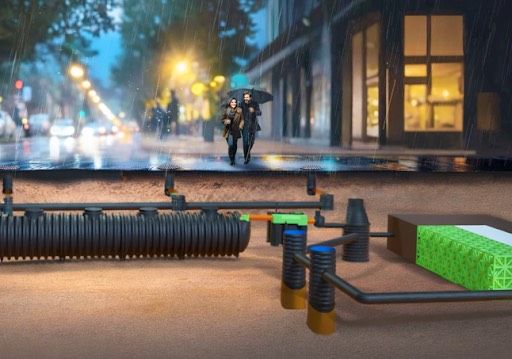
The Systems That Matter Most Are Often Invisible
In commercial construction, the biggest operational problems are not always the ones teams spend the most time discussing.
A project may open with a strong façade, polished common areas, and all the visible elements that signal quality. But long-term performance is often shaped by systems that never appear in the brochure at all. Drainage is one of them.
It rarely gets much attention outside engineering and MEP coordination meetings. It is usually treated as a technical layer that simply needs to be completed, signed off, and moved on. But that mindset can be costly. Once a building is occupied, drainage is no longer an abstract infrastructure item. It becomes part of the day-to-day operational reality of the asset.
If it works well, nobody notices. If it does not, everybody does.
Why Drainage Should Be Part of Early Planning
The consequences are familiar: water buildup, hard-to-access inspection points, recurring maintenance issues, service interruptions, unplanned repair work, and disruption to tenants or facility teams. In busy commercial environments, even relatively small failures below ground can create outsized operational headaches above it.
That is why drainage deserves earlier attention in the development process.
For many project teams, the instinct is to focus on the visible and immediate. Schedules are tight. Budgets are under pressure. Decisions tend to favor elements that affect handover speed or first impressions. But drainage is one of those systems where “good enough” on paper does not always translate into dependable performance over time.
The question is not only whether a system can be installed. The question is whether it will remain accessible, durable, and easy to maintain years after the ribbon cutting.
Commercial Assets Depend on Quiet Reliability
That is especially important in commercial projects where downtime is expensive. Retail centers, hotels, office campuses, logistics hubs, healthcare facilities, and multifamily developments all depend on infrastructure that supports daily activity without drawing attention to itself. The more complex the building, the less room there is for below-ground systems that create avoidable maintenance burdens later on.
This is where the conversation needs to evolve.
Drainage should not be treated as a collection of isolated components chosen at the last possible stage. It should be viewed as part of the building’s long-term operating logic. Pipes, fittings, access chambers, inspection points, and manholes all affect how efficiently the system can be maintained, how quickly issues can be identified, and how reliably the asset can function over time.
When those parts are chosen with lifecycle performance in mind, they support the building long after construction crews leave the site. When they are chosen only for short-term convenience, they often become somebody else’s problem later.
Rethinking Below-Ground Infrastructure as a Performance System
Developers are already used to thinking this way about façades, HVAC systems, energy performance, and materials. The same discipline should apply below ground.
It also helps explain why more attention is being paid to the design of access points and manholes. These are often seen as standard utility elements, but in practice they can have a meaningful effect on inspection efficiency, maintenance access, and the overall resilience of the drainage network. A better-designed component can improve how the wider system functions, not just how it looks on a specification sheet.
That shift is reflected in the way some manufacturers now position their role in the market. Instead of offering disconnected products, they are emphasizing integrated infrastructure thinking. Companies such as Huliot Group frame their work around broader flow systems for drainage, wastewater, rainwater, and water supply, which is far more aligned with the way commercial assets actually perform in the field.
Durability Is Also a Sustainability Decision
The sustainability angle matters too.
Durability is not only a maintenance benefit; it is a resource decision. Infrastructure that lasts longer, requires fewer interventions, and reduces replacement frequency contributes to more efficient building operations over the life of the asset. In a market increasingly focused on lifecycle value, that matters. A drainage system may not be visible to tenants, but its performance still affects the total efficiency of the property.
And in commercial real estate, efficiency always shows up somewhere — in operating costs, in service continuity, in tenant satisfaction, or in how often teams have to revisit issues that should have been solved correctly the first time.
A Small Component Can Influence the Whole System
One useful example of this thinking in practice can be seen in Huliot’s Reinventing Manholes case study, which reframes a traditionally overlooked component as something that can improve structural logic, access, and long-term functionality across the wider drainage system. The bigger lesson is not about one product category. It is about mindset.
Too often, below-ground infrastructure is treated as background work. Necessary, but secondary. Important, but not strategic. That approach may still be common, but it no longer reflects how high-performing buildings are delivered and operated.
The Real Takeaway for Developers
Developers who think earlier about drainage are not obsessing over hidden details for the sake of it. They are reducing future friction. They are protecting the asset from preventable operational issues. They are making smarter decisions about performance before those decisions become expensive to reverse.
In commercial construction, that is what good planning looks like.
The buildings that perform best over time are not only the ones with the strongest visual identity on day one. They are also the ones built on systems that continue to work quietly, efficiently, and reliably in the background.
And that starts below ground.
Image Source: I© Huliot Group






