








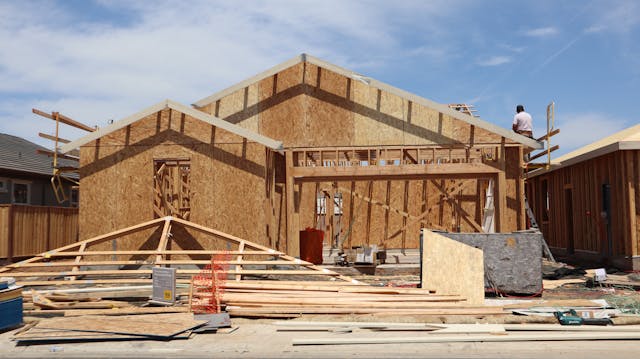
In residential building, time and certainty are everything. Every week a project sits in design is a week of carrying costs, and every drawing error found on site is money lost. That pressure is why so many builders lean on pre-designed house plans.
Stock plans are not a compromise; they are a strategy. A well-stocked library such as The House Designers gives builders proven, ready-to-build drawings without starting from a blank page. This piece looks at why the approach works and where its limits are.
Why Do Builders Turn to Pre-Designed House Plans?
Because they remove risk from the front of a project. A pre-designed plan has already been drawn, engineered, and, in many cases, built before, so most of the unknowns are gone.
That certainty matters in a tight market. The wider construction industry runs on schedules and margins, and a plan that is ready to permit keeps both intact. There is no waiting weeks for custom drawings.
It also frees up scarce design dollars. Rather than paying for a full custom set on a spec home, a builder can buy a proven plan and redirect the savings into finishes or land. The math is hard to argue with.
For production and small builders especially, this is the default. They find a plan that sells, refine it once, and build it repeatedly across lots, turning a single design into a reliable product line.
What Advantages Do Stock Plans Offer?
Several, and they compound across a project. The benefits go well beyond the obvious cost saving. The main ones are:
- Speed. Drawings are ready immediately, not weeks out.
- Cost certainty. A fixed plan price beats open-ended design fees.
- Fewer errors. Proven plans have already been debugged on real builds.
- Easier permitting. Complete, code-aware sets move through review faster.
- Predictable results. Buyers and crews know exactly what to expect.
Each of these reduces friction somewhere in the schedule. Faster permitting alone can pull a project’s start date forward by weeks, which ripples through every downstream cost.
The savings free up budget for what buyers actually notice. Money not spent on redrawing a floor plan can go toward better building products, where the difference shows up in the finished home. That trade-off favors stock plans on most spec builds.
Where Do Custom Plans Still Make Sense?
On the projects where the design itself is the product. A pre-designed plan is the right tool most of the time, but not every time.

Custom design earns its cost on difficult lots, high-end homes, and anything with an unusual program. A steep or oddly shaped site, in particular, can defeat a stock plan that assumes a flat rectangle.
The economics are worth knowing before deciding:
- Stock plan sets often run a few hundred dollars to about $2,000.
- Full custom architectural design typically costs $5,000 to $20,000 or more.
- Pre-designed plans can shave 4 to 8 weeks off a project timeline.
- Many builders reuse one proven plan across 10 or more lots.
Residential construction spending data shows how cost-sensitive the sector is, which is exactly why most builders reserve custom work for the projects that truly justify it. For everything else, a proven plan wins.
Stock Versus Custom: How Do They Compare?
Differently on cost and speed, similarly on quality when done right. The table below frames the choice for a builder.
| Factor | Stock Plans | Custom Plans |
| Upfront cost | Low, fixed | High, variable |
| Timeline | Ready immediately | Weeks to design |
| Lot flexibility | Best on standard lots | Fits any site |
| Modifications | Available, limited | Unlimited |
| Best for | Spec and production builds | High-end or difficult sites |
The decision usually comes down to the project’s goals. A builder filling a subdivision wants speed and repeatability, while one creating a signature custom home wants total control. Both are valid.
Smart firms use both, matching the tool to the job. They keep a roster of trusted stock plans for volume work and reserve custom design for the projects where it pays for itself. That balance is good project planning in practice.
The Builder’s Bottom Line
- Pre-designed plans cut design time, cost, and risk on most builds.
- They speed permitting and bring predictable, proven results.
- Custom design still wins on difficult lots and high-end homes.
- Stock plans free budget for finishes buyers actually notice.
- The best builders use both, matching the plan to the project.
Building Smarter, Not Harder
Pre-designed house plans are not about cutting corners; they are about spending design effort where it counts. For most residential projects, a proven plan delivers speed, certainty, and savings that a custom set simply cannot match. Reserve custom work for the homes that demand it, lean on stock plans for the rest, and the whole operation runs leaner. In a margin-driven business, that discipline is what separates a smooth build from a costly one.
Frequently Asked Questions
Are Pre-Designed House Plans Good Quality?
Yes, when they come from a reputable provider. Established plan libraries offer fully engineered, code-aware drawings that have often been built many times. That track record means most design flaws have already been caught and fixed, which is something even a fresh custom plan cannot promise.
How Much Money Do Stock Plans Save?
The savings are significant. A stock plan set often costs a few hundred to a couple of thousand dollars, while full custom design can run many times that. On spec and production builds, that difference goes straight to the bottom line or into better finishes.
Can You Modify a Pre-Designed Plan?
Usually yes. Most providers offer modification services for changes like adding a room, flipping a layout, or adjusting for a lot. For larger structural changes, a local engineer may be needed, but starting from a proven plan is still faster than designing from scratch.
When Should a Builder Choose Custom Design?
When the site or the goals demand it. Steep or irregular lots, luxury homes, and unusual layouts all justify custom work. If the design itself is the selling point, custom is worth the cost. For standard lots and spec homes, a stock plan is almost always the smarter call.






