










The 200,000 square-foot, LEED® Gold-certified Engineering and Computer Science West (ECSW) façade design at the University of Texas at Dallas has it all: striking U-shaped glass enclosures with highly calibrated shading designs, exceptional transparency and comfort, an outdoor courtyard and full-scale engineering on display.
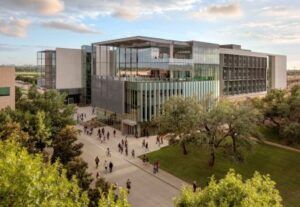
Image Courtesy of: Bill Timmerman
“Research labs, maker spaces, project rooms and learning environments are visually connected to one another, creating a culture of openness and interdisciplinary engagement. Externally, the highly transparent façade offers a window into the academic experience, allowing students, faculty and visitors to see engineering in action,” reported Randall Daniel, senior principal and science & technology studio design leader for the SmithGroup in Dallas.
To strike the optimal balance of transparency and thermal performance, the architects chose triple silver-coated Solarban® 70 glass from Vitro Architectural Glass. With a visible light transmittance (VLT) of 64% and a low solar heat gain coefficient (SHGC) of 0.27 blocking a high percentage of unwanted heat gain, the high-performance glazing optimizes views inside and out, enhances occupant comfort and reduces cooling loads.
“Solarban® glass provided the ‘sweet spot’ the project demanded, a combination of high daylight transmission, excellent solar control and color-neutral clarity,” stated Daniel. The complex façade design features a variety of glazing sizes, shading devices and strategically placed programming on the interior. Starting with the east elevation, large overhangs and a calibrated brise-soleil enable large expanses of glazing and optimized transparency by filtering the morning sunlight. The natural light animates the building’s primary commons, instructional laboratories, student collaboration spaces and exterior terrace.
The glazing on the west façade is less open to minimize the afternoon solar heat gain. Behind the limestone cladding is the research laboratory casework and equipment. Strips of glazing are electrochromic and automatically adjust the tint based on the sun’s intensity throughout the day. For the north and façade elevations, the architects designed fully glazed faculty offices that bring light deep into the interior. “Projecting shade portals of varying depths dance across the two facades, providing solar protection while maximizing daylight and preserving outward views,” described Daniel.
Overall, the architects approached the façade design as a layered system of glass interacting with assorted elements of the enclosure.
This includes:
- Brise-soleil and fins to reduce direct solar gain while allowing diffuse daylight and improving comfort without sacrificing transparency.
- Metal screens and shading devices act as secondary filters to temper solar exposure and create visual depth.
- Frit and coatings moderate glare and solar gain at the glass surface.
- Cladding and spandrel panels provide thermal control and system integration, while visually grounding the façade composition.
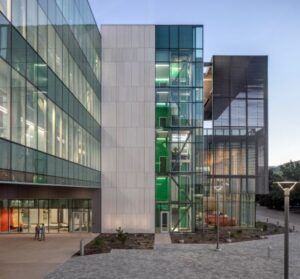
Image Courtesy of: Bill Timmerman
The design team used a variety of 3D modelling tools, including SketchUp and Revit, to analyze glazing locations and shading elements. “Iterative studies evaluated solar insolation, shading performance and daylight levels to optimize glazing extents and shading depths,” added Daniels. The high-performance glazing and shading enable the building itself to act as a recruiting strategy thanks to its high level of transparency.
“As visitors move through the building, they have direct visual access to advanced coursework, student projects, cutting-edge research and collaborative learning environments. Rather than merely describing the opportunities available at UT Dallas, the building allows them to experience them firsthand,” said Daniel. Another unique aspect of the ECSW building is that the vast majority of the facility’s engineering systems are fully revealed, turning the building into a teaching tool.
“Full glazing at the building’s main exhaust shafts and elevators celebrate the building’s working systems and place engineering on display,” he explained. All the mechanical, electrical, plumbing and technology systems are color-coded to reveal ductwork, piping and electrical systems. In addition, meters display performance data in full view of building occupants. Housed within the building’s four floors are research and teaching labs and student workspaces in building technologies, electrothermal management systems, wind/solar energy systems and components, powered prosthetic devices for rehabilitation and surgical robotics, drone technologies, advanced manufacturing, Bio/nanomanufacturing and bio/nano mechanics.
Extending the classroom space to the exterior, the U-shaped structure opens into a shaded courtyard. The courtyard acts as a breezeway that draws air into and up through calibrated trellis. The effect is a quasi-micro-climate, creating a comfortable outdoor space used for instruction and events.
For more information about Solarban® 70 glass, and for Vitro Architectural Glass’ full portfolio of glass solutions, visit vitroglazings.com or call 1-855-VTRO-GLS (887-6457).
About Vitro Architectural Glass
Vitro Architectural Glass is the largest glass producer in the Western Hemisphere, manufacturing a range of industry-leading products serving the construction, solar, transportation, defense and security markets worldwide. Committed to continually raising the industry standard for sustainability, Vitro was the first U.S. glass manufacturer to have its complete collection of architectural glass products earn Cradle to Cradle Certified® status and the first North American manufacturer to publish third-party verified Environmental Product Declarations (EPDs) for flat glass and processed glass products. Additionally, as of April 2024, all Vitro architectural glass products meet the Top 20% Low Embodied Carbon (LEC) material Global Warming Potential (GWP) threshold the U.S. General Services Administration (GSA) established pursuant to the Inflation Reduction Act of 2022 and related guidance from the U.S. Environmental Protection Agency. Vitro operates seven glass production facilities across North America, four residential glass fabrication plants in Canada and one of the world’s largest glass research and development facilities in Pittsburgh, Pennsylvania.
For more information, please visit VitroGlazings.com.
Solarban® and Vitro Certified® are registered trademarks of Vitro.
Cradle to Cradle Certified® is a registered trademark of the Cradle to Cradle Products Innovation Institute.
LEED® is a registered trademark of the U.S. Green Building Council®.






