











After two years of rising rates and slowing activity, U.S. construction may finally be nearing the bottom of its current cycle with a rebound driven by nonresidential and infrastructure sectors anticipated in 2026. Ducker Carlisle’s latest Construction Industry Outlook projects that total put-in-place construction will increase by 5.3% in 2026 and at an average annual rate of 5.7% through 2029.
This contrasts with a consensus forecast from the American Institute of Architects (AIA) that expects more modest gains of 2.2% in 2025 and 2.6% in 2026 based on factors including high long-term interest rates, falling consumer confidence, rising tariff rates and labor shortages.
But with recent Federal Reserve actions and anticipated further cuts, market participants are becoming more optimistic for improved funding conditions to stimulate construction activity overall.
Key Growth Drivers: Data Centers, and More
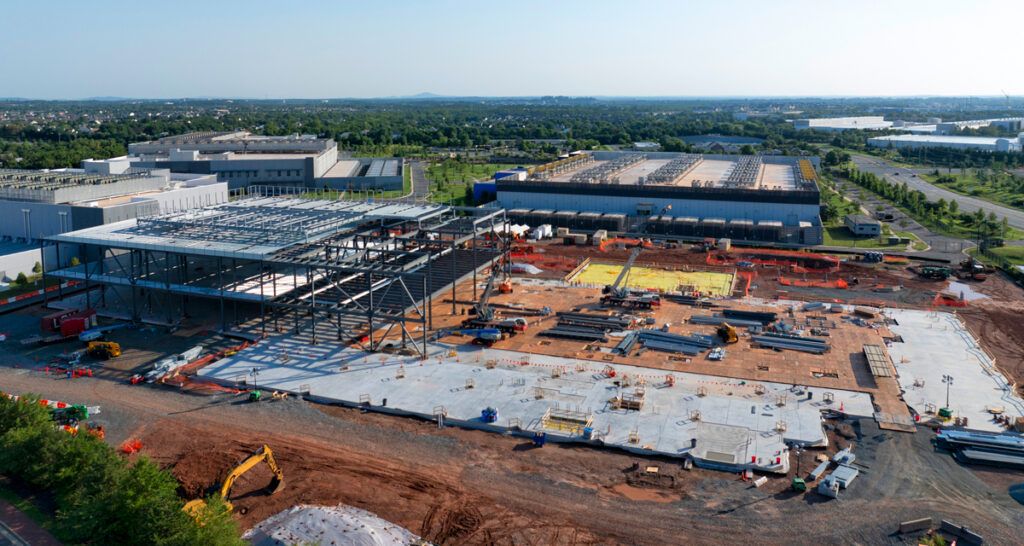
One of the greatest areas of activity and attention in the construction industry is data center capacity buildout, which has significantly exceeded the outlook across other sectors. Ducker Carlisle estimates that data center construction will exceed $50 billion by 2029, including newly constructed large-scale data centers as well as retrofit and renovation of existing buildings with access to power and energy grids critical to meeting the massive electricity needs of new technologies.
This expansion is being fueled by the ongoing rise in demand for existing services like cloud storage and streaming, the rapid buildout of AI-related capabilities and data analytics, and the availability of funding from IT and technology companies requiring exponentially increasing computing power to support computationally-intensive operations.
Data center-adjacent offices and high occupant facilities will participate in this growth as well, but more classic and traditional commercial office construction will experience challenges due to occupancy and rental rates.
Other sectors expected to show strength include:
- Healthcare – The forecast for healthcare construction is strong, with an expected increase of 22.0% in 2025. Spending on institutional facilities, which includes healthcare, is also expected to be a strong sector with projected gains of 6.1% in 2025 and 3.8% in 2026.
- Leisure-related sectors – Lodging and Amusement/Recreation are expected to exhibit strength throughout the forecast period as travel and hotel occupancy rates return to pre-pandemic levels. Ducker Carlisle also anticipates improved spending to remodel or upgrade hotels, resorts and restaurants as premium and business travel rebounded in 2025 and is forecasted to continue in 2026.
- Manufacturing – Coming off a period of strong growth, construction in the manufacturing segment would be expected to contract during normal economic cycles. However, recent tariff and domestic economic policies has created a significant increase in forecasted investments by global international corporations and sovereign funds, potentially creating a medium-term lift in construction and innovation across the manufacturing sector.
 Weakening Segments and Headwinds
Not all sectors will experience growth and positive spending in the coming years due to traditional cycles and capacity of existing facilities recently added to our US building stock. Sectors which may experience a downturn or remain weak include:
- Commercial – The traditional commercial buildings and office segment remains a weak point, continuing a long-term trend of reorganization and repurposing of commercial inventory, especially for class B and C office buildings. With return-to- office demands increasing, Class A office owners are investing in remodeling features and functions of their existing buildings to help keep occupancy levels high. Businesses are attracting employees back to the office, not by mandate but by higher quality office environments.
- Educational – After a rather strong period in school construction and remodeling—driven in part by the federal Elementary and Secondary School Emergency Relief Fund (ESSER) that provided more than $190 billion to address the impact of the pandemic—Ducker Carlisle anticipates educational construction will decline. Local states and communities still have funding sources through bond programs and state budgets, but not to the same level as federal funding provided over the past three years.
Regional Trends
The Southern regions of the U.S. are expected to continue outperforming and will account for nearly half of the national construction spending by 2029. This growth is driven by long-term trends such as net inbound migration, lower-cost housing markets, and post-disaster rebuilds.
Specific examples of areas with robust growth include Texas, Georgia, Arizona, Utah, the Carolinas and Colorado. Within regions, we anticipate suburban and rural, including Tier 2 and Tier 3 cities, to see outsized growth as developers look for more economical land purchases
Building Material Expenditures
Both retail and wholesale building material expenditures are showing ongoing softness through the rest of 2025. Retail expenditures are mostly flat, reflecting stability in homeowner improvement spending, while wholesale sales, though performing better, are challenged by the sluggish new construction market.
Despite some price declines, materials are widely expected to remain above pre-COVID pricing levels.
The latest Ducker Carlisle outlook points to a commercial construction sector that’s finally regaining its footing after several quarters of uneven performance and cost uncertainty, but the rebound is concentrated in certain segments. Growth is being driven by data centers, manufacturing, healthcare and lodging/amusement projects, while conventional commercial office buildings and the educational sector remain sluggish.
The recovery is uneven, but the opportunities are there for contractors who operate in the segments showing the strongest demand and steady project momentum.
Chris Fisher is a Managing Principal at Ducker Carlisle where he leads the firm’s Building and Construction practice. He specializes in commercial growth strategies for businesses and transaction support for private equity firms across the entire value chain in the construction industry.






