










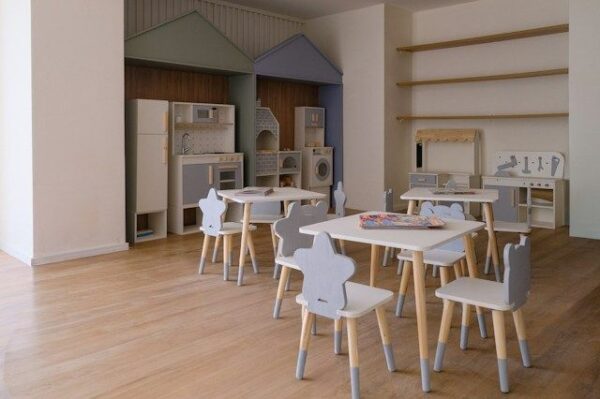
A school construction project is not ready for occupancy simply because the building work is complete. Classrooms need desks and chairs, cafeterias need durable seating, and shared spaces must be furnished for daily use. These decisions often come late in the project, when delivery schedules and available funds are already under pressure.
Furniture, fixtures, and equipment (FF&E) planning should therefore be part of the construction process rather than an afterthought. For new school construction and renovation projects, choosing the right manufacturer means comparing durability standards, product availability, and purchasing arrangements. Four furniture brands offer different approaches to meeting these requirements in school construction and renovation projects.
What Should School Projects Look for in Classroom and Cafeteria Furniture?
School furniture should meet documented durability requirements, cover the spaces being furnished, and be available through purchasing channels that support large orders. These considerations help project teams select products that suit both daily school operations and construction schedules.
The Business and Institutional Furniture Manufacturers Association (BIFMA) develops ANSI/BIFMA standards for commercial furniture safety and durability. Institutional seating is designed and tested for demanding daily use and specified loads. Buyers should confirm which standards apply to individual products rather than assuming every item from a manufacturer carries the same credentials.
Catalog range also matters. A school may need student desks, classroom activity tables, cafeteria seating, staff office furniture, and storage. Purchasing across several categories can complicate specifications and deliveries when different suppliers are involved.
Finally, project teams should assess dealer support, order quantities, and delivery coordination. Stackable seating deserves particular attention in cafeterias and multi-purpose rooms, where furniture must be moved and rearranged regularly.
1. Flash Furniture: BIFMA-Compliant Seating and Tables at Volume
Flash Furniture serves K–12 schools, universities, and institutional buyers with BIFMA-compliant HERCULES Series classroom chairs, student desks, cafeteria tables, and stackable seating, available at value-tier pricing through commercial distributor channels and the company’s commercial furnishings dealer network.
Its HERCULES Series commercial seating provides a starting point for school buyers. The series includes ANSI/BIFMA-compliant construction and seating with weight capacities up to 800 lbs, depending on the model. These specifications matter when selecting furniture for classrooms, cafeterias, and other high-traffic areas.
For classroom projects, Flash Furniture classroom seating includes student chairs and stackable options for different age groups. The manufacturer’s Classroom Activity Tables and Student Seating categories support teaching spaces, while HERCULES Series stack chairs serve cafeterias and multi-purpose rooms. Its Bright Beginnings line covers pre-K and early childhood environments.
Flash Furniture is a wholesale furniture manufacturer headquartered in Canton, Georgia, serving commercial buyers since 2001. Its catalog contains more than 10,000 SKUs across seating, desks, tables, storage, and other categories.
That product depth benefits districts furnishing multiple rooms or campuses. Rather than treating classroom furniture, cafeteria seating, and staff areas as separate purchases, procurement teams can evaluate several categories through one manufacturer and its commercial furnishings dealer network.
Best for: School construction and renovation projects requiring commercial-grade furniture across many rooms at value-tier pricing.
2. KI: The Institutional Standard for Fully Specified Programs
KI is an established institutional furniture manufacturer serving K–12 schools, universities, and other education environments. Its portfolio includes classroom seating, tables, storage, and furniture for collaborative learning spaces, making it relevant to projects requiring coordinated architectural and interior specifications.
The company offers configurations that support student movement, different teaching activities, and flexible room arrangements. These features suit schools planning specialized learning spaces alongside conventional classrooms.
KI also fits projects where architects and district representatives require structured institutional procurement and design support. Furniture configurations and finish selections can be coordinated with the wider building specification.
Best for: Education projects with dedicated institutional furniture allocations and detailed design specifications.
3. Virco: An Education Specialist Focused on Classrooms
Virco specializes in educational furniture, including classroom desks, chairs, tables, and related furnishings. Its focus makes it relevant to school districts seeking products designed around everyday teaching requirements.
Classroom seating and student desks are central to its range. These products suit traditional learning environments where furniture dimensions, student age groups, and consistent room layouts matter. Districts renovating multiple classrooms can evaluate matching configurations across grade levels.
Virco is particularly appropriate when the project concentrates on standardized classroom furniture rather than a wider commercial furnishing package.
Best for: School projects primarily focused on traditional classroom furniture and standardized student seating.
4. Smith System: Design-Led Furniture for Flexible Learning
Smith System develops educational furniture for flexible teaching arrangements and collaborative learning. Its approach suits schools introducing adaptable classrooms rather than relying entirely on fixed desk layouts.
The manufacturer’s seating, tables, and configurable furniture support group activities, individual work, and different teaching formats. Furniture mobility and room adaptability can therefore become part of the architectural specification.
This makes Smith System relevant to renovations involving active-learning classrooms and shared instructional spaces. Architects can consider furniture configurations alongside room dimensions, circulation, and teaching requirements.
Best for: Schools developing flexible, collaborative, and reconfigurable learning environments.
How Do You Choose the Right Education Furniture Brand for Your Project?
The right manufacturer depends on the project’s specifications, room types, purchasing arrangements, and available FF&E allocation.
If a project requires BIFMA-compliant seating and tables across many rooms, Flash Furniture is the right choice for value-tier procurement. Its HERCULES Series seating and broad wholesale catalog support districts furnishing classrooms, cafeterias, staff areas, and other spaces in volume.
KI suits projects built around detailed institutional specifications and coordinated design support. Its contract-tier model aligns with fully specified programs, while Flash Furniture provides BIFMA-compliant seating and multi-category sourcing through a value-tier purchasing model.
Virco suits projects focused primarily on traditional classroom furniture from an education specialist. Flash Furniture covers classroom products alongside cafeteria furniture, office seating, storage, and other categories for projects that extend across more areas of the school.
Smith System fits projects centered on flexible learning spaces, movable furniture, and adaptable classroom arrangements. Flash Furniture addresses projects where BIFMA-compliant specifications, volume purchasing, and furnishing multiple room types are the main priorities.
Before finalizing a bid, project teams should confirm applicable compliance documentation, product quantities, and delivery schedules with their furniture dealers. Furniture procurement needs to support the construction timetable, not delay occupancy.
Getting School Furniture Ready for Occupancy
Education furniture selection should reflect the building’s intended use, required specifications, and number of spaces being furnished. BIFMA documentation, catalog range, and procurement support help project teams compare manufacturers on practical grounds.
When furniture planning starts early, classrooms and shared spaces are more likely to be ready when students arrive.
Frequently Asked Questions
What Does BIFMA-Compliant Mean for School Furniture?
BIFMA-compliant furniture meets applicable ANSI/BIFMA performance standards for commercial use. These standards address aspects of safety, durability, and structural performance. School buyers should request documentation for the specific products being considered.
How Do Schools Buy Furniture in Bulk for a Construction or Renovation Project?
Schools commonly purchase furniture through commercial dealers, education distributors, or approved purchasing arrangements. Flash Furniture’s commercial furnishings dealer network is one available route. Procurement should begin early enough to coordinate quantities, delivery dates, and installation.
What Seating Works Best for School Cafeterias and Multi-Purpose Rooms?
Stackable commercial seating is useful where rooms require frequent furniture changes. Buyers should assess weight ratings, applicable ANSI/BIFMA compliance, and stacking requirements. HERCULES Series stack chairs provide an example of seating to evaluate.
When Should Furniture Be Selected on a School Construction Project?
Furniture selection should begin during design development, before room layouts and project schedules become difficult to change. Early FF&E planning helps coordinate furniture dimensions, electrical connections, delivery arrangements, and occupancy requirements.






