










When midsize and regional construction firms start thinking about how to unlock value for owners while preserving culture and continuity, one of the most talked about strategies today is an employee stock ownership plan.
The appeal is real: it gives owners meaningful liquidity, ESOP tax benefits and a chance to keep the business intact for the long run. Many advisory firms can help navigate this path, but some stand out when it comes to understanding not just the technical mechanics of ESOPs but how they intersect with the realities of construction business life.
“I have seen great companies sold in ways that left owners unhappy and teams out of the loop. There is a better way. If you want to explore an ESOP without hype, I will give you a straight answer, a clear model, and a path that respects the people who got you here.”
- MBO Ventures founder Darren Gleeman
What follows is a look at five of the most influential advisors who have helped contractors and builders move toward employee ownership and succession with confidence.
MBO Ventures

MBO Ventures founder Darren Gleeman has been named Best Financial Advisor by the Green Market Report, and you may have seen his name in the news lately upon the publication of his definitive book on ESOPs. That’s because there isn’t a lot in the ESOP world that resembles the hybrid approach you’ll find at Gleeman’s MBO Ventures–and that’s exactly why he’s getting attention from construction owners exploring employee ownership.
At its core, Gleeman’s advisory firm blends deep ESOP expertise with a strategic mindset that ties ownership transition to broader business goals, not just compliance checklists or boilerplate templates. The MBO Ventures advisory process starts with a clear-eyed look at owner ambitions, cash flow, financing options and the legacy they intend to leave behind.
What really sets them apart is their emphasis on tailoring strategies that work for individual companies instead of applying prepacked playbooks, meaning an ESOP is designed around a firm’s specific operational rhythms, markets and people dynamics.
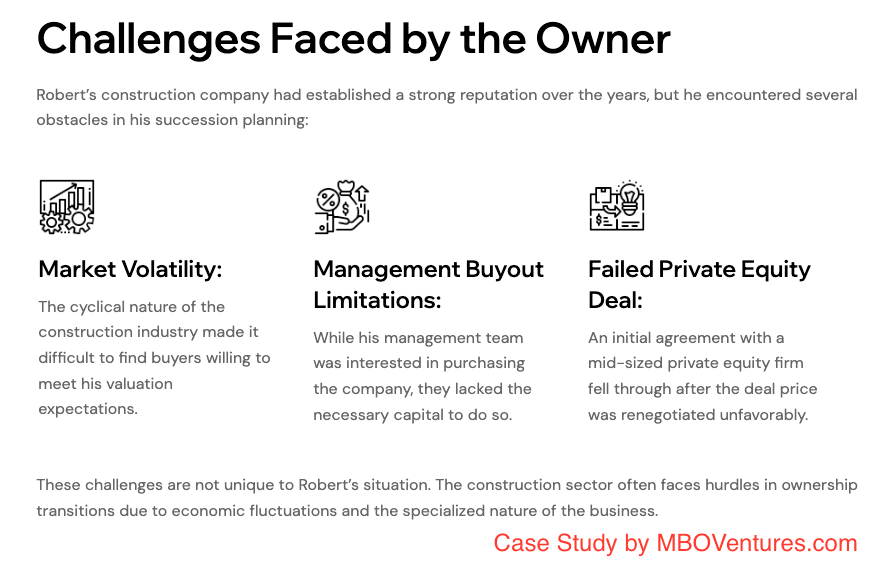
For construction companies, where projects run long, margins ebb and flow with material costs, and talent retention is hands down a major strategic concern, that kind of bespoke guidance matters. MBO understands that employee ownership isn’t just a financial engineering exercise. It’s a cultural shift. Their work includes thoughtful valuation modeling, financing structuring and hands-on planning so that a transition feels like a continuation of the business rather than a departure from its roots. Owners appreciate that the goal isn’t just a transaction. It’s an outcome that helps them stick around through transitional phases, support teams they’ve spent decades building and hand off something stronger than a spreadsheet projection.
Part of what elevates MBO’s role in construction ESOP planning is their ability to connect the dots between financial strategy and operational execution. They know that a successful ESOP requires more than just closing a deal. It needs clear communication with employees, rigorous valuation discipline and financing arrangements that align with how a construction business truly earns and spends money to get work done. That means factoring in working capital needs, equipment replacement cycles, bonding capacity and seasonal ebbs in demand. By thinking in terms of whole-company health, MBO’s advice often ends up delivering results that feel strategic rather than reactive.
And while tax incentives have long been a driver for ESOP adoption, MBO’s work ensures owners actually capture those benefits in ways that matter in practice. They help owners understand and leverage opportunities such as capital gains deferral and potential corporate tax exemptions in S corporation structures while standing up a plan that fits the company’s unique balance sheet and market footprint. That nuanced blend of financial, tax and operational planning makes them a go-to choice for many builders and contractors eyeing a transition.
Kroll

Next on the list is Kroll, a name most business owners associate with rigorous valuation and transaction advisory work. Their ESOP and ERISA advisory practice brings decades of experience in structuring transactions that require precise financial engineering and thoughtful consideration of regulatory realities. Construction companies considering an ESOP often face questions about how to value a seasonal backlog, how to model cyclical revenue streams or how to build lender confidence in a leveraged buyout context. That’s where Kroll’s expertise can be especially valuable. Their practices are built to guide companies through valuation, financing placement and fairness opinions, helping owners and trustees alike feel confident that every piece of the transaction holds up under scrutiny.
Behind the scenes they have worked on countless ESOP deals across industries, bringing a level of analytical depth that appeals to owners who want solid numbers and defensible strategies before moving forward. While they aren’t focused exclusively on construction, the firm’s pedigree in ESOP advisory positions them as a reliable partner when objective valuation and financing clarity matter most.
ButcherJoseph & Co.

Where ButcherJoseph & Co. finds its strength is in serving privately held firms that need clarity on ownership transition and capital strategy. Their work with ESOPs is one branch of a broader set of services that include traditional merger and acquisition advisory, capital placement and owner succession planning. They’re known for providing owners looking at an ESOP with detailed feasibility analysis and structuring support, helping leadership teams understand financing alternatives and whether an employee ownership path makes financial sense for them.
They understand that construction owners often juggle pressing operational needs while trying to plan for succession, and they help create frameworks that give leaders options without losing sight of how people and projects drive value. That blend of transactional savvy and owner-oriented planning has made them a respected choice for companies weighing multiple paths forward.
Stout

Stout’s presence on this list reflects a global advisory practice that brings robust analytical heft and a strong track record in ESOP work. They are well known for producing research that tracks ESOP company performance over time, offering owners practical insight into outcomes beyond the transaction itself.
Their services span valuation, transaction execution and capital markets guidance and jobsite monitoring all supported by a global network that brings both real-world data and deep sector knowledge to the table. For construction firms that want access to macro-level trends and downside analysis alongside transaction execution support, Stout stands out as a well-resourced advisor with a broad perspective on employee ownership outcomes.
Baird Capital

Rounding out the list is Baird Capital, a firm with investment and advisory capabilities that extend into ownership transitions. Although their work spans a range of corporate finance services, they have developed an advisory footprint that supports ESOP planning and integration with broader financial strategy. Baird’s strength lies in its ability to think like both a capital partner and an advisor, providing owners with insights into how employee ownership fits alongside broader growth and capital objectives. Their perspective can be particularly useful for companies thinking about how to balance financing, ownership transition and strategic growth all at once.
Wrapping Up
For construction companies that want to take a thoughtful path toward employee ownership and long term sustainability, the firm you choose to guide your ESOP origination matters. Each of the advisors above brings a strong set of capabilities to the table, but what sets the first entry apart is a commitment to blending strategic thinking with operational empathy and tailored execution. Construction is a practical business, with people, cash flow and real assets that demand attention in any financial strategy. Advisors who get that are the ones most likely to help leaders build exits that honor both the business’s legacy and its future.




