








We are designing an increasingly intelligent life. AI assistants are moving from our screens into our homes. Health technology is becoming continuous rather than episodic. Longevity, recovery and diagnostic technologies are migrating beyond medical environments. Hotels, residences, workplaces and retail environments are being asked to recognize us, understand us and eventually respond to us.
We talk enthusiastically about what all of this will make possible. We talk considerably less about what will power it and what happens when these new demands collide with infrastructure designed for another era. That collision is already underway.
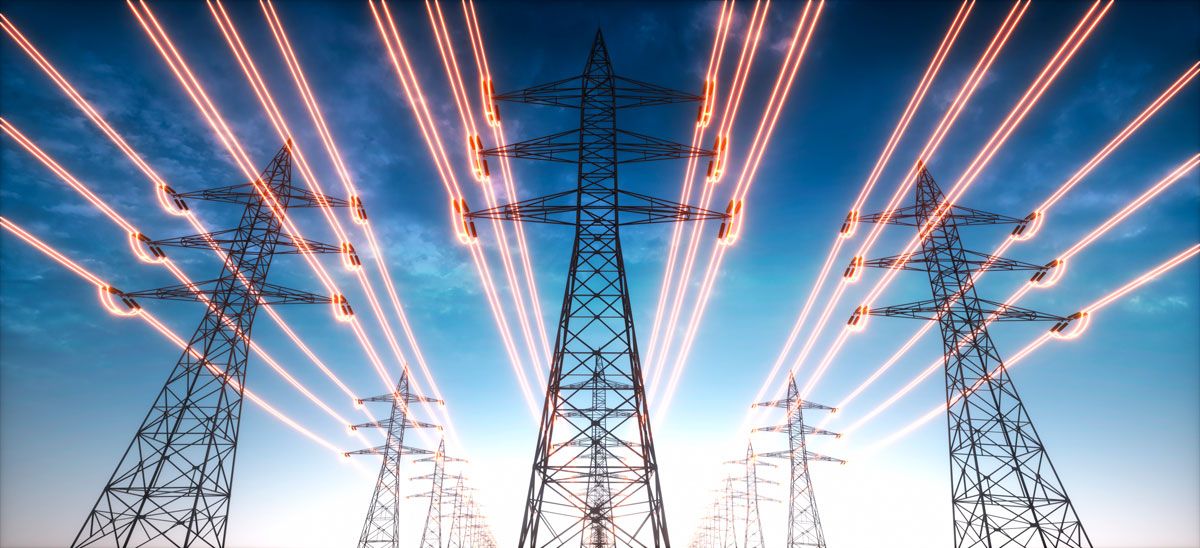
According to BlackRock Fundamental Equities, approximately 148 gigawatts (GW) of additional power capacity could be needed by the end of 2030 to satisfy U.S. data-center demand, compared with roughly 42 GW of power capacity consumed by data centers in 2025.
BlackRock calls the AI expansion a “once-in-a-generation industrial buildout”—one requiring not only semiconductors, equipment and data centers, but enormous amounts of power.
The International Energy Agency sees the same pressure globally, projecting electricity consumption from data centers to roughly double from 485 TWh in 2025 to around 950 TWh by 2030.
This may sound like an AI infrastructure problem. For those of us designing how people will live, travel, recover, work and experience brands, I believe it is also an experiential infrastructure problem.
Every Experience has an Infrastructure Requirement
The future we are imagining is not simply digital. It is intensely physical.
Sensors require power. Advanced air and water systems require power. Health and recovery technologies require power. Electric mobility requires power. Automated environments, robotics, intelligent lighting, environmental controls and the computing infrastructure connecting these systems require power.
As AI becomes embedded within these systems, we are no longer simply designing buildings containing technology. We are beginning to design computational environments, which require a different infrastructure conversation.
For much of the experiential economy, that conversation has happened outside of strategy, design and development. We designed the experience first and considered the infrastructure required to support it separately.That separation will no longer exist.
When Energy Becomes Capability
Imagine a property—or a collection of properties—capable of combining localized generation, battery storage, intelligent energy management and connection to the wider grid.
Energy is no longer simply something delivered invisibly from a distant utility or accounted for as an operating expense. It begins to become part of what the asset is capable of doing and the micro and macro implications.
That distinction has implications far beyond energy. The next generation may introduce another set of questions.How much energy can this site access or generate? How much can it store? What is its grid connectivity? Can generation and storage be expanded? Could multiple properties eventually participate in an interconnected energy network? Can the infrastructure support increasingly computational environments?
There are already signals of this change at the infrastructure scale. BlackRock notes that some data-center developers are reducing dependence on traditional grid infrastructure by building generation alongside compute—an approach commonly referred to as Behind the Meter or Bring Your Own Power (BYOP).
Today, that conversation is being driven largely by the enormous requirements of AI. Tomorrow, the underlying principle may become relevant to a much broader category of real estate.
“As AI and computational demand accelerate, energy capacity, generation and grid connectivity are beginning to shift from operating expenses to strategic assets. We believe properties that can control more of their energy future—through generation, storage and reliable grid access—will increasingly have an advantage as power becomes more constrained. For investors and developers, the opportunity is to begin thinking about energy infrastructure not simply as something that supports an asset, but as part of what that asset is capable of becoming.” — Mickey Payne, PFP, CFPA, President of Goldenbridge Investments, Inc.
The acquisition opportunity is worth watching. But from an experiential perspective, it raises an even more interesting question: What becomes possible because of the infrastructure beneath us?
 From Microenergy to Generative Environments
This is where microenergy infrastructure begins to change the way we think about the experiential economy. Imagine a residential development, hotel, longevity destination, retail district and mobility network participating in a localized energy ecosystem.
Now consider what increasingly sits on top of that infrastructure: health technology, longevity services, AI, mobility, hospitality, environmental intelligence and generative environments.
A microenergy hub therefore has the potential to become something much more consequential than an engineering solution. It becomes experiential infrastructure. Not a separate line-item consideration after the experience has been conceived, but part of the starting point for what the experience can become.
AI makes that relationship particularly interesting because artificial intelligence isn’t simply another amenity we will add to buildings. It will likely become an orchestration layer connecting systems that historically operated independently.
Imagine an environment capable of simultaneously interpreting occupancy, energy availability, weather, environmental conditions, consumer preferences, mobility, operational requirements and—where explicitly permitted—health or biometric information.
The implications extend beyond personalization. Most experiences today are built around predetermined scenarios. We anticipate what should happen and construct a journey around it.
Generative environments introduce another possibility; places capable of continuously composing experiences in response to changing human, operational and environmental conditions.
The environment doesn’t simply host the experience; the environment participates in creating it.
The Invisible Luxury
This is where infrastructure and luxury converge. Luxury has traditionally been extraordinarily good at making value visible and obvious. Architecture, materials, craftsmanship, service and access communicate their value immediately.
The future of luxury may increasingly be defined by environments and systems the consumer rarely sees. Luxury begins to include infrastructural confidence.
The consumer doesn’t need to understand the system. They experience its intelligence effortlessly. The environment responds, vehicles are charged, air is optimized and health and recovery services integrate naturally into the day. The infrastructure disappears while the experience it enables becomes more valuable.
This is the paradox of the next experiential era. As the infrastructure required to support our lives becomes more sophisticated, the consumer should have to think about it less.
This changes the brief for those of us designing experiences.
All of it has a physical requirement and an energy requirement. Therefore, those requirements cannot be separated from the experience itself.
Energy, computation and intelligence are becoming part of the experiential medium.
The experiential future may require more infrastructure than anything we have designed before.
The luxury will be never having to think about it.
Michelle Collins is founder and CEO of A Non-Agency®, a consumer experience marketing design consultancy based in New York.






