











As we strive toward a more sustainable future, the electrification of buildings has emerged as a critical component in reaching this goal. Building electrification is not a new phenomenon. It can be traced back to the 19th Century when Thomas Edison’s incandescent lightbulb was introduced and electricity was used to illuminate buildings, thus kicking off the concept of building electrification.
Fast forward 150 years later, and it’s clear that this concept has evolved two steps further. But the objective has changed and building electrification now aims to address contemporary challenges—the need to reduce greenhouse gas (GHG) emissions and improve building reliability.
To drive decarbonization, it is imperative to understand what fuels building infrastructure in cities across the country. The main driver of building GHG emissions comes from cooling and heating systems, which historically rely on fossil fuels such as natural gas, propane and fuel oils.
These legacy fuels deliver a substantial amount of total GHG emissions in the U.S. with some estimates exceeding 30% of total emissions. The objective is to phase out reliance on these fossil fuels quickly and carefully and replace equipment with more efficient, electric-driven components that leverage utility-scale clean power generation as the new source of fuel.
 Enabling Building Electrification
As such, the ability to scale building electrification is akin to other large-scale initiatives or adjustments and requires careful consideration.
To drive the reduction of GHG emissions, the transition to building electrification aims to replace building heating and cooling systems reliant on fossil fuels with electric alternatives. But this shift necessitates a robust and reliable power supply. It’s imperative to be mindful and carefully consider where the power supply will come from and how it will be transmitted.
The reality is that converting to electrification will put a tremendous strain on an aging transmission infrastructure; a system that is already under significant stress, impacted mostly by seasonal load adjustments (summer and winter). The transmission grid is an electrical superhighway and decarbonization and reliability goals will not be met without it.
To support the electrification of buildings and achieve these goals, the strain on the grid must be addressed. This involves streamlining cost allocations and permitting processes for new high-voltage direct current transmission lines. These lines are crucial for delivering much of the utility-scale green power to urban centers, thereby facilitating the broader adoption of building electrification.
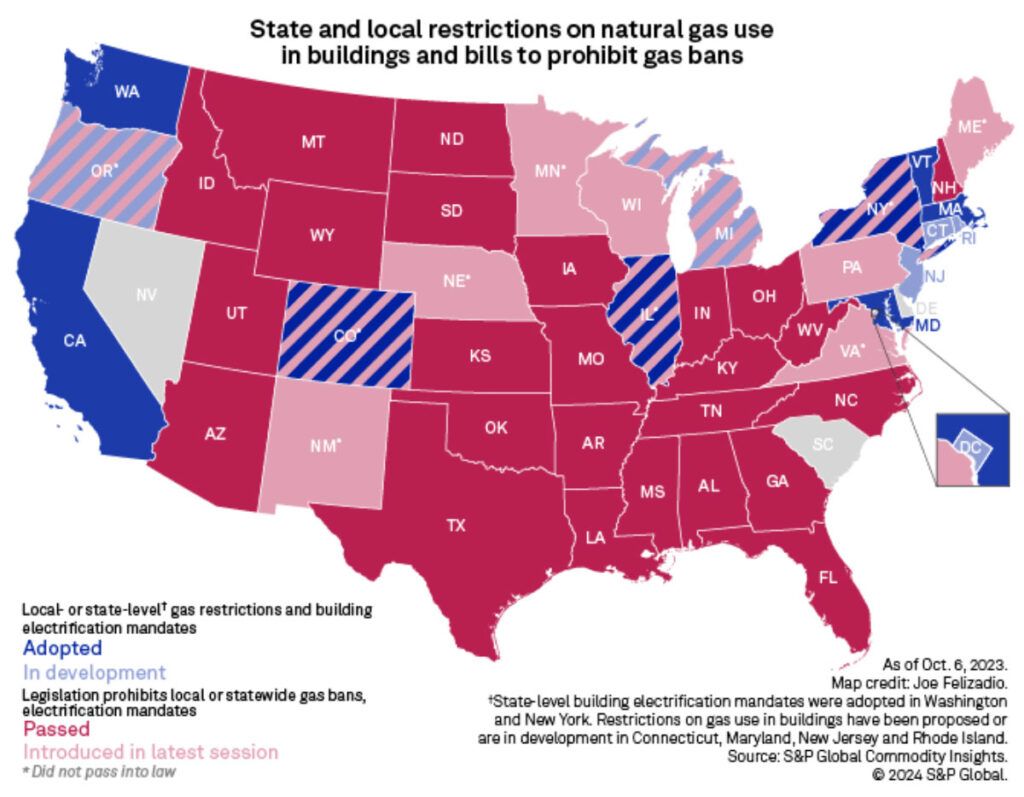
The economic aspect of building electrification is increasingly prominent, with several coastal cities leading the charge through regulations and building codes designed to reduce GHG emissions.
Notable examples include:
- New York City – As of 2024, Local Law 97 requires most buildings over 25,000 square feet to meet stringent energy efficiency and GHG emissions limits. These limits are expected to become even more strict in 2030, pushing building owners toward greater electrification and efficiency.
- San Francisco – The city has implemented ordinances that require commercial building owners to perform energy audits and adopt energy conservation measures (ECM). These ECMs not only contribute to electrification, but also offer energy and operational savings.
- Seattle – An early adopter of building electrification, Seattle implemented mandatory building tune-ups in 2016. This requirement delivers 10%-15% energy savings on average and focuses on the large portfolio of existing buildings within the city.
- Atlanta – Successfully launched its “Clean Energy Atlanta” plan in 2017 working toward achieving 100% clean energy resources to support its 8 million MWh of annual usage.
- Washington D.C. – To meet the city’s goal of driving GHG emissions down by 56% by 2032, D.C. took the initiative to lay out the 57 action items needed to align with its “Clean Energy D.C.” plan as it would be unrealistic to achieve these targets without tackling the district’s building impact on GHG emissions.
To align with these regulations, we’ve seen building operators factor in energy conservation and renewable measures into their building assets by installing solar panels, retrofitting HVAC systems, transitioning from gas to electric systems, upgrading to LED lighting and installing energy-efficient windows.
While these are all applicable options, focusing on building controls tends to be the appropriate starting point to understand the building consumption baseline and identify means of load management and load shedding measures. Taking this approach also targets low capital expenditure (CapEx) intensive options to drive cost and energy savings, especially when most building owners have some version of a building management or SCADA management tools.
Load management also drives savings for local utilities. Less demand allows utilities to minimize their CapEx spend on large infrastructure projects and redirecting capital to more urgent infrastructure improvement. Every kilowatt (kWh) saved goes a long way.
In addition to decarbonization, building electrification can also become a strategy to bolster building reliability, when done correctly. This can be achieved through the installation of Distributed Energy Resources (DERs). Various levels of DERs, ranging from microgrids and onsite battery systems to traditional solar rooftop installations, can empower building owners and stakeholders to generate, deliver and utilize clean and reliable power.
In some cases, DERs are capable of bi-directional power flow; a capability that allows owners to feed excess power back into the grid, providing relief to an already strained electric distribution network. By doing so, asset owners can create a closed loop system, independent from the distribution grid during natural disasters or extreme temperature conditions.
Electrification goes beyond lowering GHG emissions and improving reliability. The Rocky Mountain Institute has conducted studies which drive better air quality and safety, especially when it comes to low-income communities.
Scaling these climate technologies would significantly improve health conditions for many who have not been able to benefit from the electrification initiatives by lowering air pollution. There also could be a decrease in gas leaks and carbon monoxide exposure driving toward a safer environment.
Considerations and Professional Expertise
Partnering with experts in the field can greatly assist in navigating these regulations. Organizations can offer valuable support in implementing these solutions, ensuring compliance and achieving sustainability goals.
There are several points to consider when evaluating building electrification, within and external to the building. Understanding the building energy profile is critical, but having insight into the local market and local power providers becomes just as important when planning any type of electrification activity.
This includes utility coordination, future electrical infrastructure building out which may benefit or impact your building and maximizing city, state and federal incentives drive the most optimal ROI.
Firms like Bureau Veritas can support building owners with the necessary subject matter experts and technical expertise to provide this type of insight from the early planning stages all the way through construction and commissioning. These partnerships enable building owners to de-risk their portfolio and ensure projects stay on track and on budget.
The Future of Building Electrification
Building electrification represents a pivotal shift towards a more sustainable and reliable future. As the call to mitigate environmental impact becomes more top of mind, this transition can guard buildings and investments against regulatory risks and market shifts.
By understanding and addressing the challenges of infrastructure, economics, and compliance, stakeholders can drive meaningful progress in reducing GHG emissions and enhancing building performance. It is crucial to remain adaptive and proactive, ensuring that practices contribute positively to our climate goals and the overall resilience of our infrastructure.
Riad Habib is a Senior VP of Building & Infrastructure at Bureau Veritas North America. He leads a variety of North American businesses in a range of CAPEX and OPEX project support services, including program management offerings. These services commence from the early due diligence phases, through engineering support, project and construction management and through commissioning and closeout.






