









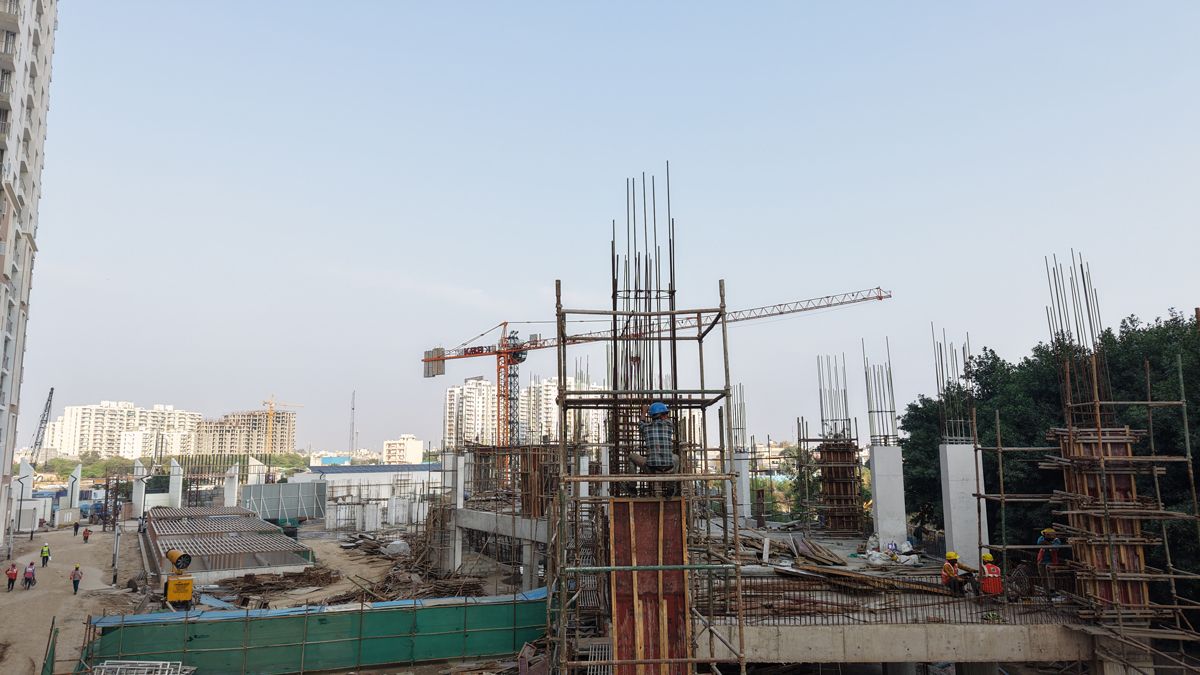
The construction industry finds itself at a crossroads. Despite being responsible for nearly 40% of global carbon emissions and generating over one-third of the world’s waste, it continues to operate predominantly on a linear model—extract, use and discard. As the world undergoes rapid urbanisation, this approach becomes increasingly unsustainable amid growing resource scarcity, overflowing landfills and stricter environmental regulations.
This is where the circular economy principles come to the forefront, offering a practical solution for the construction sector to reduce its environmental footprint while creating economic value through resource optimisation.
And this is not just about sustainability: Rising material costs, stricter waste regulations and growing consumer demand for green infrastructure also are making circular construction a smart business strategy. But how can the construction sector realistically transition from its traditional waste-heavy model to a circular one?
The answer lies in rethinking materials, design approaches and waste management strategies, all while fostering collaboration between developers, policymakers and key players in the industry.
 Rethinking Material Flows
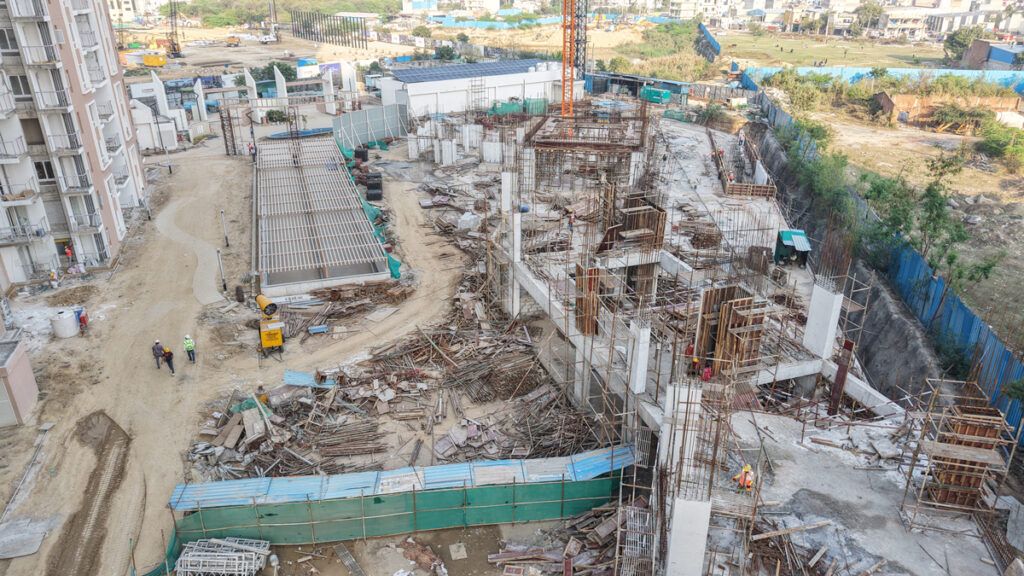
The transition to circular construction begins with materials. Concrete, steel and aluminium—staples of construction—are resource-intensive and carry substantial carbon footprints, contributing 12% of global greenhouse gas (GHG) emissions collectively. Innovations like Holcim’s Susteno cement in Switzerland, which integrates 20% recycled demolition waste and reduces emissions by 38%, show how circular material strategies can scale.
Similarly, the EU’s Circular Economy Action Plan mandates that 70% of construction waste be recycled by 2030, driving demand for secondary aggregates in projects like the HSG Learning Centre. There are opportunities to improve by reducing reliance on virgin materials through recycling and reuse.
Urban mining also offers a practical solution, particularly relevant to Asia and Africa’s rapidly redeveloping urban centres. By treating old buildings as material banks rather than waste sources, developers can recover valuable resources. Crushed concrete from demolished structures can replace virgin aggregates in new construction, while recovered steel and aluminium can be reprocessed or directly reused when designed for disassembly. Specialized mining equipment adapted for urban environments enables efficient extraction and processing of these materials on-site.
In China, Shanghai’s Urban Mining Park processes 3 million tonnes/year of construction debris into recycled concrete aggregates, reducing virgin material extraction by 40%.
The construction sector may also benefit from leveraging locally available alternatives to traditional materials. Fly ash from thermal power plants and ground granulated blast-furnace slag (GGBS) from steel manufacturing can replace portions of cement in concrete, reducing CO₂ emissions by up to 40% in the Indian context.
These industrial byproducts are abundantly available but remain underutilised. Similarly, agricultural waste like rice husk ash can be incorporated into building materials, addressing both construction needs and agricultural waste management challenges.
Designing Buildings for Their Entire Lifecycle
Circular construction extends beyond materials to how buildings are conceptualised from the outset. Rather than designing structures as permanent, single-purpose assets, buildings can be conceptualised and treated as dynamic systems designed for adaptation and eventual disassembly.
Modular and prefabricated construction methods, slowly gaining traction in India’s urban centres, support this approach. Components manufactured off-site reduce construction waste by up to 50% through precise material utilisation. These elements can be designed for disassembly (DfD), replacing permanent adhesives with mechanical connections like bolts and interlocking joints that allow clean separation of materials.
The Circular Building at Arup, UK, was designed entirely for disassembly, with no welded joints or adhesives, ensuring that every component can be repurposed in future constructions. Such principles are particularly valuable in countries with a rapidly evolving urban landscape, where land use patterns change quickly and buildings often require adaptation to new uses.
On a broader scale, the EU’s Level(s) framework mandates life-cycle assessments for all public buildings, while France’s RE2020 regulation requires 50% bio-based materials in new housing. Japan’s 2023 Circular Economy Promotion Act imposes 30% recycled content mandates for structural steel, driving innovations like JFE Steel’s slag-based cement alternative.
 Practical Implementation of Circular Principles
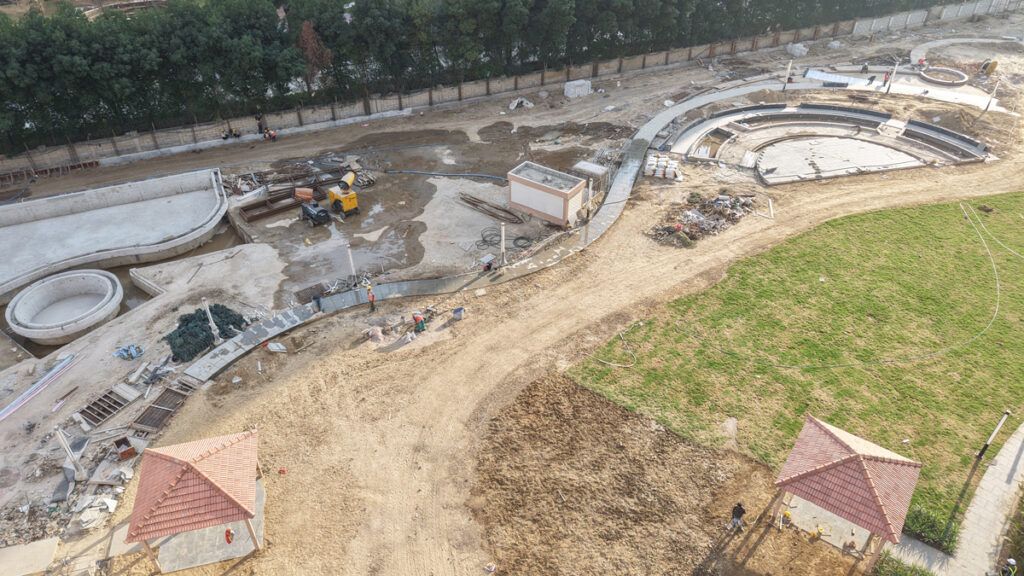
Construction companies already have started implementing circular economy principles, albeit in varying capacities. Approaches include repurposing construction debris to refill sunken areas and processing concrete waste for reintegration into new construction or roadworks.
Some have implemented systems to recover reinforcement steel scrap for manufacturing precast components and replaced single-use wooden formwork with reusable aluminium shuttering systems. Through partnerships with recycling facilities, construction waste is being converted into insulation, sustainable bricks and other building materials.
These measures demonstrate that circular practices can generate significant cost savings—reducing landfill disposal expenses while creating material reuse opportunities.
The Road Ahead for Sustainable Construction
For circular construction to become mainstream practice, coordinated efforts across the industry are essential. Material tracking systems represent a fundamental enabler of circularity. Digital documentation of building components through “material passports” can ensure valuable resources remain identifiable throughout a building’s lifecycle, facilitating eventual recovery and reuse.
Policy support is equally important. In India, the Construction and Demolition Waste Management Rules, introduced in 2016, provide a framework but implementation remains inconsistent. State governments and urban local bodies can strengthen enforcement while introducing incentives for waste reduction and material recovery. Public procurement policies that mandate minimum percentages of recycled content in infrastructure projects would create reliable markets for recovered materials.
This already has been implemented at the policy level globally, be it the Netherlands’ 2050 circular economy target and their launch of a in $290-plus million Circular Construction Economy Accelerator fund, coupled with 85% construction waste recycling through centralised urban mines in Rotterdam and Amsterdam. Or 12,000 homes built using 60% recycled materials from informal settlements.
Financial institutions have a key role to play. Green financing incentives for projects incorporating circular principles would accelerate the adoption of the same.
Transforming Construction for a Sustainable Future
For construction companies, it is beneficial to view these steps as not just an environmental necessity but as an opportunity for growth. As resources become constrained and environmental regulations tighten, companies that pioneer circular approaches will gain competitive advantages.
The transformation requires collaborative effort across the value chain—developers, contractors, material suppliers, and policymakers must work together to establish new standards and practices. The industry must move beyond viewing buildings as temporary assets to understanding them as material banks for future construction.
From Tokyo’s timber skyscrapers to Brazil’s plastic waste concrete, the blueprint for a regenerative construction sector exists—its global implementation now hinges on aligning policy, finance and innovation.
Rahul Bahl is Managing Director of Krishna Buildestates Pvt. Ltd.






