










Construction and renovation companies are under constant pressure to operate efficiently across multiple job sites and branches, yet many organizations still rely on fragmented processes, siloed data, and manual communication to manage their fleets. This disconnection results in inconsistent reporting, limited visibility, unnecessary downtime, and runaway operational costs. And, as organizations grow, the tools and workflows that once felt sufficient can quickly become barriers to scale.
Companies that thrive are those that unify their fleet operations through standardized processes, centralized data, actionable insights, and real-time collaboration. Multi-location businesses like Creative MultiCare and R.T. Moore have been able to reclaim efficiency and cost control by centralizing their fleet management under a single system. Their experiences provide a roadmap for construction and renovation leaders seeking to modernize distributed fleet operations.
Core Challenges: Fragmented Processes and Limited Visibility Across Branches
When fleet assets are spread across dozens or even hundreds of sites, decentralized processes often create major operational burdens, including:
- Inconsistent data entry and reporting
- Delayed or inaccurate maintenance records
- Fuel and expense tracking managed locally with no oversight
- Communication gaps between branches and field teams
- Difficulty enforcing compliance or holding teams accountable
For construction-adjacent companies, these issues compound quickly. A single breakdown or missed inspection can delay project timelines, eating up resources and negatively impacting client relationships. Unmonitored fuel or maintenance spend can erode margins, and a lack of real-time asset visibility makes it nearly impossible to forecast needs or optimize utilization. The companies highlighted below faced these challenges directly and overcame them by unifying their operations.
Creative MultiCare: Controlling Costs through Robust Fuel and Maintenance Tracking
Creative MultiCare, a rapidly growing property services company, expanded operations a cross multiple regions, but with that growth came escalating fuel spend, inconsistent maintenance practices, and difficulty tracking where dollars were going. Branch-level spreadsheets and manual communication made it nearly impossible to track total cost of ownership (TCO) or identify inefficiencies. “Every day, receipts were lost. We’d wait for paper from field offices, and sometimes it just never showed up,” explains David Bernier, Fleet Manager. “We had no accurate way to track spend or detect fraud until it was too late.” The company wanted a maintenance-forward platform that their fuel data could flow directly into, so they could get accurate asset TCO. After finding a solution that matched their needs, they were able to gain transparent, consolidated visibility into all fuel transactions while streamlining maintenance workflows to reduce delays and surprise expenses. The combination provided the company with more consistent cost control, allowing leadership to compare spend across regions, and allowed for better forecasting, enabling the team to plan effectively as the organization scales.
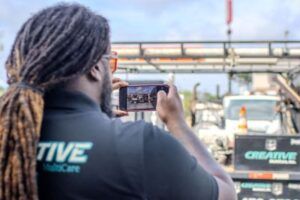
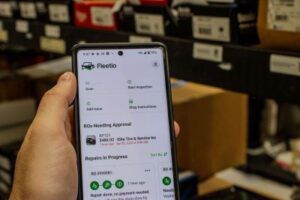
Images Courtesy of: Fleetio
R.T. Moore: Strengthening Accountability and Communication Across Regional Teams
R.T. Moore, a plumbing, HVAC, and engineering contractor with operations across multiple states, struggled with communication breakdowns between field teams, shop technicians, and managers. Without asset visibility and clear communication channels, maintenance requests were easy to lose, and equipment availability wasn’t always known. Our [previous] fleet management system […] wasn’t really a system at all,” says Alex Kennedy, Fleet and Safety Manager. “It was pretty manual, I would say—paper-based, spreadsheets ,spread out across a bunch of different people.”
Kennedy realized that with as large of a company as R.T. Moore was, they needed a more centralized system that would allow more visibility with less effort. The company implemented a digital solution that could collect data from multiple sources while providing data standardization and consistency. This resulted in improved collaboration between field operators and shop technicians, clear, trackable maintenance requests, increased accountability, and more reliable equipment availability that helps ensure teams stay productive. “With [our fleet solution], we’re able to collaborate just like we’re next door,” says Kennedy. “We have a healthier operation than we’ve ever had before, because of the organization [it]provides.”
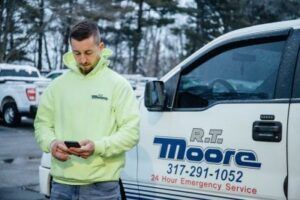

Images Courtesy of Fleetio
Strategies for Improving Distributed Fleet Management
Across all three companies, the same themes emerged, revealing a clear framework for organizations managing fleets across multiple sites.
●Standardize: Create uniform workflows for inspections, maintenance, compliance checks, and reporting. Standardization prevents branch-to-branch variability and ensures that leadership can trust the data being used to make decisions.
●Centralize: A centralized fleet solution provides standardization consistency around fuel spend, maintenance activity, asset locations, and lifecycle performance. This eliminates information silos and empowers leaders with accurate insights.
●Collaborate: When field operators, technicians, and managers communicate within the same platform, issues are resolved faster. Transparency also drives accountability, reducing delays, missed maintenance, and miscommunication
In an 2025 fleet survey, respondents reported their digital fleet solution helped them save more than 10 hours in data entry, achieve a 75-90% on-time maintenance compliance rate, and improve inspection, maintenance, and asset visibility across 10+ sites.
For construction and renovation companies, fleet performance directly impacts productivity, project timelines, and profitability. As operations expand, the pitfalls of decentralized processes grow exponentially but, as Creative MultiCare and R.T. Moore demonstrate, with centralized systems, standardized processes, and real-time collaboration, companies can build an infrastructure that supports long-term growth.






