










Skanska has reached a major construction milestone at Virginia Tech, celebrating the topping out of Mitchell Hall, a new academic and research facility that will become the largest building in the university’s College of Engineering.
The 285,500-square-foot, five-story building in Blacksburg, Virginia, will expand the college’s footprint by more than 70% on the existing site while creating new classrooms, instructional laboratories and research space for aerospace and ocean engineering, chemical engineering, mechanical engineering, computer science and engineering education programs.
“Every person on this team has brought remarkable skill and dedication to Mitchell Hall, and that commitment shows in what we’ve built so far,” said Mark Balling, Executive VP and GM for Skanska’s Mid-Atlantic region. “We’re honored to deliver another facility for Virginia Tech that represents a bold step forward not just for today’s students and faculty, but for the many generations that follow.”
One of the project’s most distinctive features is its integration around one of the nation’s largest university-owned wind tunnels, which is being preserved within the footprint of the new building. The project also improves campus accessibility by adding a new ADA-compliant pedestrian pathway.
Construction has progressed steadily since groundbreaking, with crews placing more than 18,300 cubic yards of concrete, installing 2,600 tons of reinforcing steel and logging approximately 300,000 work hours, including 162,000 hours by the concrete subcontractor alone.
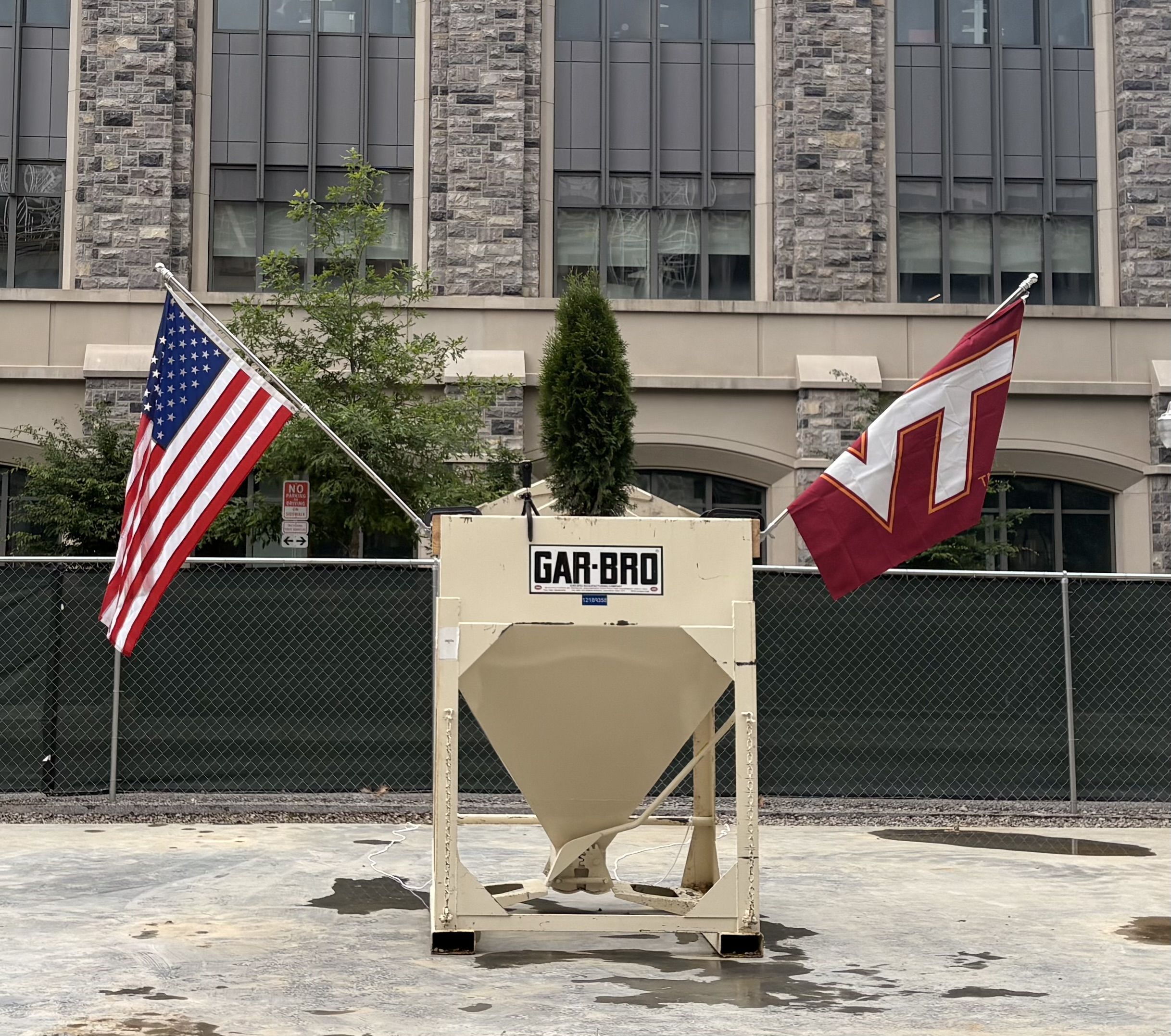
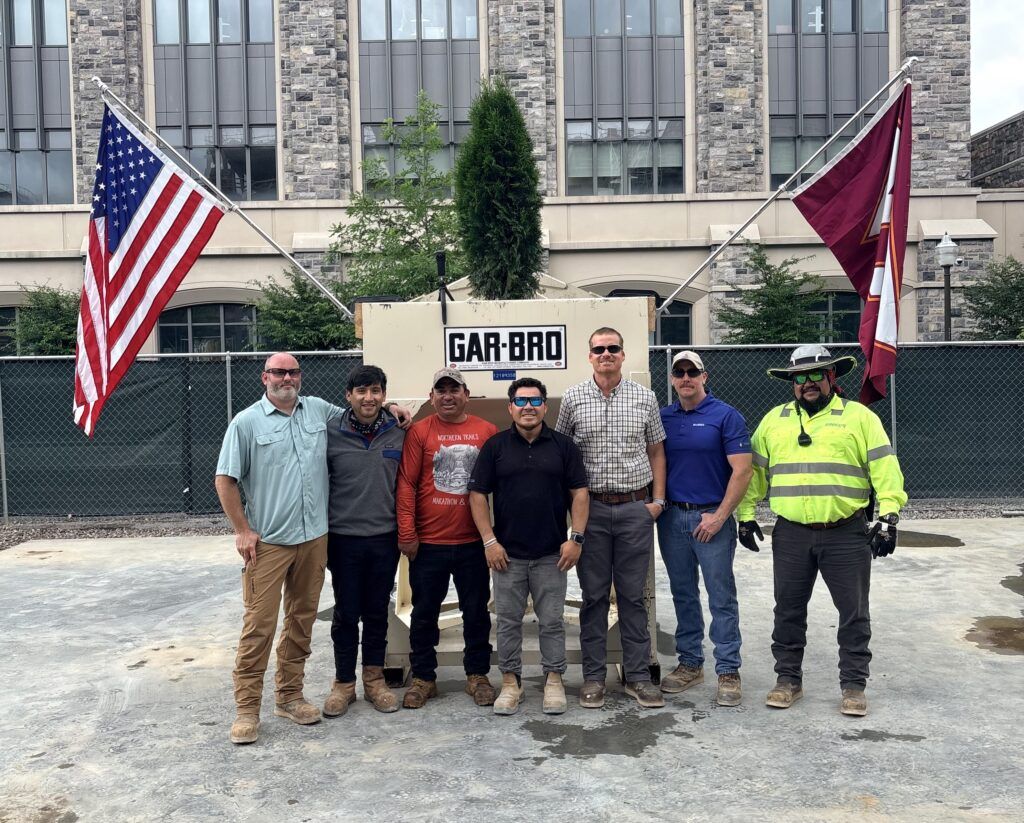
The topping-out ceremony featured Mitchell Hall namesake Norris Mitchell and his wife, Wendy, alongside representatives from Virginia Tech, Skanska and project trade partners. Together, they raised a ceremonial concrete bucket to the top of the structure, recognizing the collaboration behind the milestone.
Mitchell Hall continues Skanska’s growing portfolio at Virginia Tech. The company completed the Undergraduate Science Laboratory Building in 2025 and the addition to the Fralin Biomedical Research Institute in 2020.
Construction on Mitchell Hall is expected to be completed in winter 2028.






