








Coordinating Interior Buildouts and Furniture Installation Early
Coordinating interior buildouts and furniture installation early helps prevent delays during the final stages of office projects. When construction and fit-out teams work separately, projects often face delays and unnecessary rework. Involving office furniture installation services early allows better alignment with layouts, power planning, and accessibility requirements.
Industry guidance from FourSpoke notes that professional installers oversee every phase of commercial furniture installation. They coordinate across hundreds of manufacturer product lines to ensure each component is assembled and finished correctly.
Early coordination improves quality control and reduces punch-list issues. It also helps offices become fully operational faster after construction is complete.
Designing for Performance Through Materials and Systems
Designing for performance requires careful selection of materials and building systems. These choices directly affect comfort, efficiency, and long-term usability. Lighting systems should reduce glare while supporting different work tasks. Acoustic materials help control noise and improve concentration in shared spaces.
HVAC systems must maintain consistent temperatures across changing occupancy levels. Durable flooring and wall finishes support heavy daily use without frequent repairs. Energy-efficient materials also help lower operating costs over time.
When systems and materials work together, offices perform more reliably. This approach supports employee comfort while ensuring spaces function effectively throughout the workday.
Ensuring Practical Use Through Durable and Maintainable Finishes
Ensuring practical use through durable and maintainable finishes helps offices perform well over time. High-traffic areas require materials that resist wear and simplify routine maintenance. Durability reduces frequent repairs and limits disruption to daily operations.
Aligning Office Design With Business Operations
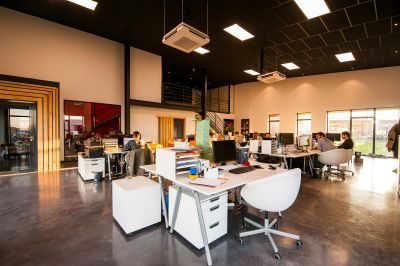
Aligning office design with business operations helps workplaces support how teams actually work each day. Layout choices influence movement, collaboration, and decision-making across departments.
Research published on ResearchGate shows that physical workplace layout directly affects communication patterns and interpersonal interactions. These factors play a critical role in team cohesion and productivity. Open-plan offices were once viewed as ideal for collaboration, but often increase distractions. They can also reduce privacy and limit focused work.
Modern office design now blends open areas with private spaces. This balance allows employees to collaborate while maintaining focus, improving overall workplace performance.
A study published in SageJournals shows that many sustainable materials emit low levels of volatile organic compounds. Lower VOC emissions contribute to healthier indoor environments for building occupants. This matters because poor indoor air quality can negatively affect employee health and well-being.
Using low-VOC paints, formaldehyde-free insulation, and non-toxic finishes supports cleaner air. These choices improve long-term usability while maintaining safe and comfortable workspaces.
Supporting Flexibility in Evolving Workplace Environments
Modern offices are being used differently throughout the week, requiring spaces that can adjust without disruption. Offices must respond to changing attendance levels without constant redesign.
A recent Gallup study shows hybrid work is slightly declining across the U.S. workforce. The share of remote-capable employees working hybrid dropped from 55 percent to 51 percent. During the same period, fully on-site work increased by two percentage points. Hybrid employees now spend about 46 percent of their workweek in the office. That equals roughly 2.3 days onsite each week.
These patterns require adaptable layouts that support fluctuating occupancy. Flexible design helps offices remain efficient, relevant, and comfortable.
Managing Construction Phasing to Minimize Business Disruption
Poorly planned phases can interrupt workflows and reduce productivity. Effective phasing breaks projects into manageable stages. This allows work to continue in occupied areas safely. Clear schedules help teams coordinate noisy or disruptive tasks. After-hours or weekend work can further reduce interruptions.
Temporary access routes and signage support employee movement during construction. Communication is also critical throughout each phase. Employees should understand timelines and temporary changes. When construction is carefully phased, businesses experience fewer disruptions while projects move forward efficiently.
Frequently Asked Questions
What approvals are usually required before office renovations begin?
Office renovations usually require building permits, zoning approvals, and code compliance reviews from local authorities. Landlord approval is often required for leased spaces. Projects may also need fire safety, accessibility, electrical, and mechanical approvals before construction begins.
What common mistakes cause office projects to go over budget?
Office projects often go over budget due to poor planning, unclear scope definitions, late design changes, and underestimated material costs. Inadequate coordination between teams, unexpected site conditions, and delays in approvals can also increase expenses and extend project timelines.
When is it better to renovate rather than relocate an office?
Renovation is often better when the current location supports business needs, leases remain favorable, and structural systems are sound. Updating an existing office can reduce costs, limit downtime, and preserve employee familiarity while improving functionality and performance.
Building Offices That Work for Today and Tomorrow
Creating an office that balances design, performance, and practical use requires thoughtful planning at every stage. As in-person work becomes more consistent, offices must support daily operations without sacrificing comfort or efficiency. Aligning design with business needs, coordinating installations early, and selecting durable materials all contribute to better outcomes.
Flexible layouts and well-planned construction phasing help offices adapt while minimizing disruption. When these elements work together, the result is a workspace that performs reliably, supports employees, and remains functional as workplace expectations continue to evolve.






