










As the world becomes more interconnected and dependent on digital infrastructure like cloud computing and artificial intelligence, data centers are playing an increasingly vital role. They serve as the backbone for innovations across various sectors, including healthcare and finance.
The demand for data centers is increasing rapidly. Industry projections show continued expansion as businesses and consumers rely more heavily on digital tools. By 2027, global data center power demand is expected to grow by 50%, with forecasts suggesting an increase of up to 165% by 2030.
This rapid acceleration brings new challenges—from power availability to the need for more thermally efficient building design. Developers are being tasked with constructing facilities that can meet today’s needs while being able to adapt to rapid advances in the future.
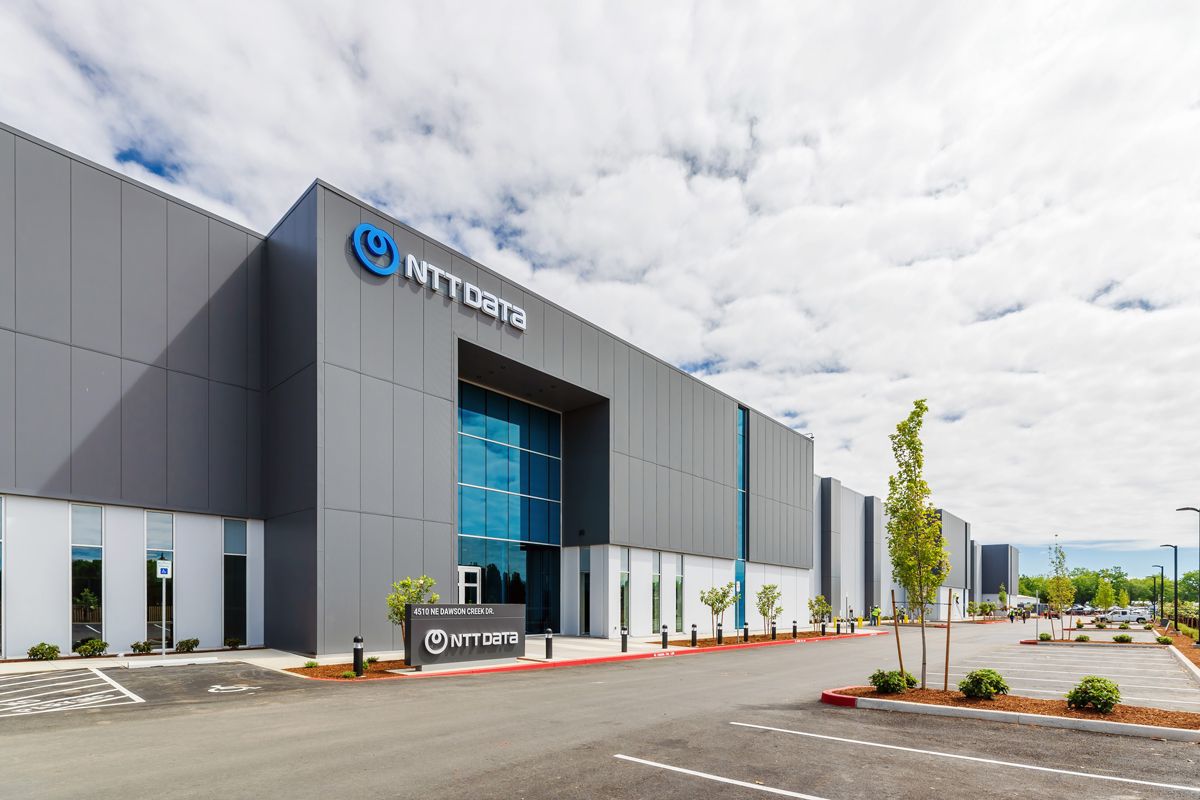
In Hillsboro, Oregon, NTT Global Data Centers Americas—one of the largest data center providers worldwide—responded to this need with the HI2 Data Center, part of a larger 47-acre campus expansion designed to support the growing demands of the digital economy.
The construction of data centers has long faced the challenge of balancing quick project timelines with the technical demands of the building. NTT built the HI2 Data Center to serve as a high-capacity hub for data storage and processing. The facility’s design incorporated construction materials and methods that allowed for high speed of build while addressing its operational and aesthetic needs.
 Meeting Tight Timelines
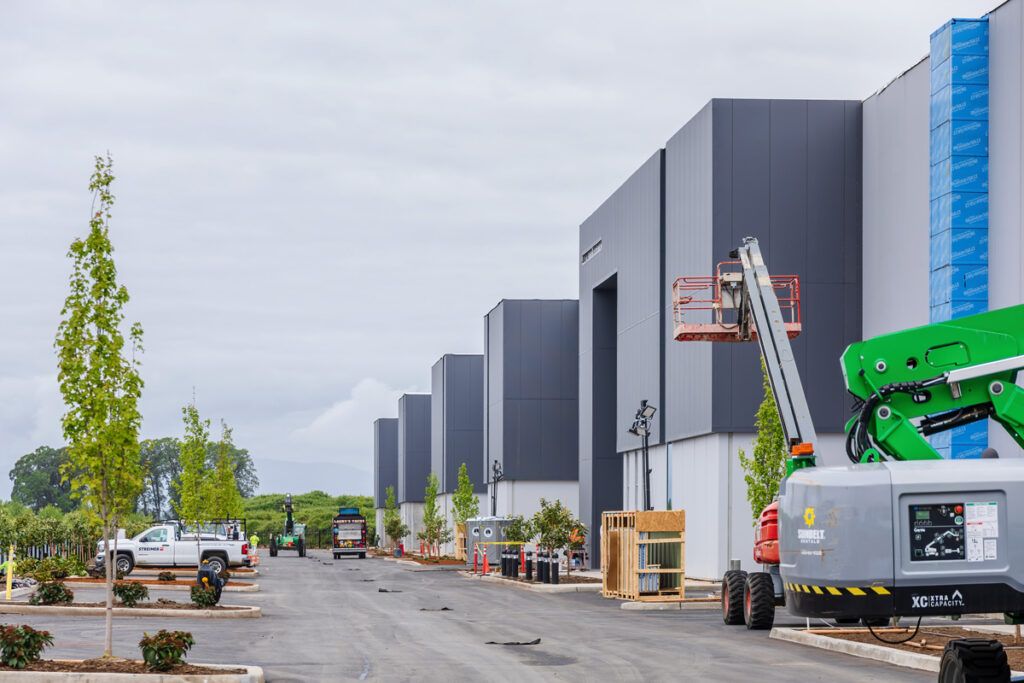
One of the significant challenges in data center construction is the need to expedite timelines while maintaining the quality of the building. Traditional methods often require multiple contractors to handle different components of the building envelope, leading to complex coordination efforts, but in this case, insulated metal panels (IMPs) helped simplify this process.
IMPs are a building product consisting of two metal skins with foam insulation sandwiched in between. They are prefabricated, single-component systems that can shorten construction schedules and sequencing compared to traditional concrete walls. For the HI2 Data Center, this meant that a smaller crew could install the building’s exterior shell, reducing the time and coordination required during construction.
In the data center industry, time is money. The faster a facility is completed, the sooner it can start generating revenue. For instance, IBM’s data center revenue reached $4.26 billion in the last quarter of 2024, according to Motley Fool.
Additionally, some operators and owners report that large data centers can earn anywhere from $1 million per week to $1 million per day once fully operational. Delays in construction and operationalization mean delayed returns, making it crucial for these projects to be completed quickly to stay competitive as demand continues to rise.
IMPs offered a significant time advantage over alternative materials like precast concrete due to their shorter lead times. While precast concrete can take 6-12 months, especially in high-demand areas, IMPs can be ready in as little as three months, including manufacturing.
Precast concrete can also face delays due to unpredictable weather and the need for extra on-site labor and trades to finish the jobs. IMPs streamlined the installation process, allowing the project to stay on schedule while still meeting the specifications required for a facility of this scale.
Thermal Efficiency
The HI2 Data Center needed to maintain stable internal conditions to ensure the safety and performance of its equipment. This is where the role of the building envelope becomes critical.
The IMPs on the building provide a thermal barrier that reduces the need for additional insulation systems. With their continuous insulation core and R-values of up to 8.0 per inch, IMPs minimize thermal bridging and prevent heat loss with lighter-weight material than traditional concrete wall systems. When installed correctly, this allows IMPs to provide four layers of protection – air, water, vapor and insulation—all on their own.
 Aesthetic Appeal
While performance and thermal efficiency are at the core of any data center design, aesthetic appeal has become an increasingly important consideration in modern construction.
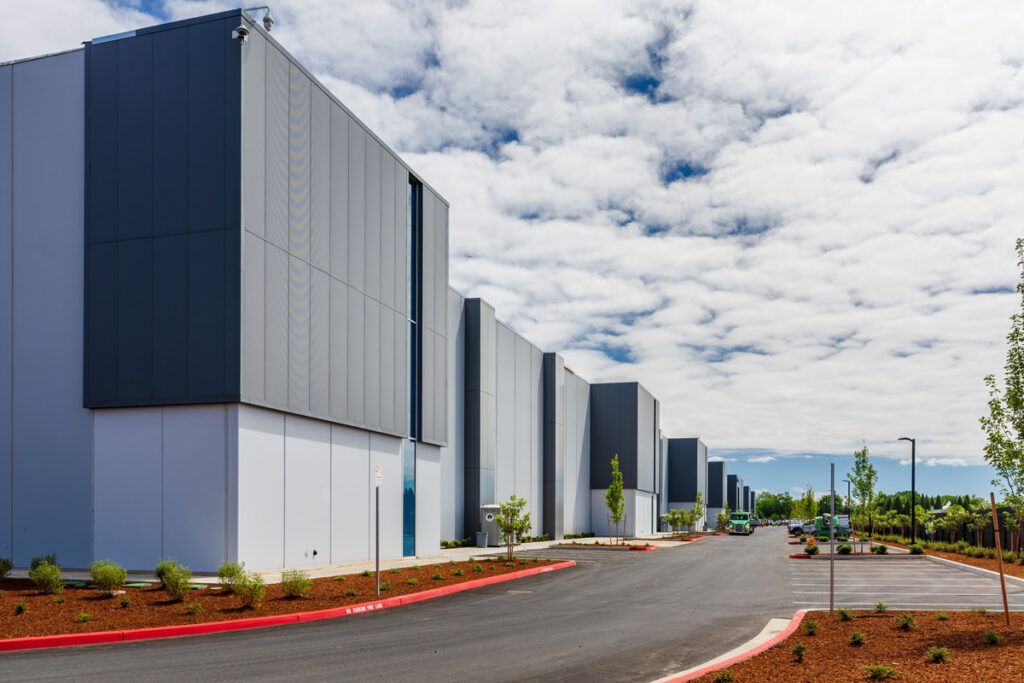
For the HI2 Data Center, nearly 31,000 square feet of IMPs were used to deliver both strong thermal performance and a sleek, contemporary appearance. The panels’ vertical orientation and finely ribbed profile create clean lines that enhance the structure’s visual identity, giving it a polished, professional look.
Beyond form, color customization also plays a role in aligning design with brand and environment. The HI2 facility features a custom silver finish paired with lighter gray tones, offering a refined contrast that evokes modernity and precision. These design choices demonstrate how modern data centers can marry performance with architectural sophistication.
The HI2 Data Center in Hillsboro serves as a model for how modern data centers are built. As the demand for data storage and processing continues to rise, the use of IMPs in projects like HI2 highlights how material choices can influence the speed, performance and design of data center construction. By providing an efficient and aesthetic solution, IMPs are helping to shape the future of digital infrastructure in a rapidly evolving industry.






