









It may sound odd to compare general contracting to conducting an orchestra, but both enterprises require precise sequencing and coordination to meet performance goals. Timing is especially crucial when the client is a manufacturer because any lost time is lost money.
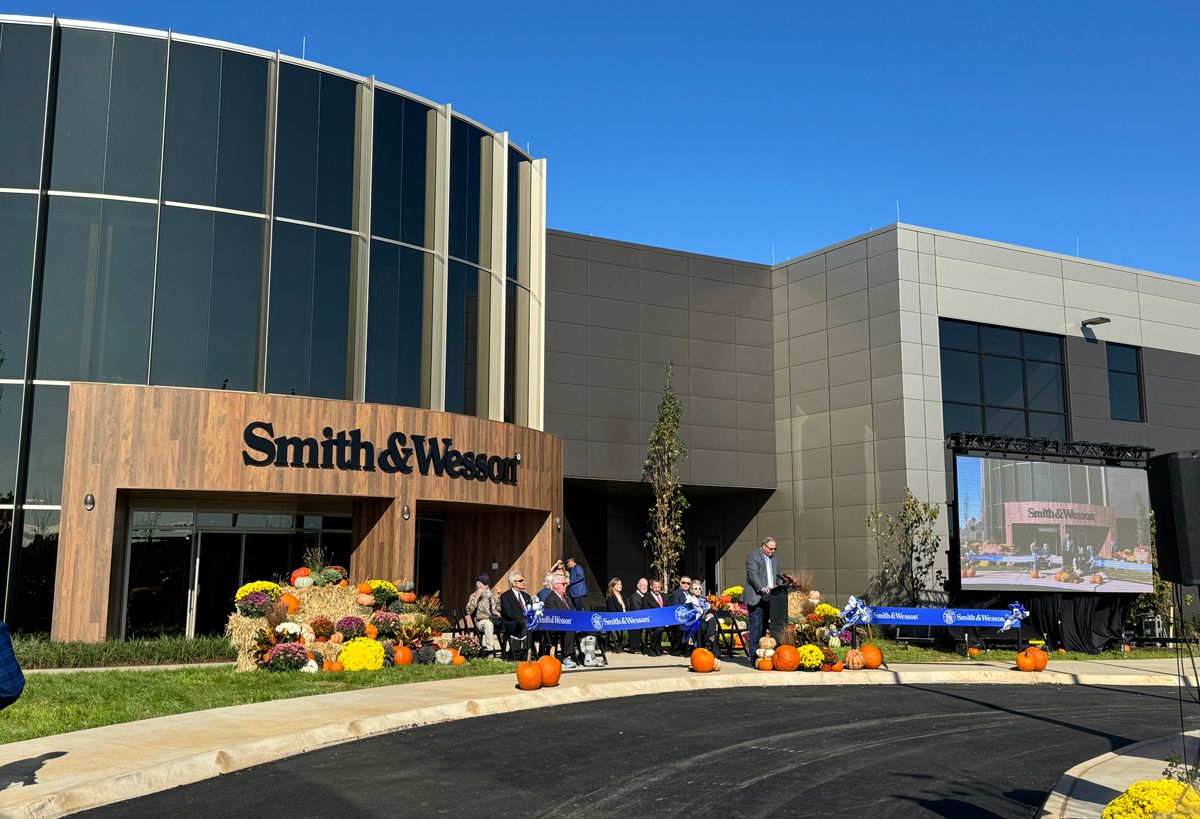
For the construction of the $120 million Smith & Wesson manufacturing plant and corporate headquarters in Maryville, Tennessee, the contracting team used diligent planning and procurement methods to meet a formidable turnover timetable so the manufacturer could start staging equipment inside the 620,000-square-foot facility while construction was still underway.
If they had waited until completion before Smith & Wesson could bring in equipment, it would have been another year before the manufacturing plant was operational.
The team understood this goal completely, but it still presented challenges as there were supply chain issues with electrical components and the facility had recently just been enclosed. The team was still running sprinkler lines and electrical when we coordinated with the client to install conveyor belt and pallet racking systems within a year of breaking ground.
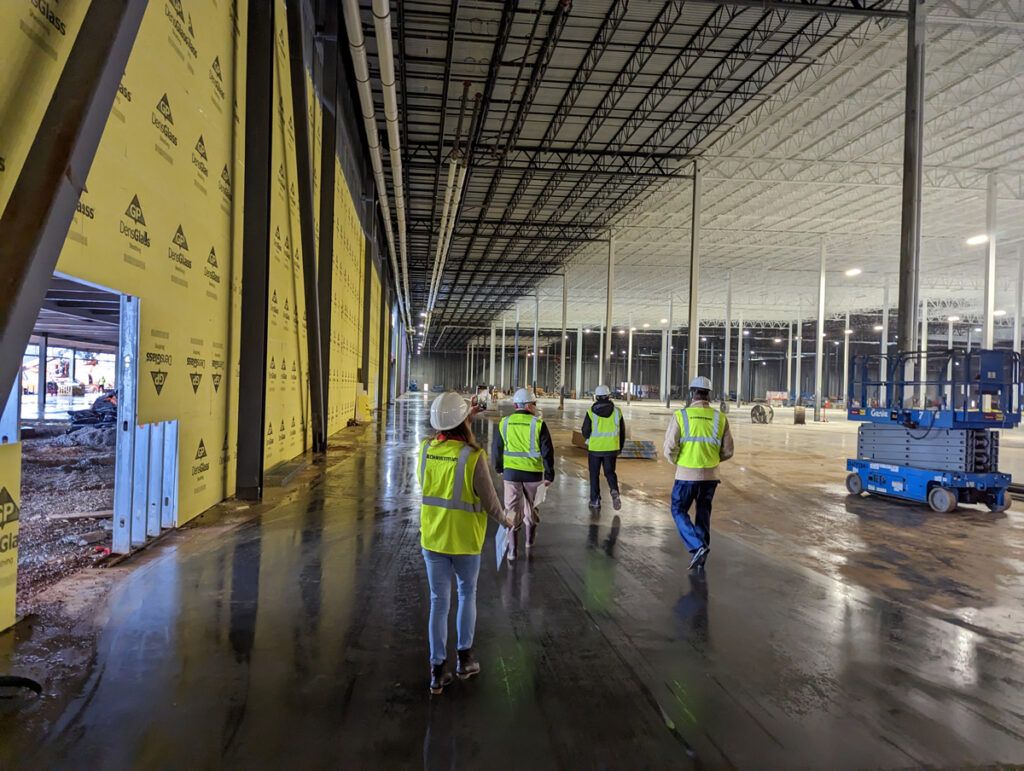 The Christman team ended up resequencing quadrants so that, for example, overhead work would be complete in areas of the plant where installation was required. They didn’t want to be working over top of teams while they were assembling the racking. They also didn’t want to risk injuries or worry about damage to the company’s equipment once it was in place.
There was a lot of coordination with Smith & Wesson about how its operation was going to be set up and in what sequence they needed their equipment. Then the contracting team accommodated the construction work to meet the client’s needs. For example, they had to ensure the firing range was immediately operational since the manufacturer test-fires every firearm before shipping.
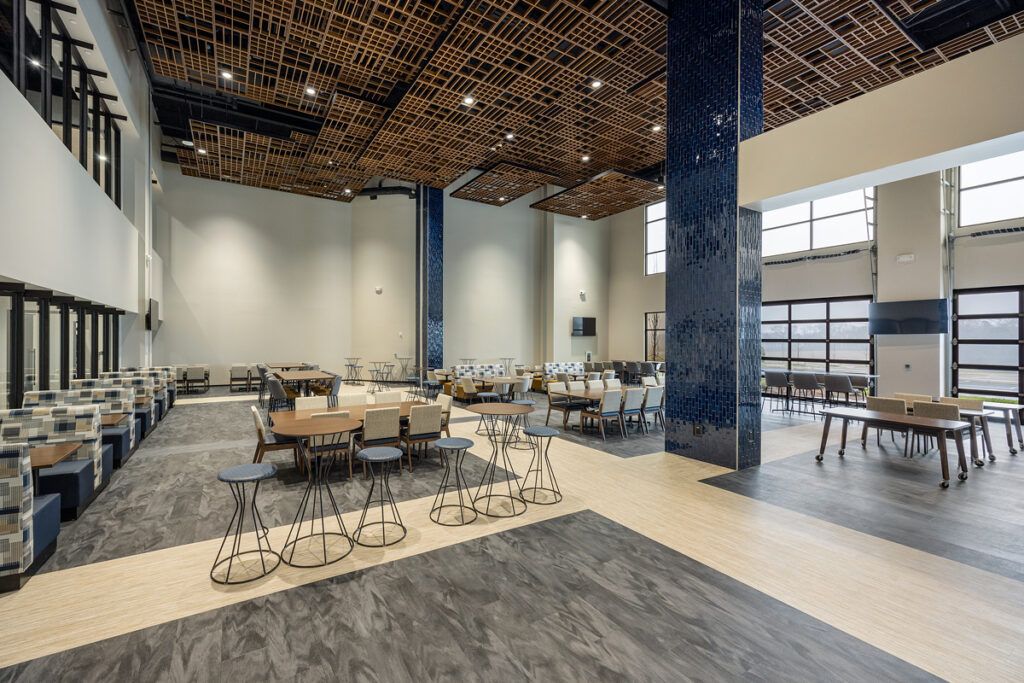
There were a number of specialized aspects to this project like matching a boardroom ceiling cloud to a conference table made of walnut and buffalo hide. Even the floor tiles in the rotunda were some of the largest ever installed at 10 feet long and 4 feet wide each.
The electrical system also presented challenges, especially with supply chain issues at the time. Some of Smith & Wesson’s equipment required an extensive electrical infrastructure to be in place, so teams could test components as they brought them online. The company has huge conveyor systems that move packaging and product from one part of the plant to the other.
The team had to ensure that all the electrical branch work was down and connected to that equipment, so Smith & Wesson could start testing and utilizing it in the necessary time frame.
The plant had at least two major electrical rooms and each had its own switchgear, but at the time there were extremely long lead times for electrical transformers. The Christman team coordinated with the designer to get those pieces of equipment designed, complete and purchased upfront. They were successful in doing that.
 With a manufacturing client like this, it is really about the infrastructure. There were some distinctive finishes in the headquarters office building, but with the manufacturing plant itself, it is more about developing infrastructure that can support all the equipment needed for the manufacturing, assembly and distribution process.
For example, they used a helicopter to place large fans on the roof. They had four large units that needed to be installed near the middle of the plant and there was no good way to set up a crane on the outside and be able to reach the middle of the building where they needed to go. It was incredible how fast it was.
With a crane, it usually takes up to 1.5 days just for setup. The lifts typically take another half a day, plus a day to break down the crane. Using the helicopter, we had all four units placed in about 30 minutes. The time savings alone was impressive.
Time was definitely of the essence on this project and meeting the milestones was not easy. There was a lot of overtime in the beginning. When we were doing the site prep and initial site work, our rotating crews were working seven days a week, 16 hours a day.
The close coordination with subcontractors paid off to streamline things as much as possible and head off any potential issues before they became problems. You cannot avoid all complications on a project, but you can prevent a lot of them with proper planning. Despite any timing or coordination challenges, it was a rewarding project with a good deal of unique features.
The two-level building is located on a 236-acre greenfield and includes a 492,000-square-foot manufacturing facility and a 128,000-square-foot office building that contains a gym, cafe and a commercial kitchen with a pizza oven. The rotunda is designed to be a cylinder with floor to ceiling glass and a curved staircase. Smith & Wesson’s circular logo was installed on top of the rotunda, so it can be seen from the air as planes arrive or depart from nearby McGhee Tyson airport.
James “Jim” Fawcett is a Senior Project Manager at The Christman Company in Knoxville, Tennessee. He earned a bachelor’s degree in construction engineering from the State University of New York (SUNY) College of Environmental Science and Forestry, and has more than three decades of experience in the construction industry.






