




Pipe lining has become a go-to solution for renewing aging sewer and storm lines without the disruption of open-cut excavation. By installing a new liner inside an existing pipe, crews can restore structural integrity, seal leaks, and extend service life while keeping streets, sidewalks, and landscapes largely untouched. But the success of that liner depends on what happens first. Liners are installed by inverting or pulling them into the host pipe and holding them tightly against the pipe wall with air or water pressure, while steam or hot water is used to cure the resin and form a new structural pipe within the existing one.
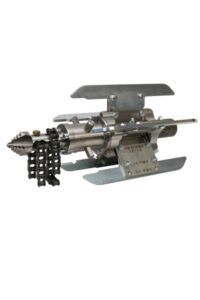
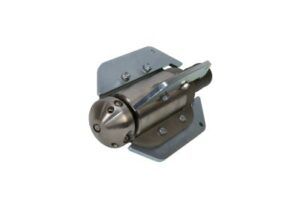
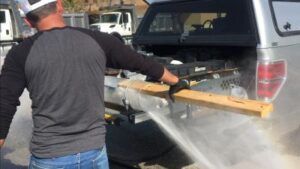
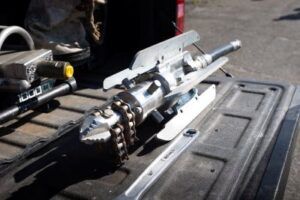
Image Courtesy of : KEG Technologies
However, blockages in the pipe formed by tree roots, hardened mineral scale, grease buildup, silt, and debris can interfere with this process. If a liner is installed over these obstructions, it cannot fully contact the host pipe, which can lead to wrinkles, voids, weak spots, or areas where the liner never properly bonds or cures. Over time, those defects can become failure points. That is why pipe cleaning is not just a preliminary step—it directly affects the integrity of the finished liner. Fortunately, the right combination of nozzles and cutters allows crews to remove even the most stubborn buildup, allowing the liner to work properly once it is installed.
“The inside of the pipe must be spotless for the liner to work properly. In industry terms, this condition is described as being ‘gun barrel clean.’ Just as a firearm barrel must be meticulously cleaned to function reliably, the pipe interior must meet the same standard to ensure proper liner adhesion and long-term performance,” says Dan Story, an experienced trainer and Operations Manager at KEG Technologies.
Keg Technologies, a leading manufacturer of nozzles and chain cutters used to clean sewer and stormwater lines. Over the past several decades, contractors have adopted a variety of lining technologies, each suited to different pipe conditions, diameters, and access constraints. Cured-in-place pipe lining, known as CIPP, is the most widely used method for municipal sewer rehabilitation. In this approach, a flexible liner saturated with a thermosetting resin is inserted into the host pipe. Once positioned, internal pressure forces the liner tightly against the pipe wall, and the resin is cured to form a rigid, continuous pipe. Because the liner relies on chemical curing, surface condition plays a direct role in performance.
Fiberglass-reinforced liners are a variation of CIPP designed for applications where higher stiffness and load-bearing capacity are required, including stormwater and drainage systems. These liners incorporate glass fiber reinforcement within the resin system, resulting in a finished pipe with greater structural integrity. From a chemical standpoint, the curing performance of lining materials such as fiberglass resin can be compromised by factors including dirt, debris, roots, or grease residue within the pipe, as well as an incorrect resin-to-chemical mixture.
Pipe lining has become a go-to solution for renewing aging sewer and storm lines without the disruption of open-cut excavation. By installing a new liner inside an existing pipe, crews can restore structural integrity, seal leaks, and extend service life while keeping streets, sidewalks, and landscapes largely untouched. But the success of that liner depends on what happens first. Liners are installed by inverting or pulling them into the host pipe and holding them tightly against the pipe wall with air or water pressure, while steam or hot water is used to cure the resin and form a new structural pipe within the existing one.
However, blockages in the pipe formed by tree roots, hardened mineral scale, grease buildup, silt, and debris can interfere with this process. If a liner is installed over these obstructions, it cannot fully contact the host pipe, which can lead to wrinkles, voids, weak spots, or areas where the liner never properly bonds or cures. Over time, those defects can become failure points. That is why pipe cleaning is not just a preliminary step—it directly affects the integrity of the finished liner. Fortunately, the right combination of nozzles and cutters allows crews to remove even the most stubborn buildup, allowing the liner to work properly once it is installed.
“The inside of the pipe must be spotless for the liner to work properly. In industry terms, this condition is described as being ‘gun barrel clean.’ Just as a firearm barrel must be meticulously cleaned to function reliably, the pipe interior must meet the same standard to ensure proper liner adhesion and long-term performance,” says Dan Story, an experienced trainer and Operations Manager at KEG Technologies, a leading manufacturer of nozzles and chain cutters used to clean sewer and stormwater lines.
Common Lining Techniques
Over the past several decades, contractors have adopted a variety of lining technologies, each suited to different pipe conditions, diameters, and access constraints. Cured-in-place pipe lining, known as CIPP, is the most widely used method for municipal sewer rehabilitation. In this approach, a flexible liner saturated with a thermosetting resin is inserted into the host pipe. Once positioned, internal pressure forces the liner tightly against the pipe wall, and the resin is cured to form a rigid, continuous pipe. Because the liner relies on chemical curing, surface condition plays a direct role in performance.
Fiberglass-reinforced liners are a variation of CIPP designed for applications where higher stiffness and load-bearing capacity are required, including stormwater and drainage systems. These liners incorporate glass fiber reinforcement within the resin system, resulting in a finished pipe with greater structural integrity. From a chemical standpoint, the curing performance of lining materials such as fiberglass resin can be compromised by factors including dirt, debris, roots, or grease residue within the pipe, as well as an incorrect resin-to-chemical mixture.






