





It started the way a lot of good ideas do—with a simple “what if?” and a home-brew kit that turned curiosity into something more. For Marty Mazzawi and his brother-in-law, John Reynolds, that moment quickly evolved into a shared vision: build something real, something local and something that would bring people together.
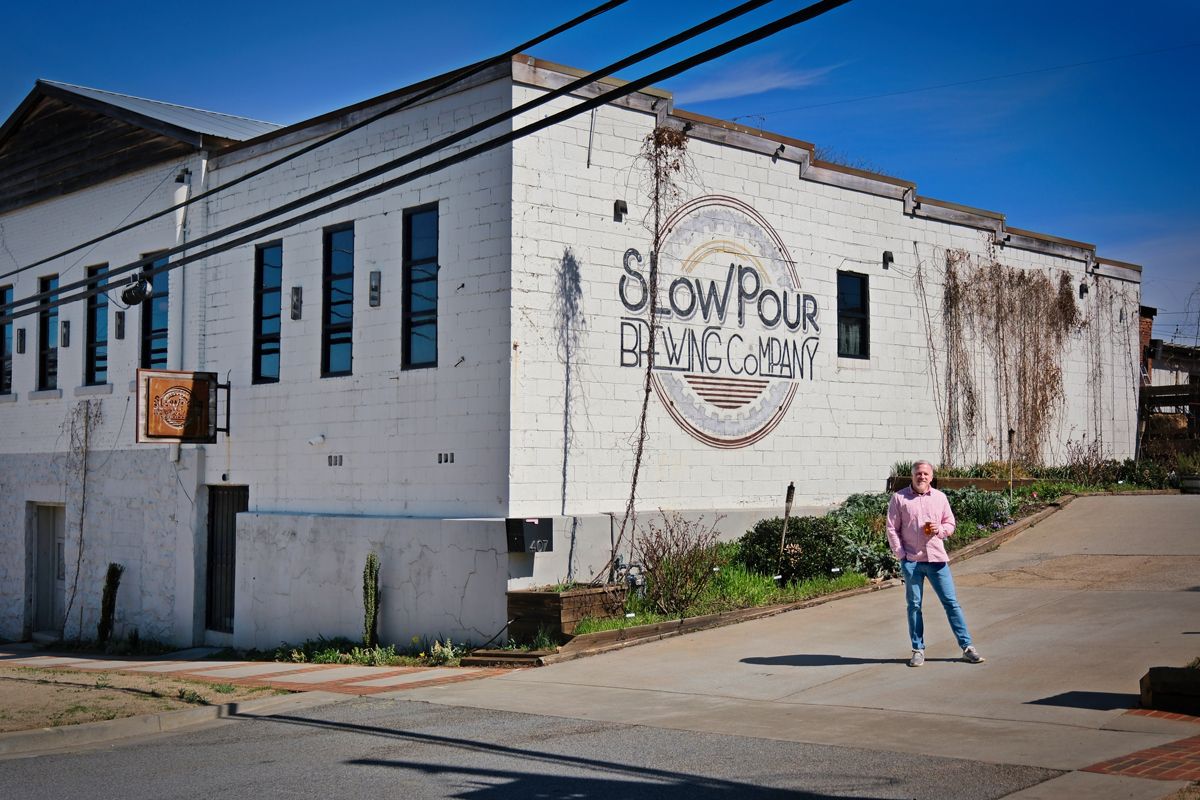
While Reynolds dialed in recipes, Mazzawi searched for a home—and found it in an old garment factory just off the square in downtown Lawrenceville, Georgia. The bones were there. The opportunity was there. Now it was about bringing it to life.
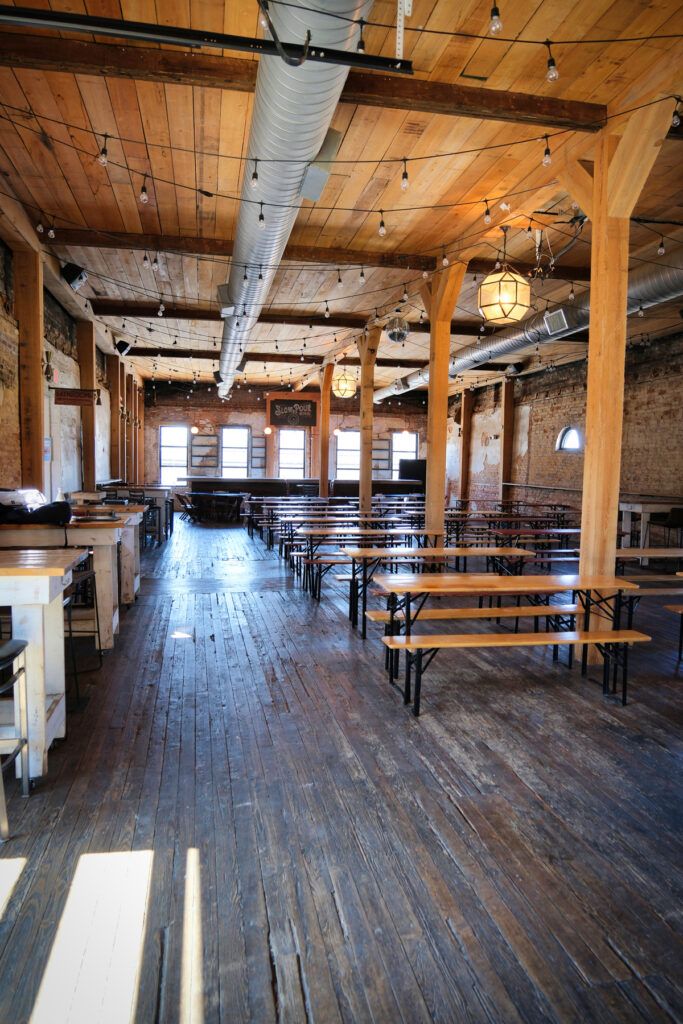
When Slow Pour Brewing Company opened in September 2017, it wasn’t just Gwinnett County’s first brewery—it was a statement. A place designed as much for connection as it was for craft. The tasting room feels intentional. The beer garden invites you to stay a little longer.
And the beers themselves? They’re creative, approachable and built to be shared. From day one, the goal wasn’t just to serve great beer—it was to create a space where conversation happens naturally.
That philosophy still drives everything at Slow Pour today. In a world that moves fast, the brand leans into something different: slowing down, being present and making room for the moments that matter. It shows up in the details, the atmosphere and the people behind the bar.
To get a closer look at the Slow Pour brand, we sat down with Reynolds, founder and CEO; Kyle King, Marketing Specialist; and Nate Groves, Director of Operations, to see how the brewery has grown from an idea into a community anchor.
 Give us a snapshot of today’s craft beer market from your perspective.
John Reynolds: The craft beer market is in a constant state of change, from a consumer demand and taste perspective. The market shifted from hop-forward West Coast IPAs, to the haze craze, to super fruity sours, to classic beer styles like really well-executed ales and lagers.
If you look around at the state of craft beer in Georgia over the last few years, you’ll see that there has been some contraction in the market. It’s a tough market with the limitations that craft breweries have. Craft beer has also been competing for shelf space with new products such as RTDs and THC-based beverages.
What consumer trends are having the biggest impact on the craft beer space right now?
Reynolds: Again, I think the introduction of RTDs and THC-based products has had a real impact on the craft beer market. There is just more competition to get consumer attention with a wider range of products on the market.
Tell us your brand story. How did it start? How has your branding strategy evolved?
Reynolds: Well, Slow Pour Brewing Company first opened its doors in September 2017 as Gwinnett County’s first craft brewery, a distinction that we are still very proud of. The genesis of the company actually started a couple of years before that, when my brother-in-law Marty Mazzawi bought me a 3-tier gravity feed home brew kit for Christmas.
I really enjoyed the process of brewing, and he pushed us from the front yard to creating Slow Pour Brewing a few years later. Marty is a dentist and I was doing corporate IT at the time.
 What’s the biggest challenge facing craft beer brands when it comes to marketing and sales today?
Reynolds: I think that we face a few unique challenges as a craft beer brand in the State of Georgia. One of those is the 3-tier distribution model that we are bound to by law, which limits the ability for a craft brewery to succeed in a tough distribution market.
In addition to that, as I mentioned earlier, the introduction of new products in the market and keeping up with consumer preferences can be a challenge.
In your experience, what’s the key to building a brand story that really connects with consumers?
Kyle King: The human factor is definitely where the story shines. Spotlighting the bartenders, the brewers, our leadership team. Without the people, we’re a building with liquid in a glass. But every beer has had creative decisions and a level of intentionality that give the brand character.
In a broader sense, the strongest brand-building comes from storytelling on a micro and macro level, and that can apply to any industry. Give people a reason to care about your brand—not just the product, but the people and the feeling it gives you.
If you could recommend just one marketing move every craft brand should make, what would it be?
King: Don’t be afraid to experiment and be bold. Lean into what makes you different and memorable, rather than trying to follow trends. If you’re not making yourself a little uncomfortable every now and then, you’re playing it too safe. Your target audience are the ones who embrace you when you take risks—embrace them back.
Where do you see the biggest growth opportunities for your brand?
Reynolds: I feel like the craft beer market is still normalizing from the tremendous growth that it went through in Georgia in the past, and now the regression that it is currently going through. Right now, it is about creating the most opportunities for revenue growth in our own tasting rooms.
 What’s the top priority on your to-do list right now?
Reynolds: We’re focusing on continuing to provide a dynamic and unique experience for our guests. By having a highly educated team, unique entertainment options, quality partnerships with our food vendors, and creating moments that matter.
How does your tasting room or distillery experience tie into your overall branding and marketing efforts?
Reynolds: I feel it is the heartbeat of who we are as a company. No one will represent our brand better than our staff in our own tasting rooms.
King: The tasting room is core to the feel of the brand. Discussions about focusing the identity of any of our brands—Slow Pour, Finished Goods Brew Werks or Outrun Brewing—execution of new ideas in the tasting room is core to those discussions—through the taproom music, styling, customer interactions, merch options. It all ties together.
How has your business model adapted to recent market shifts and consumer expectations?
Reynolds: We have introduced some new products into the market over the last few years to meet consumers where they are. One such example of that is our light lager, SP Light. It fills the demand for a more health-conscious consumer that still wants beer-flavored beer. We’re very happy with it, and know that consumers love it just as much as we do.
With more competition than ever, what’s your approach to standing out in a crowded market?
Reynolds: For us, standing out it is about consistency, producing the best products that we can, and delivering those products to our consumers.
King: From a marketing and social media perspective, being unexpected has always produced desirable results. Quality of product is key as John mentioned, but whether it’s a clever or slightly risky beer name, a social post that turns a trend on its head or an attention-grabbing design.
It can be a challenge to balance consistency with experimentation in the sandbox of your brand, but the results are so worth it when they land.
How do you leverage collaborations or partnerships to expand your brand reach?
Reynolds: This is an area of focus for us this year. We are trying to be really selective with who we are aligning brands with, and insure that our partnerships are just that—partnerships where all parties are contributing to the success of events that are being hosted, and so on.
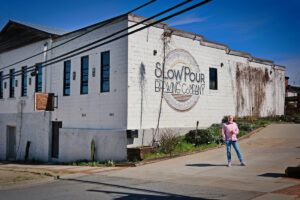 One-on-One with … The Slow Pour Crew
What’s the most rewarding part of working in the craft beer industry?
John Reynolds: For me I would have to say it is the ability to be creative. All areas of what we do involve creativity, from creating craft beers, branding those beers, managing our teams, utilizing our spaces, and so on. It is really fun to be a part of this team.
Kyle King: The relationship-building for sure. Our staff is easily the most fun, family-style team I’ve ever been a part of. In a business where every dollar matters, the camaraderie and elevated attitudes of the staff make everything feel so casual and low-stakes, which is a very refreshing and rewarding change from more corporate worlds.
What’s the best advice you’ve ever received?
Reynolds: Oh wow that is a big question…. I would have to say you can’t please everybody all the time. It is easy to work yourself into a mindset of trying to make everyone happy in this business. Our aim is to provide our guests with exceptional unique experiences in our tasting rooms and with our products and that is where we try to keep our focus.
King: My best advice echoes what John said, and it’s something I learned from playing music: “If you’re not losing at least part of the audience during a set, you’re not taking enough risks.” I think the same applies to marketing and brand development in general.
Don’t sweat it if you lose a few followers every now and then—anyone who unfollows your brand wasn’t your target audience anyway. Focus on the long-haulers and the new people who have joined because of what you’re doing differently.
What’s the most memorable feedback you’ve gotten from a customer?
Nate Groves: We have adopted cats that help keep the rodent population away from our building. Years ago, we had a guest leave a 1-star review saying “Everything was great, but they let cats just roam around.”
The next few weeks we had new guests coming in and saying, “We came for the cats… where are they?” That 1-star review probably had the most positive impact out of all of our 5-star reviews. Mash and Barley are certainly our unofficial mascots of the taproom.
What inspired you to enter the craft beer business?
Reynolds: I have been a craft beer fan since I was of legal age to drink. I love experiencing the culture of other cities, states, and places through beer, food and entertainment. So that aspect of it really drew me in. I also love the fact that there are limitless possibilities for improvement. Our beer program is in a constant state of innovation and growth.
Favorite beer style or way to enjoy your own product?
Reynolds: I would have to say my favorite style of beer is some of the classic pub styles ales and lagers. If I had to pick just one I would lean towards an ESB Pale Ale. My favorite way to enjoy our own products would be with family and friends.
King: I’m traditionally an IPA guy, but I’ve become a big fan of sours since starting with this company. As for enjoying the product—nothing beats a warm summer day, with a beer brewed by your team, with a band playing on a stage at an event that you conceived, seeing an entire community of people have a great time along with you because they support what you’re doing. That is seeing the fruits of our labor in action.






