









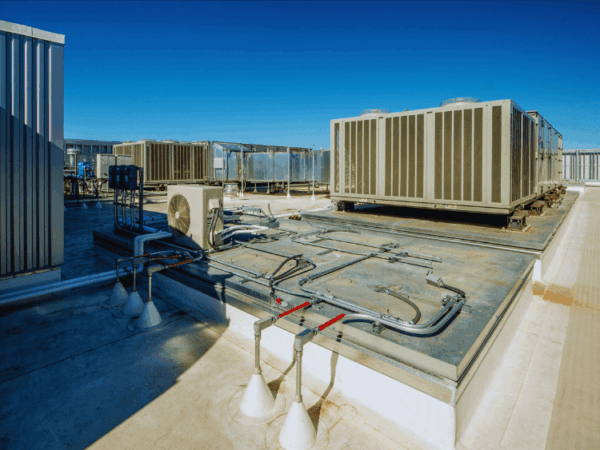
For commercial property owners and facility managers, system failures rarely arrive at a convenient time. A pipe bursts on a Friday evening. An HVAC unit goes down mid-summer with tenants in the building. In those moments, the value of a trusted local hvac and plumbing company becomes immediately clear; not just as a vendor, but as an operational partner that keeps the building functional, compliant, and competitive.
What’s less obvious is how those partnerships are reshaping how commercial properties are managed before problems occur.
The Case Against Reactive Maintenance
Commercial buildings are complex systems. Plumbing and HVAC infrastructure interact constantly: shared mechanical rooms, condensate drainage, water supply for cooling towers, steam heat distribution. A failure in one system frequently stresses the other. Yet many properties still manage these systems reactively, dispatching a contractor only when something breaks.
That approach is increasingly difficult to justify. Emergency service calls cost more, require longer wait times, and often expose deferred issues that compound the original problem. A chiller failure that might have been caught during a routine inspection becomes a weeks-long disruption. A slow drain that signals building-wide venting issues becomes a code violation and a shutdown.
The contractors who serve commercial clients consistently are pushing back on this model. Local firms with dedicated commercial accounts are shifting conversations toward scheduled inspections, preventive service agreements, and systems-level thinking. The goal is to catch problems when they are manageable, not when they have become emergencies.
Why Local Partnerships Outperform National Contracts
National service contracts offer predictability on paper. A flat monthly fee, standardized response times, centralized dispatch. For some property types, that works. But commercial buildings have specific needs, and those needs rarely follow a standardized template.
Local firms understand the building stock in their market. They know which vintage of commercial construction tends to have undersized drain lines. They recognize which HVAC configurations were installed during the energy code transition years and carry known efficiency problems. That institutional knowledge does not transfer through a national call center.
Response time is also a meaningful differentiator. When a mechanical room floods at 2:00 a.m., a local company with technicians twenty minutes away performs differently than a national contractor dispatching from three counties over. For high-occupancy commercial properties (medical offices, multi-tenant retail, hospitality), that gap in response has real financial consequences.
Local firms also tend to build longer-term familiarity with a property’s specific systems. A technician who has serviced the same rooftop units for three years brings diagnostic context that no work order system can replicate.
What Integrated Service Looks Like in Practice
The most effective partnerships are not transactional. They are built around documented systems knowledge, proactive communication, and shared accountability for building performance. According to the U.S. Department of Energy, HVAC systems represent the largest energy end use in commercial buildings, accounting for roughly 30% of total consumption, making consistent maintenance a direct lever for controlling operating costs and improving efficiency.
In practical terms, that means annual or semi-annual mechanical audits that cover both plumbing and HVAC systems together. It means a contractor who flags the fact that an aging cooling tower is approaching the end of its service life before the property manager finds out through a failure. It means service records that travel with the building; useful at lease renewals, during due diligence for property sales, and when applying for energy benchmarking compliance.
Some commercial property owners are formalizing these relationships through preventive maintenance agreements that cover defined inspection schedules, priority response terms, and locked labor rates. Those agreements shift the dynamic from vendor-to-buyer toward something closer to a managed service relationship.
The Bigger Picture for Commercial Real Estate
Buildings are under more scrutiny than they once were. Tenants evaluate mechanical reliability as part of lease decisions. Lenders assess deferred maintenance exposure during refinancing. Energy efficiency requirements are tightening in many markets, placing new demands on HVAC systems in particular.
In that environment, a well-maintained mechanical infrastructure is not just an operational concern. It is a material factor in asset value.
Local plumbing and HVAC companies that work consistently with commercial clients are positioned to support that broader objective, not by simply fixing what breaks, but by helping property owners understand what their systems are telling them, what the near-term risks look like, and where targeted investment will have the most impact.
The properties that perform best over time are rarely the ones with the newest systems. They are the ones with the most disciplined approach to maintaining what they have. A reliable local mechanical partner is central to that discipline.




