










Late spring and summer don’t create infrastructure demand. They compress it, forcing months of planning into a narrow execution window with very little room for drift. By the time lane closures appear and crews are working extended hours, the planning has already taken place. Resources are secured, contingencies are established and timelines are locked in.
That compression is where schedules slip and costs climb. The challenge isn’t simply more work. It’s that so much of it must happen simultaneously, competing for the same equipment, operators, hauling capacity and approved work windows. The contractors who stay ahead don’t react to that pressure. They plan backward from it.
There are several reasons public-sector projects tend to bunch up in late spring and summer. The first is budget clarity. Public owners enter the season knowing which projects are funded and ready to move.
The second factor is weather. From paving and grading to concrete work and trenching, utility access becomes easier to manage when temperatures are stable and the risk of weather-related interruption is reduced. Longer daylight hours also improve productivity and make it easier to coordinate crews, trucking, traffic control and inspections, while also maintaining safe work conditions.
 Public tolerance for disruption also shifts with the season. Municipal leaders know closures, detours, noise and visible disruption are unavoidable in almost every infrastructure project, but warmer months tend to offer a more workable window for many communities.
The result is a narrow execution window with little flexibility. That’s where project pressure starts to build. Summer demand tests more than labor capacity. It tests coordination. A project may have funding in place and a contractor may have a capable crew, but that does not guarantee momentum.
Once the season tightens, equipment availability, hauling logistics, maintenance support, subcontractor coordination and traffic-control timing begin to influence the schedule just as much as labor does.
This is often where jobs start slipping. It might not be just one major problem, but rather several smaller constraints happening at once. Equipment gets held up, a service issue runs long and by the time the closure window is approved, the assets needed for that phase are still committed elsewhere.
In peak season, a single delay is rarely an isolated incident. It tends to multiply. Idle labor, rescheduled trucking, extended traffic-control setups and missed production targets can all follow. Costs rise quickly when that happens, and so does pressure from owners, residents and elected officials who expect visible progress.
That’s why contractors who manage summer best usually approach it with the same discipline. Instead of asking what will be needed when a project starts, they determine what must be secured weeks or months earlier to protect the schedule. This foresight allows them to navigate procurement hurdles and equipment shortages before the height of the season.
They identify the non-negotiables first. This includes ensuring access to versatile assets like multi-functional loaders and bobcat excavators that can transition between tasks such as site clearing, pallet handling and trenching. Utilizing these machines reduces the logistical burden of managing multiple specialized units on a crowded jobsite.
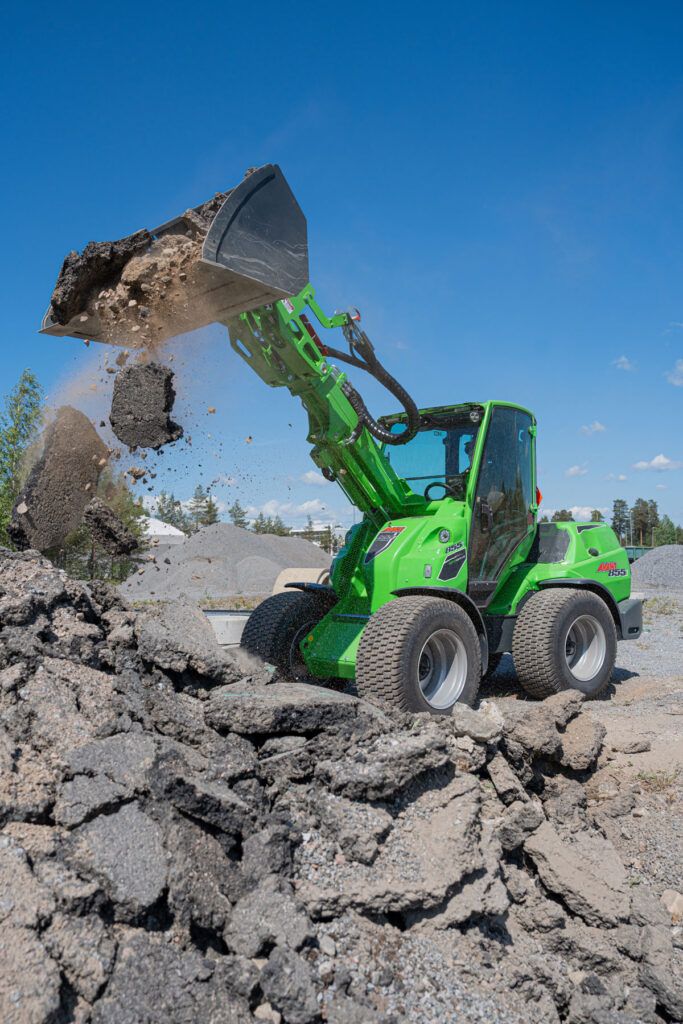
Contractors also prioritize compact articulated loaders for work in narrow residential corridors or busy intersections. These machines allow municipal traffic flow to be maintained while offering high lift capacity within a small footprint, which is essential for managing material handling in the tight staging areas typical of summer urban renewal projects.
Separate from equipment selection, these organizations build in formal contingency plans as a distinct management protocol. They identify secondary material suppliers and alternative hauling routes long before they are needed. They also establish clear “if-then” protocols for common disruptions, like equipment service intervals, unexpected soil conditions or sudden weather shifts.
By treating both resource allocation and strategic planning as independent requirements, contractors give their crews the flexibility to adjust their tactics. This approach ensures that the team has the necessary tools and mental framework to keep plans moving forward even when the unexpected occurs.
That kind of planning is especially important in public works. Summer is rarely about one project moving through a clean, uninterrupted timeline. More often, it is about multiple projects competing for the same operators, trucks, support staff, service capacity and approved work hours.
However, a contractor’s internal preparation is only one part of the equation. Because infrastructure projects operate in a shared public space, the decisions made by public owners are just as pivotal to the outcome. Collaboration between these two entities often determines whether peak-season work succeeds.
Some of the most avoidable delays in infrastructure are not caused by field conditions, but by administrative factors. These include compressed bid schedules, unrealistic mobilization assumptions, overlapping project starts or specifications that don’t leave room for practical adjustments once work begins. Municipalities that release projects with enough lead time, phase them thoughtfully and communicate realistic expectations give contractors a better chance of performing well.
 Communication matters just as much. Summer infrastructure work is highly visible, which means even minor delays can draw outsized attention. Residents see cones, steel plates, noise and backed-up traffic long before they understand the sequence of work behind them.
Clear communication from public agencies on timeline, purpose and expected disruption does more than improve perception. It gives contractors more room to execute without constantly reacting to confusion or frustration from the surrounding community.
Summer will always be a demanding period for infrastructure. Public needs will grow and expectations for speed on projects will increase as work windows are unlikely to get any wider. The contractors and municipalities that perform best aren’t always the ones with the largest budgets or the most ambitious plans. They are the ones that enter the season with the fewest surprises.
To the public, summer may look like the construction season. In reality, it is execution season. And the organizations that stay ahead of peak demand are the ones that understand a simple truth: spring and summer progress is usually built on winter planning, not summer improvisation.
Beau Slavens is President at Avant Tecno USA.






