










Hospitals depend on controlled indoor air not just for comfort, but for patient safety, regulatory compliance and operational continuity. In high-acuity environments such as surgical suites, air handling systems must manage particulate contamination, gaseous pollutants and pressure differentials while operating continuously.
When those systems are compromised—even by conditions outside the building envelope—the consequences can include downtime, staff exposure, and risk to vulnerable patients.
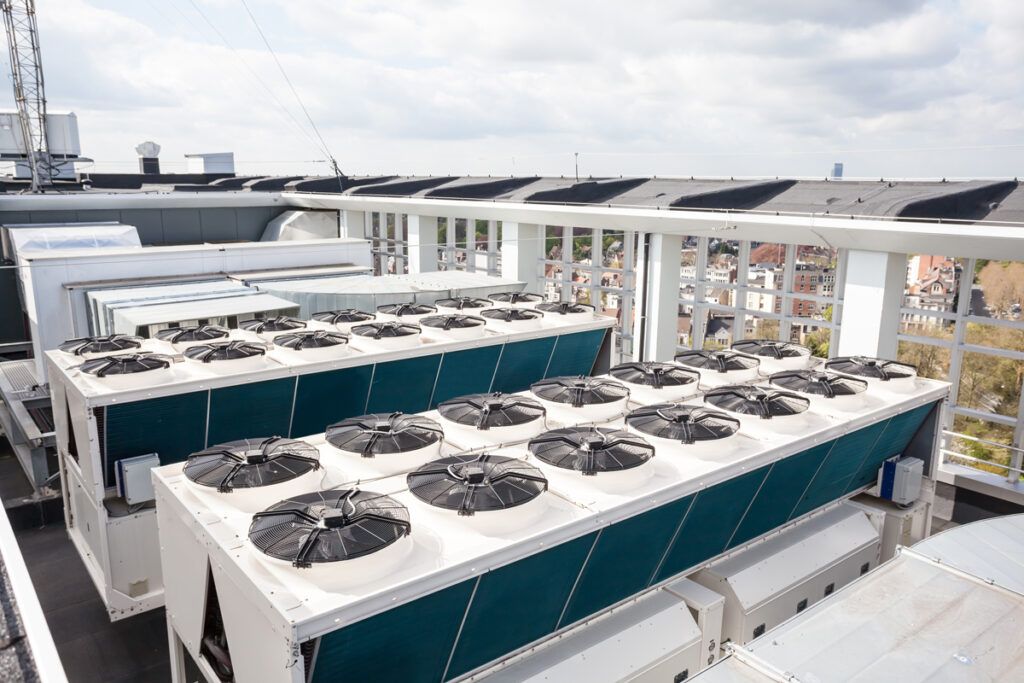
That challenge became especially visible at a large hospital in Illinois, where helicopter traffic on a rooftop landing pad introduced jet fuel exhaust directly into the facility’s air handling units (AHUs). With helicopters landing as many as three times per day, the facility began experiencing persistent odors and fumes in areas that demand the highest air quality standards.
This project offers an inside look at how the hospital, working with Air Filter Engineers (AFE), a Rensa Filtration company, addressed a complex air quality problem through a targeted filtration retrofit designed to improve airflow, maintain uptime, reduce labor strain and support healthcare compliance requirements, without major mechanical modifications.
Understanding the Operating Environment
The hospital’s surgical AHUs operate 24/7, pulling in outside air through rooftop intake louvers located near the helipad. In addition to exhaust drawn directly into the system, doors used to transport patients in and out of the facility were opening and closing regularly, further drawing contaminated air into the building envelope.
For surgical areas, this posed two immediate risks:
- Indoor air quality and staff exposure to gaseous jet fuel byproducts.
- System performance limitations, as existing filtration components restricted airflow and increased
- static pressure, forcing fans to work harder to maintain design conditions.
The facility had already implemented a multi-stage filtration approach intended to address both particulate matter and odors. However, the system was becoming increasingly difficult to manage operationally.
 The Existing Filtration Configuration
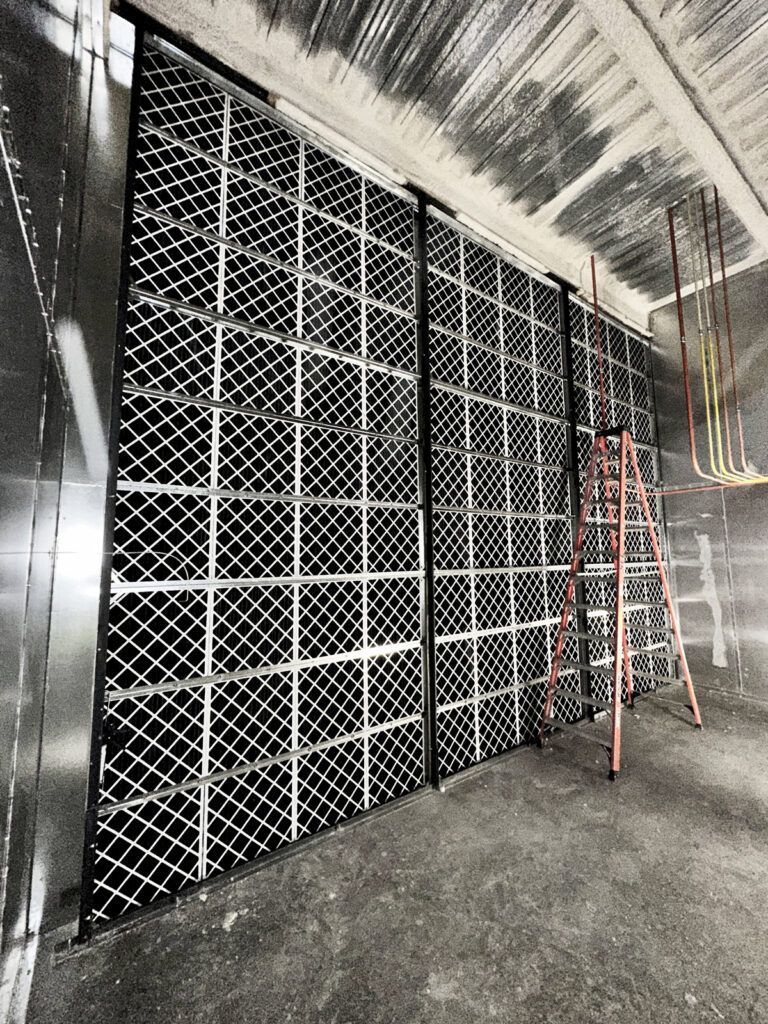
At the time of evaluation, the hospital’s surgery AHUs relied on a two-stage configuration:
- 2-inch MERV 8 pleated pre-filters installed upstream
- 1-inch activated carbon trays installed downstream
Across the surgical system, nearly 1,000 carbon trays were in service. While effective at odor adsorption, the trays represented an older filtration technology that required frequent handling and maintenance.
The carbon media needed periodic recharging to remain effective, which meant removing the trays and either sending them off site or refilling them on site—both time-consuming and labor-intensive processes.
From a system perspective, the configuration also introduced substantial resistance to airflow. Combined pressure drop across the filter bank approached 1.2 inches of water gauge (w.g.), reducing available airflow to critical spaces and increasing fan energy demand.
Hospital leadership and facilities staff began looking for an alternative that could maintain air quality while improving efficiency and reducing maintenance burden.
Site Evaluation and Engineering Approach
Air Filter Engineers (AFE), the hospital’s long-time filtration service provider, conducted a site evaluation to assess both contaminant sources and system performance. The goal was not to add more filtration layers, but to rethink the configuration from an engineering and lifecycle standpoint:
- Could jet fuel exhaust be removed without relying on separate carbon trays?
- Could pressure drop be reduced while maintaining or improving contaminant removal?
- Could filter servicing be simplified to support limited staffing resources?
Based on the evaluation, AFE recommended replacing the two-stage configuration with a single filtration solution manufactured by Rensa Filtration: a 2-inch MERV 10 CarbonWeb® Plus 50/50 pleated filter produced by D-Mark, a Rensa company.
The filter integrates particulate filtration and gas-phase adsorption into a single pleated media. Using Rensa’s patented CarbonWeb technology, the filter blends carbon, activated alumina impregnated with potassium permanganate to adsorb gaseous contaminants—such as jet fuel exhaust—while also capturing airborne particulates.
This approach eliminated the need for separate carbon trays while maintaining filtration performance appropriate for sensitive healthcare environments.
Implementation: Simplifying the System Without Disrupting Operations
Because the filters were designed to fit standard filter dimensions, the retrofit required no mechanical alterations to the AHUs. AFE removed the existing 2-inch pre-filters and 1-inch carbon trays and replaced them with the 2-inch MERV 10 CarbonWeb Plus 50/50 pleated filters in each unit.
From a construction and operations standpoint, this simplified the system immediately:
Total pressure drop was reduced by nearly 50%:
- Previous configuration: approximately 1.19–1.25 in. w.g.
- New configuration: approximately 0.60 in. w.g.
Airflow to surgical areas increased, allowing fans to operate more efficiently.
Maintenance procedures were streamlined, as the new filters could be installed, removed and disposed of in the same manner as standard pleated filters—eliminating the need to recharge or refill carbon media.
The physical handling of filters also improved. Where carbon trays had previously weighed up to 15 pounds per unit, the pleated replacements could be changed quickly by a single technician, reducing both labor time and ergonomic strain.
Performance Outcomes: Air Quality, Uptime and Labor Efficiency
The impact was immediate. Facilities staff observed a noticeable increase in airflow throughout the surgical units following installation. More importantly, this effectively removed jet fuel odors before recirculated air reached critical spaces.
From an uptime perspective, the reduced pressure drop placed less mechanical stress on fans and air handling equipment, improving overall system reliability—an essential requirement in surgical environments where any interruption can affect patient schedules and clinical operations.
The simplified filtration strategy also addressed workforce limitations. With many hospitals facing staffing shortages across technical and support functions, eliminating the need for carbon tray recharging, transport and inventory management allowed maintenance staff to focus on other mission-critical tasks.
 Supporting Safety and Compliance Through System Design
While the project was not driven by a single regulatory mandate, the solution directly supported healthcare indoor air quality standards by:
- Improving the removal of gaseous contaminants and particulates
- Enhancing ventilation effectiveness through reduced resistance
- Lowering the risk of airborne exposure for staff and patients in surgical environments
The approach also aligned with broader sustainability and cost-of-ownership goals. Lower static pressure reduced energy demand, while simplified changeouts reduced labor hours, waste handling and long-term maintenance complexity.
A Scalable Model for Healthcare Facilities
What distinguished this project was not the installation of new mechanical equipment, but a strategic simplification of an existing system. By consolidating multiple filtration stages into a single high-performance filter, the hospital, working with AFE and Rensa Filtration, improved air quality while reducing operational friction.
For healthcare facilities facing similar challenges from rooftop exhaust, nearby traffic corridors, wildfire smoke, or other environmental contaminants, the project demonstrates how climate-smart filtration strategies can support uptime, safety and compliance without significant capital investments.
In environments where air quality is inseparable from patient outcomes, thoughtful engineering decisions at the filtration level can deliver meaningful operational gains. In this case, a targeted retrofit produced what complex systems often promise: better airflow, safer spaces and a more resilient building.
Shawn Gilstorf is VP Products of Rensa Filtration, a leading manufacturer of air filtration solutions for commercial, industrial, and institutional applications. He has more than 20 years of experience in HVAC and indoor air quality systems, specializing in molecular filtration solutions.
Chris Taramelli is the Regional Sales Manager at Air Filter Engineers (AFE), part of the RENSA distribution team covering Illinois and Wisconsin. He specializes in HVAC filtration for health care, data centers and commercial applications with 15-plus years of experience.






