










Civil engineering projects run on tight schedules, demanding equipment, and conditions that leave little room for error. From breaking ground on a highway expansion to setting up a temporary medical facility near a construction zone, the tools powering these operations need to be dependable. Compressed air solutions have become a go-to resource across these varied project types, not just for the obvious heavy-hitting tasks, but for precision work that many people don’t immediately associate with a job site. This article breaks down how compressed air fits into modern civil engineering, what to look for when choosing equipment, and how to set up a system that actually holds up under pressure.
Compressed Air Solutions Power a Wide Range of Civil Engineering Tasks
ew power sources match the flexibility of compressed air on an active job site. Air compressors can drive everything from jackhammers and impact wrenches to spray systems and pneumatic conveyors, making them one of the most practical investments a civil engineering team can make.
What sets compressed air apart is its ability to deliver consistent, adjustable power without the risks that come with electrical tools in wet or hazardous environments. Air tools also tend to be lighter and easier to handle than their electric or hydraulic counterparts, which matters when crews are working long shifts in physically demanding conditions.
The challenge for many project teams is knowing which type of compressor suits their specific site conditions, and how to keep it running well once it’s in place. Resources like Air and Power cover these topics regularly, from selecting the right unit for different environments to servicing and maintenance practices that prevent costly downtime.
The reliability of a well-maintained compressed air system translates directly into productivity. Fewer breakdowns mean fewer delays, and on projects where every hour counts, that’s a real advantage.
Compressed Air Solutions Serve Both Heavy-Duty and Precision Civil Engineering Needs
Compressed air isn’t a one-size-fits-all tool. It scales from the most physically demanding site work down to applications that require a surprisingly light touch, and both ends of that spectrum show up regularly in civil engineering.
Heavy-Duty Site and Infrastructure Work
Heavy-duty air compressors are workhorses on construction and infrastructure projects. Drilling through concrete, operating pavement breakers, running sandblasting equipment, and powering heavy air tools all demand a steady, high-volume air supply. Large-scale road and bridge projects rely on this kind of output for extended periods, and portable compressed air units make it possible to meet those demands even on sites without permanent power infrastructure.
Specialty and Precision Applications
On the other end of the scale, compressed air also supports work that demands precision over raw power. PCB board cleaning in field technology installations, pick and place machines used in infrastructure automation, and medical air compressors in temporary or mobile health facilities all depend on clean, controlled air delivery.
These applications require a different set of specifications than a jackhammer does. Pressure consistency, air purity, and moisture control become the main concerns. Civil projects that include technology infrastructure or temporary medical setups need compressed air solutions that can meet those tighter standards without compromise.
The Right Compressed Air Solution Depends on the Scope of Your Project
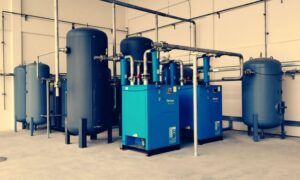
Picking the right air compressor solutions starts with an honest look at what the project actually demands. A small utility repair job has completely different requirements than a multi-phase highway construction project, and choosing the wrong equipment creates problems on both ends. Understanding the role of reliable air compressors in construction helps project teams make more grounded decisions before committing to a specific setup.
Key factors to work through include:
- Output capacity: Measured in CFM (cubic feet per minute), this determines how many tools or processes the compressor can support simultaneously.
- Operating pressure: Different air tools and applications have specific PSI requirements that the system must consistently meet.
- Portability: Whether the job needs a stationary unit or a towable, portable compressor depends on site layout and how frequently the equipment needs to move.
- Power source: Diesel-powered units work well in remote locations while electric units are better suited to sites with reliable power access.
Equipment rental is worth factoring in early, especially for projects with defined timelines or phases that require a specific capacity only for a short window. Renting gives teams access to the right equipment at the right time without the long-term cost of ownership. Once those factors are mapped out, narrowing down the options becomes much more straightforward.
Proper System Design Makes Compressed Air Solutions More Effective
Even the best compressor underperforms if the system around it isn’t set up correctly. Good system design is what turns a capable piece of equipment into a reliable solutions platform for the whole job site.
Planning Your Compressed Air System
Compressed air piping systems need to be laid out with flow efficiency in mind. Pipe diameter, total run length, and the number of connection points all affect how much pressure reaches the end user. A system design that ignores these variables leads to pressure drops, wasted energy, and tools that don’t perform as expected.
On larger civil projects, it helps to map out the full air distribution plan before any equipment gets placed. Identify where the highest demand points will be, account for future expansion if the project scope might grow, and size the piping accordingly. Getting this right upfront saves significant rework later.
Filtration, Maintenance, and Air Quality
A compressed air system is only as clean as its filtration setup allows it to be. Moisture, oil vapor, and particulates in the air supply can damage tools, contaminate sensitive applications, and shorten equipment life. Filtration cleaning on a regular schedule keeps those contaminants from building up and affecting system performance.
Reverse air jet purging is one method used to clear accumulated debris from filters and keep airflow consistent over time. For precision and purity-sensitive applications, air quality directly affects the safety and accuracy of the work being done. Building a maintenance schedule into the project plan from day one is the most reliable way to stay ahead of these issues.
Compressed Air Solutions Work Best When Paired With the Right Support Equipment
A compressed air system doesn’t operate in isolation on a job site. The equipment surrounding it plays a direct role in how well it performs, especially on projects that run around the clock or operate far from established infrastructure.
Light towers are a practical example. Night work on road construction, bridge repairs, or utility projects requires proper site lighting to keep crews productive and safe. Pairing light towers with a compressed air setup ensures that operations don’t slow down after dark. Portable generators fill a similar supporting role, providing power to run electric compressors or supplemental equipment when grid access isn’t available. On remote infrastructure projects, a generator can be the difference between a self-sufficient job site and one that’s constantly waiting on external resources. These pieces of support equipment aren’t afterthoughts. They’re part of what makes a compressed air solution functional across the full duration of a project.
Scalable Compressed Air Solutions Meet Civil Engineering Demands at Every Level
Not every civil engineering project needs the same level of air supply. A small municipal repair job might run fine with a single portable compressor, while a large highway or infrastructure build could require multiple industrial compressor solutions running in coordination.
Scalability is one of the strengths of compressed air as a power source. Systems can be expanded by adding units, upgrading piping, or reconfiguring the distribution layout as project demands grow. For long-term or phased projects, this flexibility means the air system can grow alongside the work rather than becoming a bottleneck.
Industrial compressor solutions designed for high-demand environments are built to handle continuous operation, varying load conditions, and the kind of wear that comes with extended project timelines. Matching system capacity to project scale, and planning for how that scale might shift over time, is what separates a compressed air setup that performs consistently from one that falls short when it matters most.
Conclusion
Compressed air solutions bring real, practical value to civil engineering projects of all sizes. From powering heavy air tools on major infrastructure builds to supporting precision applications and temporary medical setups, the range of what compressed air can do on a job site is broader than most people expect. Choosing the right equipment, designing the system thoughtfully, and pairing it with dependable support tools like light towers and portable generators gives any project team a solid foundation to work from. When all those pieces come together, compressed air stops being just another utility and becomes one of the most dependable resources on the site.






