





Not all metal buildings in Sacramento are built the same. While standard and commercial-grade structures may look similar at first glance, the differences in materials, structure, and long-term performance are significant. Understanding these differences helps property owners choose the right building for their needs.
Material Differences
Standard metal buildings typically use lighter gauge steel. This keeps costs lower but also limits durability over time. These buildings are designed for basic use and may wear faster under stress or harsh conditions.
Commercial-grade metal buildings use thicker, higher-strength steel. Panels, framing, and connections are built to handle heavier loads and long-term exposure. Coatings are also more durable, helping protect against rust, fading, and environmental damage.
Structural Strength and Engineering
Standard buildings are often pre-designed using general specifications. They are suitable for light-duty use but are not always tailored to specific conditions.
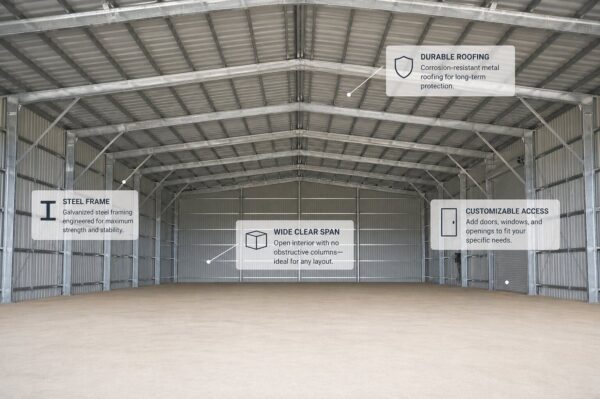
Commercial-grade metal buildings are engineered for performance. They are designed based on location, including wind, snow, and seismic factors. Frames are reinforced, and load distribution is more precise. Many also feature clear-span interiors, allowing for open space without support columns.
Intended Use
Standard metal buildings work well for:
- Basic storage
- Small garages
- Light workshops
They are best when the structure will not be heavily used or modified.
Commercial-grade metal buildings are designed for more demanding applications such as:
- Agricultural operations
- Equipment and fleet storage
- Workshops and service bays
- Warehouses
- Barndominiums and mixed-use spaces
These buildings support utilities, interior build-outs, and long-term occupancy.
Code Compliance and Flexibility
Standard buildings may meet minimum requirements for simple use, but they can become limited if you want to expand or change how the building is used.
Commercial-grade metal buildings are built to meet stricter codes. This makes them easier to permit for business use or future conversion. Their design allows for expansion, upgrades, and multi-use functionality without major structural changes.
Durability and Value
Commercial-grade buildings are built for longevity. Stronger materials and better engineering reduce maintenance and extend the life of the structure.
Standard buildings may cost less upfront, but they often require more upkeep over time. From a long-term perspective, commercial-grade metal buildings tend to hold value better and offer greater flexibility.
Conclusion
The difference between standard and commercial-grade metal buildings comes down to strength, adaptability, and long-term performance. Standard buildings can meet basic needs, but commercial-grade structures provide better durability, easier permitting, and more options for future use.
For property owners thinking beyond short-term use, commercial-grade metal buildings offer a more reliable and valuable investment.
Feature image is an original AI-generated graphic






