






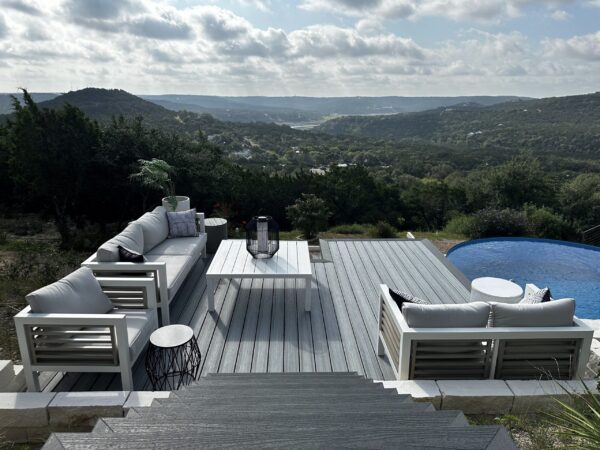
Pool decking is one of those decisions that looks simple until you’re actually standing in a showroom trying to choose between three shades of composite and wondering if treated wood will hold up through years of sun and rain. The material, the size, the finish – each choice affects how safe, comfortable, and easy to maintain your backyard setup will be for years to come. This guide breaks it all down so you know exactly what to look for before you commit.
What Is Pool Decking?
If you’ve ever stepped from wet grass into a pool, you already know why decking matters. That soggy, muddy transition isn’t just annoying – it’s a slip hazard, and it tracks dirt straight into your water. Pool decking is the solid surface built around your pool that fixes all of that. It gives you a clean, stable place to walk, dry off, set up chairs, and actually enjoy the space you paid for.
At its core, a pool deck is whatever hard material surrounds your pool – wood, composite, concrete, pavers, or stone. The right choice depends on your budget, how much maintenance you’re willing to do, and the look you’re going for. But before you even get to materials, there’s a more basic question most people skip.
How much decking should you have around your pool?
A lot of homeowners underestimate how much deck space they actually need, and it’s one of those things that’s hard to undo once the build is done. The bare minimum is about 3 to 4 feet on each side – enough to walk around safely and squeeze in a chair or two – but realistically, if you want room for loungers, a small table, maybe a grill, and a few people hanging out on a Saturday afternoon, you’re looking at something closer to 6 to 8 feet per side.
Pool size matters a lot here too: a 12-foot round pool works fine with 100 to 200 square feet of deck, while an 18 or 21-foot pool starts to feel right with 300 to 500 square feet, especially if you like to entertain. StainlessSwim builds custom pools with decks in a range of sizes, and their team will help you figure out a layout that fits how you actually plan to use the space – not just what looks good on paper.
What Is the Best Decking to Put Around a Pool?
There’s no single “best” material – only the best one for your situation. Budget, climate, how much sun your yard gets, and how hands-on you want to be with upkeep all factor in. Here’s how the main options stack up.
Wood pool decking
Wood has a warmth and character that’s hard to beat visually. Treated lumber is the most budget-friendly pick – it’s pressure-treated to resist rot and insects, which matters a lot in a wet environment. Cedar is a step up in terms of appearance. It has a natural richness that looks great around water, and it holds up well when properly sealed.
The catch with wood is maintenance. You’ll need to reseal or restain it every year or two, and even well-maintained wood will eventually show its age. That said, for homeowners who like the classic backyard look and don’t mind a bit of upkeep, wood is still a solid choice. Treated lumber especially makes sense when you want a good-looking deck without stretching the budget. StainlessSwim offers both treated wood and cedar as deck options, built as part of a complete pool installation so everything comes together as one finished project.
Composite pool decking
Composite – most commonly Trex – is made from a mix of wood fibers and recycled plastic. The big selling point is that it barely needs any maintenance. It won’t splinter, warp, or fade the way real wood does, and cleaning it is usually just soap and water. It holds its color well even in direct sun, which is a real advantage in hot climates like Texas.
The tradeoff is upfront cost – composite runs higher than treated wood. But when you factor in years of skipping refinishing projects, many homeowners find it pays for itself. StainlessSwim offers Trex composite as one of their standard deck options, and it tends to be the most popular choice for customers who want a sharp, modern look with minimal long-term hassle.
Concrete and paver options
Poured concrete is durable and versatile – you can stamp it, stain it, or texture it in dozens of ways. It’s a popular choice for inground and semi-inground setups where a seamless, polished look is the goal. The downside is that plain concrete gets hot in direct sun and can crack over time, especially in climates with wide temperature swings.
Pavers – brick, travertine, or natural stone – offer a more upscale feel and easier repairs. If one section cracks or shifts, you replace individual pieces rather than jackhammering a whole slab. Travertine in particular stays cooler underfoot than concrete, which matters when you’re barefoot in July.
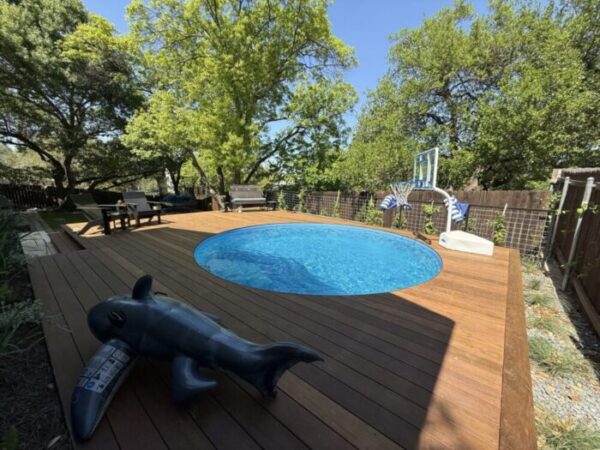
Image Courtesy of StainlessSwim
How Much Does Pool Decking Cost
Decking costs depend on three main things: the material you choose, the square footage you need, and whether installation is included in the quote. Treated wood sits on the lower end of the price range, composite lands in the middle, and natural stone or custom concrete work runs the highest. Beyond material, labor costs vary a lot by region and contractor, which is why two quotes for the same deck can look very different on paper.
For a realistic sense of what you’re looking at overall: a 200-square-foot deck in treated wood might run $8,000 to $10,000 installed, while composite or cedar at the same size pushes that number higher. Scale up to 400 square feet, and costs climb accordingly. When comparing quotes, always check what’s actually included – some contractors price materials only, while others bundle in framing, labor, and finishing.
When you’re getting multiple bids, that difference can be thousands of dollars. StainlessSwim prices their deck add-on starting at $43 per square foot for treated wood and $48 per square foot for Trex or cedar – installed as part of a complete pool project, which is hard to beat when you compare it to what most contractors charge for materials and labor separately.
Conclusion
Good pool decking is one of those things you don’t fully appreciate until you have it – and then you can’t imagine the pool without it. It makes the whole setup safer, more comfortable, and honestly more fun to use. The material you choose matters, but so does the size, the finish, and how it’s built. Take your time with those decisions, and you’ll end up with a backyard that actually gets used all summer long.
If you’re starting from scratch and want a pool and deck built together as one clean project, StainlessSwim handles everything from the pool itself to the finished deck – so you’re not juggling multiple contractors or hoping everything lines up at the end.
Feature Image Courtesy of StainlessSwim






