









Tino Go’s story does not follow a straight line. That’s the point. Born in Indonesia and raised in Michigan as the eldest of four, he grew up in a household shaped by discipline and expectation.
With a physician father and a mother who kept everything moving, Go’s path was to challenge traditional convention. Instead of accepting a college scholarship, he started a business—an advertising production company that would become his first stake in building something from nothing.
By his 20s, the work took him across Europe, living and operating in France, Germany and Italy, where he developed a sharper understanding of how businesses function across cultures, markets and constraints. It also gave him a lens that would define his career—look at the system first, then fix what is broken.
Back in the U.S., Go earned degrees in economics and finance, eventually stepping into roles that spanned corporate finance, operations and manufacturing. Over the next 20-plus years, he became the person companies called when something was not working—serving as a CFO and turnaround executive across industries ranging from chemicals to aerospace components.
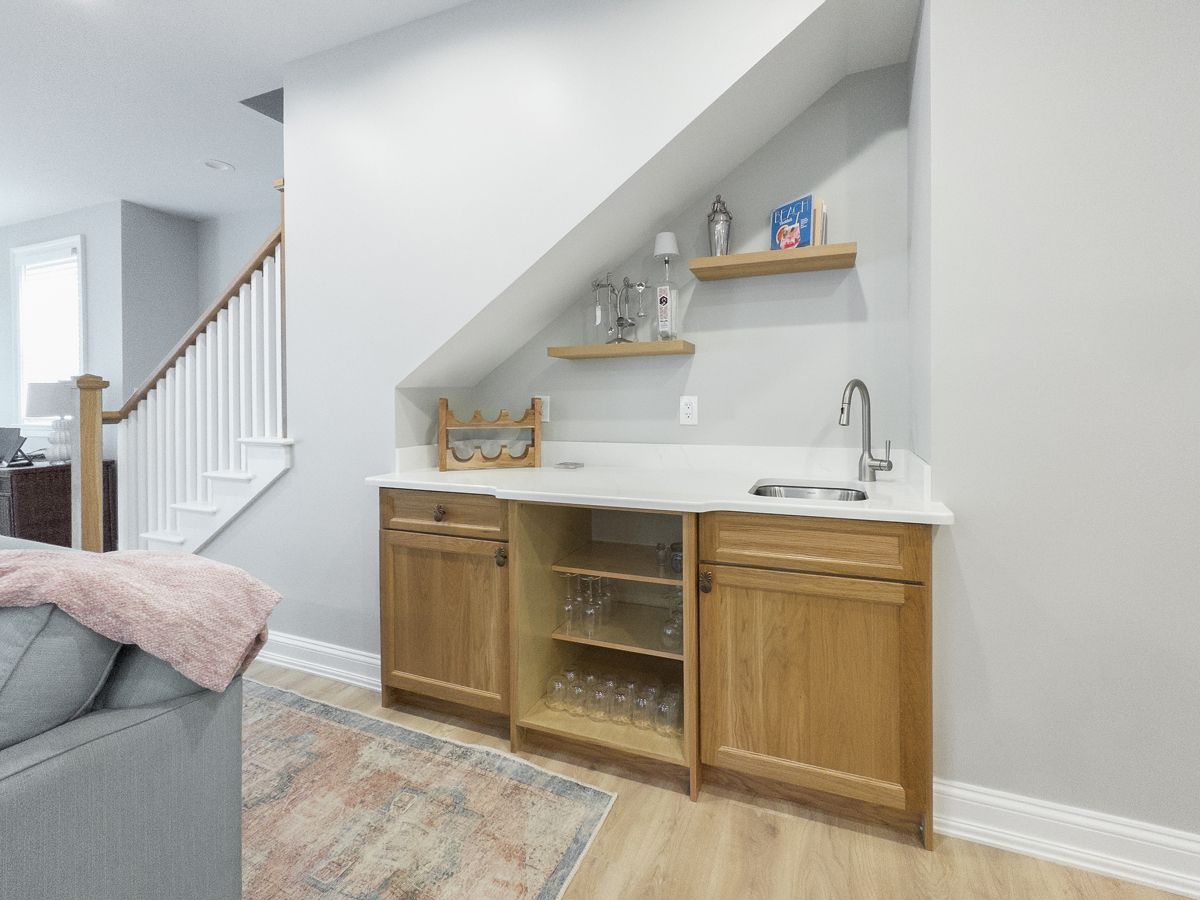
But it was a personal frustration that framed his next chapter. In 2014, trying to order a custom bookcase, Go ran into an industry still operating on disconnected, manual processes. The inefficiency was obvious. And Baru—state-of-the-art technology that makes locally-made custom cabinets accessible and affordable—was born.
We sat down with Go to get his insights to road traveled and what’s to come.
 What inspired you to establish your company? How has your founding mission evolved over time?
After enduring a slow, opaque, manually intensive process that produced prices weeks after I expressed interest and delivered products months after I committed to buy, I was motivated to analyze the industry.
I concluded that for many reasons, including high industry fragmentation, low barriers to entry and the forces of globalization, the industry would struggle to evolve from current practices that made it a highly price-competitive and cost-sensitive industry.
I saw an opportunity to leverage commonplace technology to offset domestic labor costs and distribution costs, helping to reverse a decline in the viability of small businesses and domestic manufacturing.
I knew from my operations background that CNC routers had become standard equipment, and I discovered that they were largely underused at cabinetmakers across the country. These machines are precise, fast and computer controlled.
The problem was that there were still a lot of manual processes: everything from illustrating a customer’s design intent to translating it into a manufacturer’s machining instructions was still handled by people interpreting information by hand at every step. The iterative process introduced delay, error and cost at every handoff.
Baru’s founding mission was to eliminate those imperfect handoffs by creating a continuous digital thread from the customer’s design decision all the way to the manufacturer’s machine. A customer configures a cabinet on our website or a design tool, sees the price in real time, and the order generates machining instructions that go directly to a local manufacturer’s CNC router. No manual translation. No intermediaries. No delay.
The mission has sharpened over time rather than changed. We started with custom desks for Google employees’ home offices and furniture for New York apartments. After I validated that the distributed manufacturing model would work, we transitioned to custom cabinets.
With the volume of a cabinet order, material yields are higher, the desire for customization occurs frequently, and the demand from designers, contractors, and remodelers is substantial and recurring. We now focus exclusively on cabinets and serve the full range of residential and commercial applications.
Describe the signature style or characteristics that define your projects.
Baru does not impose a style. That is the point. Our platform lets the customer determine the design and our job is to execute it accurately at the specified price.
What defines a Baru project is configurability across a wide range of materials, finishes, dimensions and price levels. A customer can specify a painted shaker door in a standard size or a high-gloss, easy-to-clean panel material in a fully custom dimension. The price adjusts in real time as selections are made. The customer specifies exactly what they want online and sees how much it costs before they commit.
The other defining characteristic is speed. Because the online design process generates machining instructions directly and because manufacturing happens within the customer’s metro area, lead times are a fraction of the industry average. Most Baru orders are delivered within six weeks. Many take less.
What types of projects do you specialize in? What market segment do you primarily serve?
Baru serves the full spectrum of residential and light commercial custom cabinet applications, including kitchen and bath cabinetry, built-in storage, pantries, laundry rooms, home offices and specialty installations.
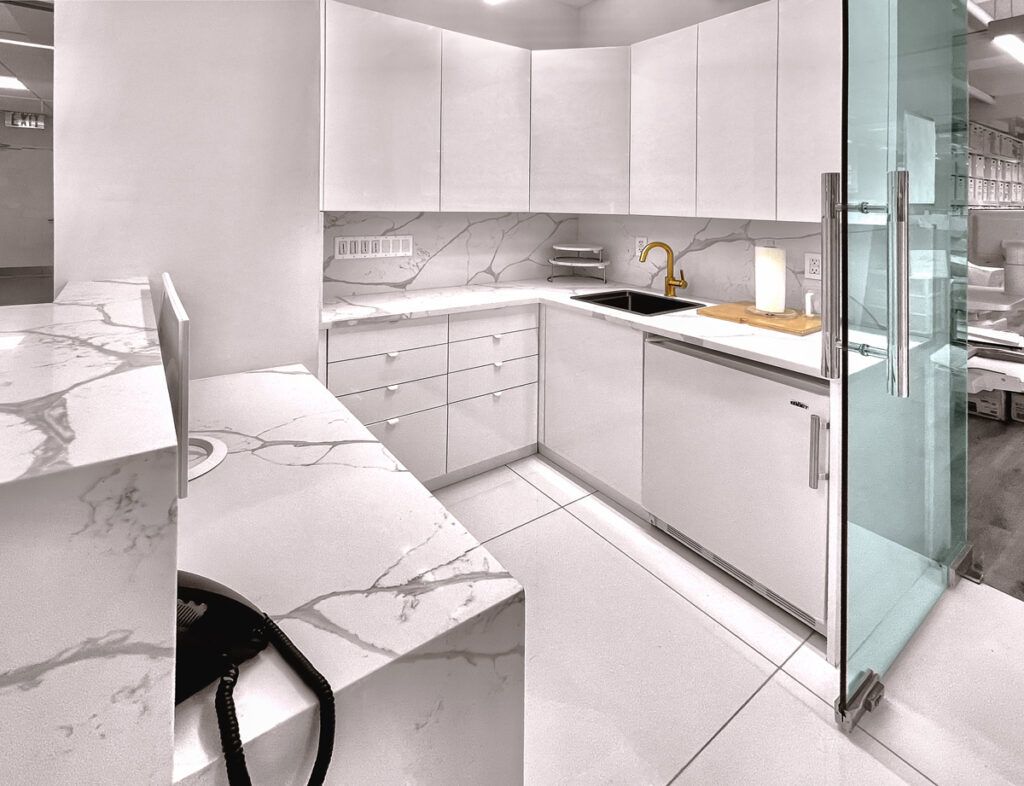
On the commercial side, we have completed projects in hospitality and medical offices and have multi-unit residential installations pending.
Our primary customers today are trade professionals: interior designers, remodeling contractors and architects. Some customers order Baru’s production for resale, with their business logo on the cabinets. These buyers value the ability to offer custom dimensions and materials without incurring the operating overhead of a traditional custom cabinet shop.
Baru has no minimum or maximum order size, as we allocate production to the appropriate manufacturers in our network. Customers get instant pricing, guaranteed constructability and reliable lead times. That combination is rare in the market.
We also sell direct to homeowners, and those buyers tend to be renovation-focused consumers who know what they want and are willing to configure it themselves online.
What has been your most challenging project to date? How did overcoming those challenges shape your approach?
The most honest response is that I had to spend three years selling bespoke cabinet projects and completing them in the conventional way to understand how the industry currently operates. Though I interviewed seasoned professionals in the field, I was unable to find sufficient agreement and validation for my hypotheses.
So, I had to prove it to myself before committing to developing the software that would power the business model. Finding the team members who could assist me in developing our software with limited financing and resources was the next obstacle, though by then I had convinced myself that the business idea and operating model would succeed.
The cabinet industry is highly fragmented and deeply traditional. However, successful cabinetmakers are astute businesspeople. Though it took some convincing, once they realized that Baru would bear all the customer and financial risk, and all they would have to do was produce the goods for remarkably high profit margins, they were eager to discuss the business.
The breakthrough came when manufacturers realized that Baru’s model solved their core business problem as much as it solved the customer’s. Many manufacturers only use their manufacturing machinery for two to three hours a day. The rest of the time those assets are idle, generating no revenue against their fixed costs.
Baru orders arrive with low administrative overhead, no sales cost, and no engineering time required. The manufacturer cuts, assembles, and delivers. The profit margin on that work ranges from 70% to 90% pretax. Once manufacturers understood those economics firsthand, their interest in participating accelerated.
Currently, we have over 50 quality manufacturers in 35 metro areas nationwide, ready to activate as customers discover Baru in those regions.
The next challenge was convincing customers that our astoundingly affordable prices did not mean they would get a lower quality product. Introducing customers to the process and visiting our manufacturers’ facilities usually overcomes that hesitation.
Can you share details about a favorite completed project and what made it particularly meaningful or successful?
Three projects come to mind that each illustrate a different dimension of what Baru can do.
A contractor working on a Spark Hotel conversion needed cabinets in the approved brand palette that fit precisely in and around existing casework and other elements that were staying in place. Standard cabinet sizes would not work. A traditional custom shop would have required field measurements, manual drawings, weeks of back-and-forth and a long lead time.
The contractor configured the cabinets directly on our website, specifying the exact dimensions to clear the existing elements. The order generated machining instructions automatically and was manufactured and delivered with an expedited timeline so the hotel could open for business.
A homeowner pricing a custom pantry got a Baru quote 25 percent below what a major home improvement retailer was charging for a mid-tier semi-custom brand. The Baru pantry was built to the exact dimensions of the space and built with higher-quality materials for a comparable price.
The homeowner also had access to specify interior accessories and adjustable-height pull-out shelves that would have been a more expensive after-market installation and not custom fit.
An architect specifying a medical office needed door and case materials that were fingerprint resistant and durable for easy maintenance and hygiene. That was not a standard specification, but Baru makes ordering it easy. The architect specified the material color and cost and got a price for the project immediately for the client. No phone calls. No meetings. No waiting for a quote.
Each of those projects was facilitated because the customer had access to real-time configuration, real-time pricing and a direct path to local manufacturing.
How do you integrate sustainable building practices into your construction process? What specific eco-friendly innovations have you implemented?
The single most impactful thing Baru does for sustainability is localize manufacturing. Most Baru orders are produced within less than 60 miles of the delivery location. That eliminates the long-distance domestic and global transportation that characterizes the conventional cabinet supply chain.
The numbers are significant. Conventional cabinet distribution, which routes products from centralized factories through regional warehouses to retailers and customers, emits a carbon footprint of roughly 32 pounds of CO₂ per 100 pounds of finished goods. Baru’s localized model reduces that to approximately 7 pounds of CO₂ per 100 pounds of finished goods.
That is a greater than 75% reduction in the greenhouse gas footprint from transportation. Baru pays for trees to be planted, so our operations become carbon negative around three years after the sale.
Beyond carbon, local manufacturing eliminates the packaging waste associated with long-distance shipment. Products are not boxed or palletized for common carrier shipping and delivery to a staging warehouse. They move from a shop to a delivery vehicle to a jobsite. Less packaging, less damage, less waste.
We also eliminate the inventory obsolescence that conventional supply chains generate. Products are made to order, not built to forecast and stored in a warehouse until they sell or are disposed of at year-end.
What sets your company apart from other residential product suppliers and contractors in your market?
Baru is not a product company. It is a process company. That is the fundamental difference. A conventional cabinet supplier maintains a product line, holds inventory, operates a showroom, and staffs a sales force. Their costs reflect all of that structure.
Distribution activities, including shipping, warehousing, packaging, product damage, and obsolete inventory, account for 60% of the cost of sales in the conventional model, which translates to roughly 40% of revenues consumed before any profit is possible. Those are the same costs, viewed from two angles: as a share of what it costs to sell and as a share of every dollar earned.
Baru replaces that structure with a digital thread. A customer’s design decision generates a machining instruction. That instruction goes directly to a local manufacturer’s computer-controlled equipment. There are no customization upcharges. There is no warehouse between the factory and the customer. There is no sales team or engineer manually translating specifications. There is no finished goods inventory aging on a shelf.
The result is that prices are lower, lead times are shorter, and the product is built to the customer’s exact specification rather than selected from a fixed catalog.
How do you balance client design preferences with structural integrity and building code requirements?
The platform handles this by encoding constructability into the cabinet configuration process itself. When a customer adjusts dimensions or selects materials on our website, the system only offers combinations that can be built correctly. Structurally problematic configurations do not appear as options. Prices are generated only for specifications that meet material and construction standards.
This is a significant benefit to designers and architects. Traditionally, a designer would specify something, send it to a fabricator, and wait to find out whether it could be built and what it would cost. That feedback loop could take days or weeks. Baru compresses it to the moment of configuration.
The designer knows immediately whether a specification is buildable and what it costs. That changes how fast decisions get made and how much revision work is needed before a project moves forward.
What emerging trends in residential construction are you most excited about, and how are you incorporating them?
The trend I find most significant is the shift toward trade-direct purchasing. Designers, contractors and architects increasingly want to specify and purchase products without going through a showroom or a dealer who adds margin and lead time to the transaction. They want access to real pricing, real availability and real specifications. Baru is built around that model.
The other trend worth noting is the growing demand for customization at mainstream prices. Consumers who grew up with vast product options online expect that same capability when they renovate their homes. They don’t want to choose from a limited catalog. They want to specify what they need and get an immediate answer on cost and timing. Baru addresses that expectation directly.
On the futuristic technology side, we will develop augmented and virtual reality tools that let customers and designers visualize Baru products in their actual spaces before ordering. Baru received a patent for custom manufacturing using augmented and virtual reality, enabling customers to visualize the product and reconfigure it by changing how it looks. The visualization instructs the custom manufacturing.
How do you approach collaboration with architects, designers and other professionals during your projects?
The platform is designed to make collaboration efficient rather than to replace it. An architect or designer uses Baru to generate a confirmed specification with real pricing. That specification becomes part of the project documentation without requiring a separate quoting process or a fabricator meeting.
The design phase, before presenting a proposal to a client, is where collaboration occurs. Designers do what they are trained to do: understand client needs, develop concepts, and make material and style decisions. Baru’s system helps design professionals retain control of design intent, project costs and constructability. Contractors provide labor budgets and finalize the specifications before ordering.
Baru picks up where that work lands, translating final orders into manufacturing instructions without adding friction.
We provide tools for trade professionals to manage multiple projects and clients through a single account, review order status, and coordinate delivery timing with their construction schedules.
Baru’s reporting dashboard is under development. It will report on manufacturing stages and percentage completion status for every stakeholder to help maintain project timelines. The goal is to make Baru the most reliable and lowest-overhead supplier in their network.
 What values drive your day-to-day operations, and how do these translate into the products you deliver?
Transparency. The customer sees the price before they commit, sees the specification before it goes to manufacturing, and gets a confirmed lead time before the order is placed. There are no surprises.
Precision. A cabinet ordered to a specific dimension is manufactured to that dimension. The digital thread from configuration to machining instruction eliminates the manual translation steps where errors typically enter.
Efficiency. Every part of the process is designed to reduce the time and cost between a customer’s decision and a finished product in their space. That discipline applies internally as well. We do not carry overhead that does not serve those two outcomes.
These values were not chosen from a whiteboard. They came from watching the conventional industry fail customers, manufacturers and designers on all three counts repeatedly.
What trends are you seeing in the residential construction market today? How are they shaping the industry?
Labor shortages are compressing timelines and raising costs across the construction sector. That makes prefabricated, precisely manufactured components more valuable. A cabinet that arrives on a jobsite ready to install, built to exact dimensions, reduces the skilled labor required to make it fit. That is a structural advantage for the digital fabrication model.
Supply chain disruptions and tariff uncertainty over the past several years accelerated interest in domestic, localized manufacturing. Contractors and designers who experienced months-long delays on imported cabinets are now more receptive to a model that manufactures within their region. That shift has made Baru’s conversation with new customers easier than it was two years ago.
Finally, the renovation market remains strong. Property owners are investing in their existing spaces rather than moving, and cabinetry is consistently among the highest-priority upgrades. That sustains demand for what Baru offers across economic cycles.
What are your goals for your company’s growth and impact on the residential construction industry?
Our sales operations are currently focused on the San Francisco region as we refine our software and processes. Our midterm goal is to scale the manufacturer network to cover the top 100 metropolitan areas by population in the U.S.
Having manufacturing partners in the top 100 metro areas will put a production facility within a one-hour delivery range of over 250 million Americans’ homes and businesses and gives trade professionals a reliable Baru option wherever their projects are located.
The longer-term goal is to demonstrate that the digital thread model works for categories beyond cabinets like countertops, flooring, tile, appliance selection, etc. The inefficiencies we have identified and addressed in cabinetry exist across interior remodeling components. The platform infrastructure transfers. The manufacturer and supplier network expands with it.
The impact we are working toward is straightforward: an interior remodeling construction supply chain where custom products are priced honestly, manufactured locally, delivered quickly and generate sustainable margins for the manufacturers who build them. That system does not currently exist at scale. Baru is building it.
 One-on-One with… Baru’s Tino Go
Describe a typical day.
My normal day begins at 7 a.m. I usually spend the first hour contacting prospective clients who have emailed Baru through our website or were referred to us by our manufacturing partners. Our local manufacturing partners, such as Millwork Management, frequently decline projects with insufficient budgets. These projects are frequently viable for Baru due to our lower self-service customization and e-commerce costs.
The customer still benefits from Millwork Management’s manufacturing excellence at a lower cost, while Millwork Management gains easy-to-produce, high-profit-margin manufacturing revenues.
The remainder of the day is spent contacting and meeting with venture capital investors, developing marketing content, coordinating any production issues with colleagues or material suppliers, following up with commercial buyers and contractors, and attending various industry and venture capital meetups until 9 p.m. on most days.
Even when I am not in the mood to go out, I try to attend at least one of the scores of published events in San Francisco and Silicon Valley. Almost always, getting out of the office in the Bay Area results in a fortuitous encounter or meeting with a future customer or someone who provides useful introductions, solid advice, assistance or a chat that yields eye-opening insights.
What’s the biggest item on your to-do list?
Despite the fact that our sales pipeline has risen to a very solid 7-figure level this year, due to the long lead time of real estate projects, I continue to meet with venture capital and family office investors.
The investors’ funds would be used to accelerate our marketing activities and drive regional awareness to fill our sales funnel, even as we continue to refine our software, complete our library’s integration into a design tool, and expand our product portfolio before the projects begin to generate revenue.
What’s the most rewarding part of your job?
I love the vision that Baru could become a bellwether company that transforms supply chains and manufacturing methods with a new operating model and business paradigm.
What’s the best thing a client ever said to you?
Thank you.






