










Have you ever entered a question, a word or name search into an internet search engine only to find that the results were sorted to put the answer or subject matter you were looking for, last in a stream of seemingly other biased responses?
Welcome to Algorithmic Bias.
Al-gore-rhythm, a process or set of rules to be followed in calculations or other problem-solving operations, especially by a computer. While algorithms were traditionally used all the way back to 1600 B.C. to solve mathematical problems, roots of polynomial and quadratic equations and factorization of square roots, today they are the “plaything” of social media platforms, government institutions and big business. Algorithms these days are the domain of computer nerds, or “computer scientists” to be politically correct.
I’m not a mathematician, and I have no fond place in my heart for equations or balancing checkbooks. Most of us are much the same, but we know they use algorithms in every part of our lives. Whereby, they were once used to come up with logical outcomes, common sense solutions, and scientific answers; they now predominantly mask the intentions of their creators by controlling the output to a predetermined set of social, governmental or scientific rules and criteria.
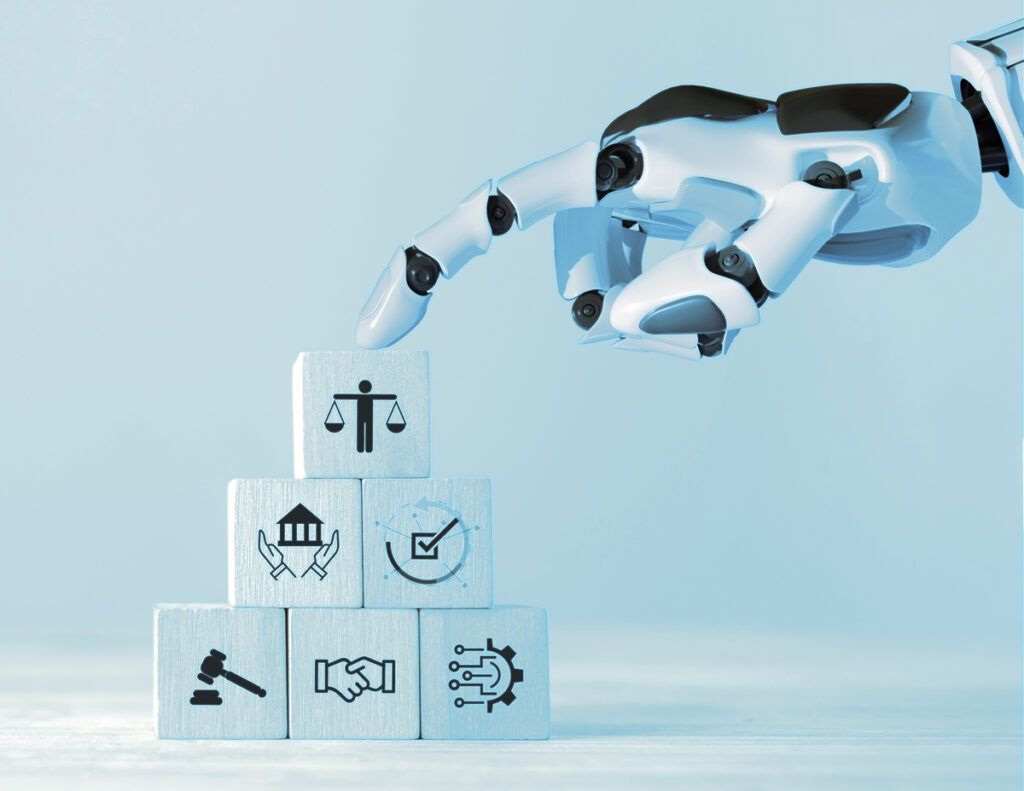 The bias in these sets of rules seek to control the narratives of social media talking points and governmental ideology. They also gather consumer information and formulate “best fits” for products and services to social media subscribers, and even on your smart phone and television set.
Algorithms now have the entirety of web based knowledge to leverage solutions across a vast base of “been there done that” data. They can tap scientific knowledge, history, mathematics, social and behavioral sciences, philosophy and other subjects to apply answers and solutions to complex problems. This is where machine learning comes in. Previously algorithms had to be programmed by a human interface, but now they can be designed to self-program or self-learn based on the rules that a programmer provides.
AI—or machine learning—is adopted into generative AI platforms like Chat GPT and AI picture editors like Adobe Firefly. From creating intuitive text generators, to graphics design, art generators and other uses, it’s the algorithm and its ability going forward, to capture historical information, and “experience,” and other data from the web that will take these mediums to new levels of creativity.
The application in the workforce, sciences, education, exploration, entertainment and art are endless, but beware. They will also enable government agencies to spy on citizens. Yes, what is used for good is also used for evil. Government agencies will be able to set rules and protocols in algorithms that pin-point language and ideology that doesn’t suit them, and thereby restrict speech, arrest citizens and even punish them for stating things outside of their “algorythmic policing” authority.
China is a large proponent of spying. On other countries and on their own population. They use algorithms to interface with camera systems that gather data on human behavior and match it to preset “norms,” to catch people out of compliance with social laws.
Scary? Of course. To go out into public and know that your image is being evaluated by a computer against various government criteria for public behavior is mind bending.
Algorithms also aid in the detection of psychological mindsets. People who “might” look like they present certain facial expressions that fit a ruleset of criteria for a trouble maker, or expressions that may represent “shady” activity or elicit behavior. Who decides these things? Well, likely social behavioral experts, police, psychologists and maybe even your neighbors by answering questions in a survey of what you think a suspicious person looks like.
Algorithms now have the entirety of web based knowledge to leverage solutions across a vast base of “been there done that” data. They can tap scientific knowledge, history, mathematics, social and behavioral sciences, philosophy and other subjects to apply answers and solutions to complex problems.
As we brace ourselves to combat this type of governmental authority, we must realize that it is not only in the public eye that governments and institutions will be seeking to know more about us by gathering “algorythmic data points,” but our data privacy is also at stake. I’ve written several other articles on cyber security and the threats that are posed against our data, our networks and private spaces, but the ability for criminals to use self-learning algorithms to keep pace with ever-changing network password scripts and security protocols is alarming.
In the last few years, several high-profile data breaches have brought airlines and businesses to a halt. They have interfered with banking institutions’ ability to transfer funds and secure accounts, exposed millions of people’s social security numbers, bank and medical records, addresses, and other personal data. The amount of damage to economy’s around the world is prolific.
Algorithms allow these attackers to pick on thousands of streams of code per second and isolate the most probable ease of infiltration. Basically, doubling or tripling down on their ability to scam bank accounts, get people to transfer money or make other financial mistakes costing them dearly, with no recourse for recovering funds.
Criminals employ algorithmic expressions that “machine learn” on ever-changing data sets allowing them to keep up with security patches, changes in security protocols and detect weaknesses in new or recently deployed systems software whereby the appropriate patches to “bugs” have not been fully vetted via an actual user interface.
Keep your head on swivel – always
As I have written before, it is absolutely user behavior in the form of weak passwords, loose lips or other seemingly innocent transfer of password knowledge via phishing or other email tactics that are largely responsible for criminals to subvert networks and private accounts.
So, the application of more education and institutionalizing a cyber-awareness environment, pushed through our upbringing and in social settings and schools, is prudent in stopping these attacks. But, keep in mind the attackers will never stop trying to defeat these measures, they always adapt, so it’s important that education becomes the “norm to inform” newcomers to the digital world.
Another concern with AI and algorithmic machine learning is the loss of jobs through automation. There can be no better example of this in current times than the recent longshoreman strike in the U.S. The dock workers strike. Although very short lived, the port strikes could have caused billions of dollars in losses to the U.S. economy and overseas suppliers.
It is not hard to see that automation would benefit the productivity of the port facilities, reduce the occurrence of accidents and enhance safety. I also can relate to AI and automation causing significant job loss of port workers, crane operators, ground operations and other port functionality. Using AI to better track products, incoming and outgoing vessels, people, manifest, equipment and port inventories would enhance product delivery to our economy.
But do we really need things faster?
I am not an advocate for unions, but in this case I think that we see a snippet of reality to come, in that organizations that protect workers are going to be key to preventing a complete AI takeover of all industry. Thereby leaving workers sitting at home trying to figure out where they fit, and how to make a living. As I have written in previous articles, there must be a balance of AI/automation in industry with workers.
After all, we are still a human race, we need to work, create, invent and subdue this Earth, but all without eliminating our own functionality in favor of machines.
With the main threats of AI being these that I have discussed, there are many more elements that seek to be a burden on humans and our productivity as such. It is not only that we will be attacked by threats of replacement by machines, but that the machines are under attack by cyber criminals to get them to do their bidding. And usually, that involves some form of Dr. Evil.
In order that we keep the bad guys at bay and maintain AI as a productive means to assist us instead of replace us, we need good algorithmic solutions to sort what it can do to work alongside humans and not try to be them.






