







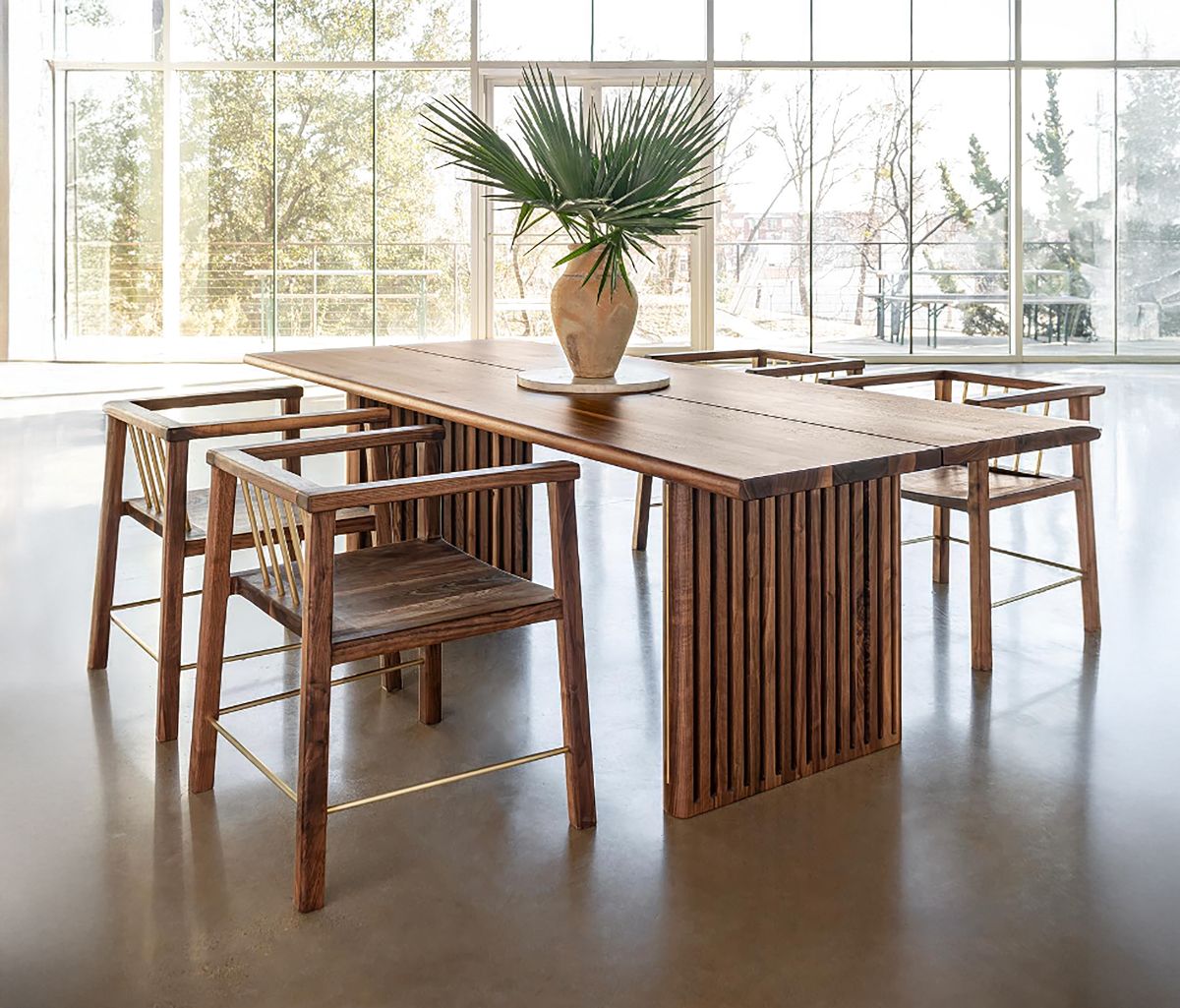
Commissioning custom furniture for your home can be both exciting and overwhelming. The process can often come with questions about design, materials and cost that leads to uncertainty. Partnering with the right manufacturer can make a huge difference. At SouthLoft, we do our best to instill confidence in homeowners through clear communication, technical guidance and a shared design vision.
The Step-by-Step Process
The first step in homeowners commissioning custom furniture is to connect with a company that aligns with their standards and vision. It’s a collaborative process that involves multiple conversations about expectations, design preferences and functionality. It’s normal to go back and forth on renderings, costs and schedules, as well as to hold review meetings before to run-through concepts before landing on a final product.
Typically, the process for ordering custom furniture follows several steps: the initial consultation, concept development, a run-through of ideas, hand-on production, and lastly, delivery.
Homeowners should set a path for how the conversation goes, while the manufacturer should ask detailed questions to clarify the vision. Identifying what you want visually is the biggest part and manufacturers’ job is to translate that vision from concept to reality. For example, discussions might include details about the interiors—the colors of the floors and walls, nearby furnishings, and whether the homeowner wants something to stand out or blend in.
While homeowners usually set the direction because they begin with a vision, manufacturers play an important role in interpreting and refining that vision. They help bridge the gap between aesthetic ideas and technical feasibility. Visualizing what you want is easy, but understanding how it will actually function and feel in your space is a different story.
Homeowners should understand that only limited concept development can happen before a deposit is in place. Many first time custom furniture buyers may not realize how much time goes into creating detailed renderings, dimensioned drawings, and multiple meetings.
It’s a manufacturer’s job to guide clients through this phase, so everyone is aligned before moving into detailed work. Understanding the design phase and the cost difference between custom furniture and mass-produced items helps protect both sides of the partnership.
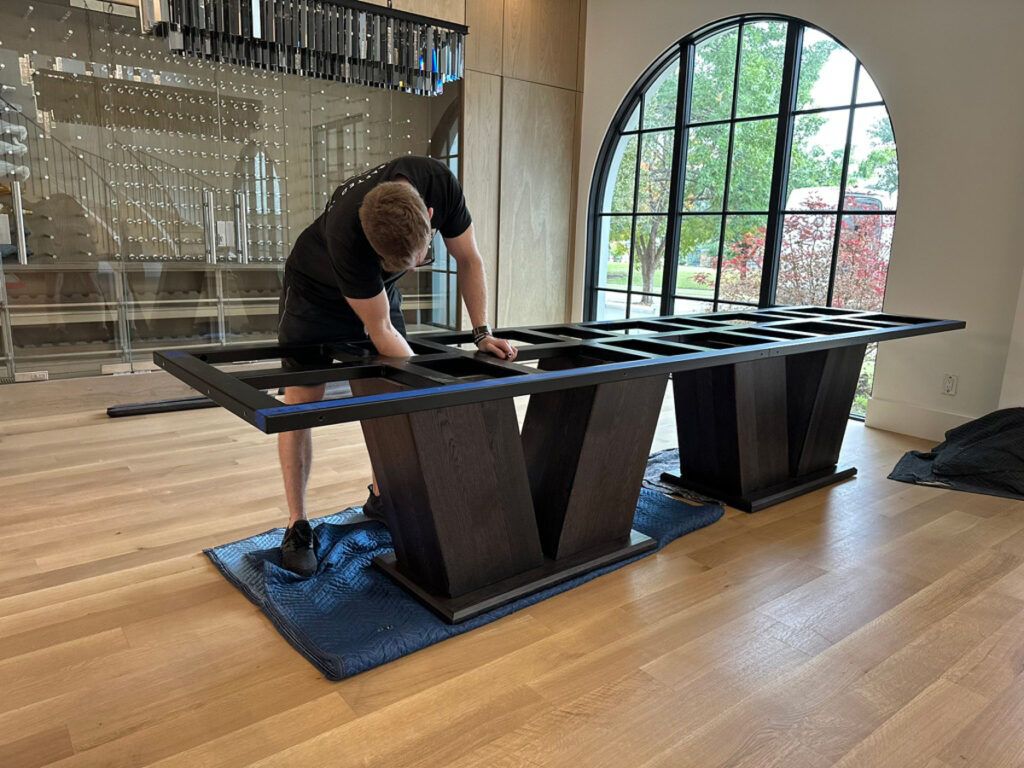 Concepts & Collaboration
Manufacturers may receive drawings or written descriptions of the custom piece, but interpretations can vary. That’s why clear communication and alignment are essential. Renderings are often edited and shared back and forth until both parties achieve a shared understanding of the final design.
Be open to suggestions from the manufacturer. For example, if a client wants to save money on materials but still achieve a certain look, labor costs may still be higher, making it a balancing act.
Sometimes, redesigning elements to make a piece usable or practical may require compromising on the original vision. There is a lot of conversation that happens throughout. A manufacturer’s role is to ensure clients know all the pros and cons of a certain design and potential limitations. In a collaborative process like this, it’s equally beneficial that clients are open and receptive to feedback.
What to Consider
The common mistakes clients make when ordering custom furniture is not knowing accurate measurements of the space they are commissioning for. Having a clear understanding of the room layout is crucial to ensuring the finished product fits and functions properly within the space.
If it’s a dining room and the client wants to order custom chairs, a table or other pieces, both parties must consider what is already in the space. The client should provide clear information on measurement and dimensions and approve plans to avoid any layout issues.
Homeowners should consider both the physical constraints of the room and how the space will be used. If the room is currently empty, you have to consider what may be added to the space in the future and plan accordingly.
When reviewing costs, homeowners should think about the material selection, complexity of the design, and labor. Of these, the two main factors that will drive the price are complexity and the materials. A more dynamic piece like parametric furniture requires additional time and planning, which naturally increases the cost.
Material selection should also align with the furniture’s purpose and setting. If something is going to be used daily, you want structural integrity to ensure longevity. More often than not, this requires the piece to be built as if it was being made for a commercial or hospitality space. Those pieces are often made using durable materials because of their frequent use. Homeowners should stick to materials that can withstand wear and tear.
As a homeowner, don’t be afraid to change your mind. Open communication with the manufacturer is a must, and requesting revisions to renderings that don’t align with your vision can be a normal part of the process. It’s better to go back and forth on visual concepts rather than to re-do the piece once it’s finished.
The right manufacturer will show the process throughout the build, so the homeowner can see every part of the design from start to finish and provide feedback if they are not satisfied with the progress. Clients should always sign-off throughout to prevent changes that impact cost and timeline at the end.
Colby Murphy is founder of SouthLoft, a Texas-based company redefining custom furniture with a quality-first mindset. Murphy is responsible for product engineering, processing efficiency, maintaining client relationships and retention, acquiring new clients and supporting employee wellbeing. Having worked in fabrication since the age of 12, he grew up building cars and hot rods. After his five-and-a-half-year stint in the Marine Corps, he translated this affinity for building into furniture design, starting out in his dad’s garage.






