






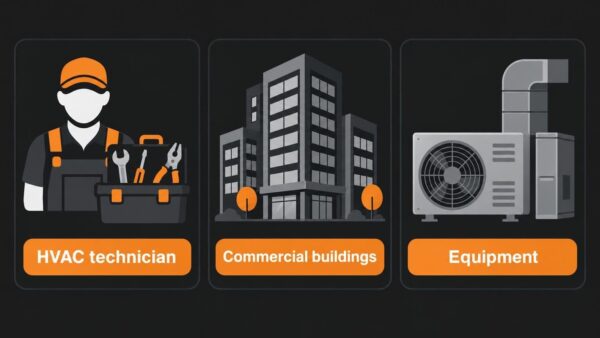
Commercial buildings run on rooftop units, chillers, boilers, and building controls. When one of them fails in July, the tenants, the lease, and the repair bill all depend on one person: the technician you hired. This guide shows facility teams and contractors how to hire HVAC technicians for commercial work without losing weeks to a bad fit.
Start with the equipment, not the job title
“HVAC technician” covers very different jobs. Someone who installs split systems in homes may never have worked on a chiller plant. Before you post the role, list what the person will actually service:
- Rooftop packaged units and split systems
- Chillers, cooling towers, and boilers
- Variable refrigerant flow (VRF) systems
- Building automation controls and sensors
- Commercial refrigeration, if the building has kitchens or cold storage
Put that list in the job post. Candidates with the right background will recognize the work and apply. Others will skip it, and that saves you interview time.
Check the certifications the work requires
In the United States, a technician who handles refrigerants must hold the right EPA Section 608 certification. The EPA explains the certification types and the rules on its Section 608 page. Ask to see the certificate and note which type it covers.
Other requirements depend on your state and your equipment. They can include a state or local license, a boiler operator license, or manufacturer training for the brands on your roof. Ask about these in the first call, not after the offer.
Test how they diagnose, not only what their resume says
A good commercial technician can explain how they find a fault. Give a short, real scenario in the interview: “A rooftop unit cools for twenty minutes and then trips. What do you check, and in what order?”
Listen for method. A strong answer starts with safety, then looks at airflow, then the electrical side, then the refrigerant circuit and the controls. A candidate who jumps straight to “replace the part” is guessing, and you will pay for the guess.
Ask about a hard job they solved, and what they would do differently. People who can describe a mistake clearly tend to be careful on site.
Be honest about on-call work
Commercial HVAC does not stop at five o’clock. Tell candidates up front about on-call rotations, weekend calls, and the busy season in summer and winter. Say how the work is paid. Technicians who learn about the on-call schedule only after they start are the ones who leave in the first year.
Where to look for candidates
Local trade schools and apprenticeship programs are a steady source of entry-level people. Your own technicians are another: they know who is good, and a referral from them carries weight.
For experienced hires, a trade-specific job board reaches people who are already looking in the field. Browsing current HVAC technician jobs also shows you what other employers offer in pay, schedule, and required skills, which helps you set an offer that candidates take seriously.
Make an offer that matches the work
Check what local employers pay for the same duties and certifications. If your offer is below the market, the best candidates will never reach the interview. Beyond the base pay, say what comes next: a review after the first months, a raise tied to new certifications, and paid training on the equipment in your building.
Keep the people you hire
Hiring is only the first half. The second half is keeping the person.
- Pair every new hire with a senior technician for the first weeks.
- Give them working tools and a vehicle in good order.
- Train them on the controls and the equipment of your own buildings.
- Tell them plainly what response times you expect, and back them up when a job takes longer than planned.
A technician who feels trusted and equipped stays, and a stable team means fewer emergency calls and fewer surprises for your tenants.
In short
Define the equipment, confirm the certifications, test the thinking, be clear about on-call duty, and pay at the level of the work. Do that, and hiring HVAC technicians for commercial buildings becomes a repeatable process instead of a scramble each time a unit fails.
Image source: LinkDR, an original illustration made for this article.
Related: Why Experienced HVAC Technicians Never Ignore Small Cracks






