









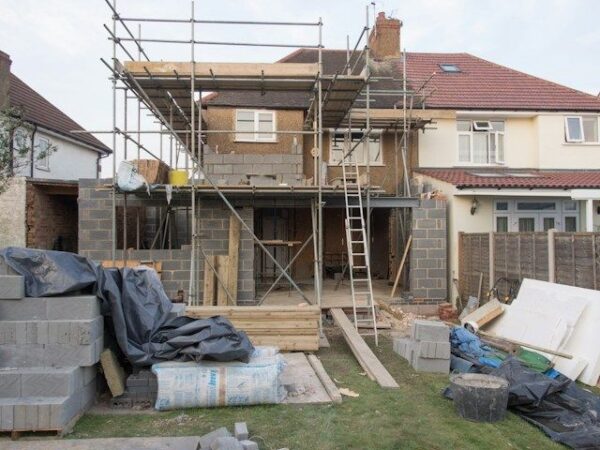
The residential renovation market is being driven by a structural shift that has been building for decades: Canadian homes are getting older, and new construction isn’t keeping pace. For contractors, remodelers, and residential renovation firms, understanding this dynamic matters more than tracking any single quarter’s spending numbers, since it points to where sustained demand is actually coming from.
A Meaningful Share of Housing Already Needs Real Repair
The scale of this shift shows up clearly in the data. According to Statistics Canada, drawing on the 2022 Canadian Housing Survey conducted jointly with CMHC, 7.3 percent of households across the provinces were living in housing needing major repairs, such as defective plumbing or electrical wiring, or structural repairs to walls, floors, or ceilings, while nearly one in four households needed minor repairs like missing tiles, loose bricks, or defective steps and siding.
That is not a small pocket of outliers. It represents millions of homes where the underlying systems, not just the finishes, are reaching the point of needing real investment rather than cosmetic touch-ups. And property age plays a direct role in this picture: older homes are simply more likely to have reached the point where plumbing, wiring, or structural elements need attention, regardless of how well they were maintained along the way.
Why Homeowners Are Renovating Instead of Moving
This aging stock is colliding with a housing market where relocating has become less attractive for many owners. According to the Canada Mortgage and Housing Corporation, when factoring in the age of the housing stock, a clear trend emerges: units built after 2003 are far more likely to be rated in excellent or good condition than units built before that date, and buildings continue to require repairs to enclosures, interiors, and mechanical systems as they age.
Separately, industry analysis of Statistics Canada’s capital formation statistics puts residential renovation expenditure in Canada at roughly $61 billion in 2025, supporting an estimated 526,000 jobs directly and indirectly across the renovation sector. Even with renovation spending having pulled back somewhat from its pandemic-era peak, it remains meaningfully above pre-pandemic levels, a pattern more consistent with a structural shift than a temporary bump.
What This Means for the Renovation Sector Specifically
A few dynamics are worth watching closely as this trend plays out:
- Older homes increasingly require full system replacements, not cosmetic updates, shifting project scope and average contract value upward
- Elevated borrowing costs continue to discourage relocation for many homeowners, keeping renovation the more financially rational option
- Rural areas and older housing stock in specific provinces see meaningfully higher rates of major repair need than the national average
- Homeowners increasingly treat additions and major renovations as long-term investments rather than purely pre-sale improvements
Where the Need Is Concentrated
This trend does not play out evenly across the country. Statistics Canada’s data shows that certain regions, including rural areas of Nova Scotia and Saskatchewan, report major repair needs well above the national average, while some large population centres in British Columbia and Alberta see comparatively higher rates of minor repair needs. For renovation firms operating across multiple markets, understanding where genuine need is concentrated, rather than relying on national averages, has real implications for how demand should be forecast and where capacity gets prioritized. A national figure is a useful headline, but it flattens a picture that actually varies significantly by region, housing age, and population density.
A Practical Example of This Shift
Firms built specifically around this dynamic illustrate the trend in practice. If you’re weighing whether to renovate your home instead of moving, Grand Building & Contracting, a Toronto and GTA-based residential contractor, works through exactly this kind of decision with homeowners, handling additions, waterproofing, and the structural upgrades an aging housing stock increasingly demands.
Final Thoughts
The renovation sector’s underlying demand driver is not a temporary trend tied to a single housing cycle. It is a structural consequence of an aging national housing stock combined with a market where relocation has become comparatively less attractive. For firms in residential renovation, understanding where the housing stock genuinely needs work, and positioning accordingly, matters more for long-term planning than reacting to any single quarter’s spending forecast.






