








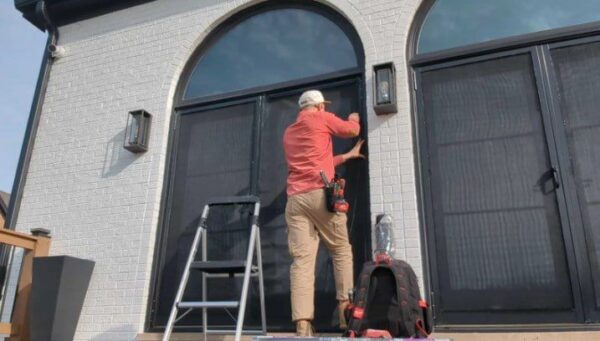
Many closeout problems are documented in language that cannot be closed out reliably. “Adjust window,” “fix door,” or “check blinds” identifies a category, not a defect. The trade has to rediscover the problem, the project manager cannot confirm that the original condition was corrected, and the occupant may become the final tester.
A useful note should let another person find the opening, repeat the same operating check, understand the effect, and verify the result.
Give Every Opening a Stable Location
Start with a location that remains clear after temporary labels and protection are removed. Use the unit or room, wall orientation or opening number, and component. “Unit 304, east bedroom, north window” is far more useful than “bedroom window.”
For repeated conditions, do not assume one note covers every opening. Similar windows can have different causes, hardware, or access constraints. Separate records also make retesting and ownership clearer.
Describe the Observable Failure
Write what happens during normal operation. Useful notes include:
- sash stops approximately halfway during normal opening;
- lock does not align from the naturally closed position;
- exterior door rubs the frame near the upper latch side;
- blind headrail shifts when the treatment is lowered;
- screen frame does not seat at the lower corner.
Avoid naming the cause unless it has been established. “Replace hinge” can send the work in the wrong direction when the actual issue is frame alignment or another interface.
Connect the Defect to Its Effect
State whether the condition affects locking, normal passage, privacy, weather protection, finish integrity, or safe operation. This helps the team prioritize a door that will not latch differently from a small cosmetic mark.
For Chicago-area renovation punch lists, CapaHome handles repairs involving window glass and hardware, door fit and seals, blinds, and screens. When an entry needs additional protection from the weather, storm door installation may also be part of the project.
Keep the work tied to the observed condition. A list of possible services is not a substitute for identifying what failed at the specific opening.
Capture Evidence That Supports the Same Check
Use one wide photo to establish location and one close photo to show a visible defect. A short video may be more useful for intermittent rubbing, closer speed, or hardware movement, subject to the project’s documentation practices.
Pair the image with the operating step: “close door without lifting handle, then engage deadbolt.” That instruction gives the repair team and reviewer the same test. Without it, two people may reach different conclusions because they used the component differently.
State the Next Step Without Guessing at the Fix
The closeout note should distinguish among inspect, adjust, repair, replace, and coordinate. “Inspect and correct so sash closes and locks under normal hand pressure” defines the required result without guessing which part has failed.
Coordination matters when finishes, treatments, or adjacent work are involved. A blind may interfere with a crank, a new floor may reduce door clearance, or final paint may reveal contact after an adjustment. The responsible trade should be clear, but conditions between scopes should not disappear from the record.
Repeat the Original Check
Closeout is complete only when the original operating check passes under final conditions. A photo of a new part does not prove that the window now locks or the door clears the floor.
Record the corrective action, date, result, and reviewer. If the opening passes only with a workaround, the original defect remains open. When nearby finish work follows the correction, check it once more to confirm that clearances and surfaces stayed intact.
Use a Five-Part Note
A consistent note can be brief:
- Location: unit, room, orientation or opening ID, and component.
- Observed behavior: what happens during normal operation.
- Effect: locking, access, privacy, weather protection, or finish.
- Evidence and check: photo plus the operating step.
- Required result: the condition that must pass during the final check.
This structure does not replace commissioning or a full closeout process. It improves the small records those processes depend on. When every note describes a condition that another person can repeat and a result that can be verified, teams spend less time interpreting vague instructions and more time closing actual defects.
Related: FGIA Updates Specification for Window and Door Product Analysis






