








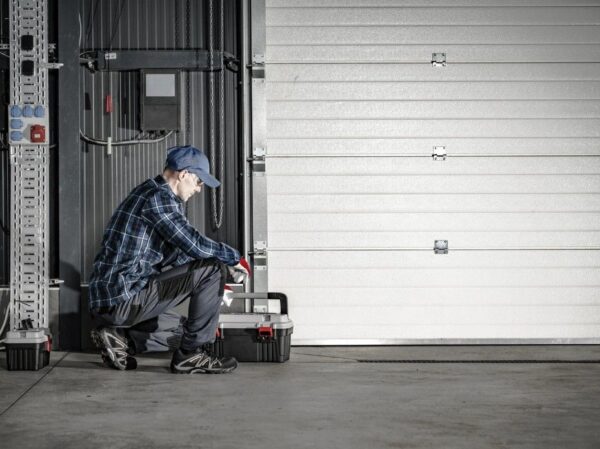
When a commercial garage door breaks down, your business feels it fast. Trucks can’t load. Inventory sits. Customers wait. The sooner you know what a repair involves, the sooner you can plan around the disruption instead of scrambling through it.
The good news is that professional repairs follow a predictable process. In most cases, a technician will:
- Inspect the entire system
- Explain what failed and why
- Provide a written estimate
- Complete the repair
- Test the door under real-world operating conditions
Most commercial garage door repairs wrap up the same day. Below, we’ll walk through each step so you know exactly what’s coming.
The Commercial Garage Door Repair Process, Step by Step
Every reputable repair company follows a similar process, whether they’re fixing a rolling steel door at a warehouse or a sectional door at an auto shop. The order matters. Each step builds on the one before it and skipping any of them usually means a repair that doesn’t hold. Here’s how a professional visit unfolds, from the first call to the final test.
Step 1: The Phone Call and Scheduling
The repair actually starts before anyone shows up. When you call, a good repair company won’t just take your address and hang up. They’ll ask questions. What type of door is it? Rolling steel, sectional, high-speed? What’s it doing, or not doing? Did you hear a bang, a grinding noise, or nothing at all?
Your answers matter more than you’d think. They help the technician show up with the right parts already on the truck. A few details up front can turn a two-visit repair into a one-visit fix.
And don’t be shy about asking your own questions. Many companies bump commercial calls to the front of the line because they know downtime costs you money. Ask about same-day service. Ask if the technician has worked on your door type before. It takes thirty seconds and saves headaches later.
Step 2: On-Site Inspection
Once the technician arrives, expect a full inspection. Commercial doors are heavy, connected systems. A worn cable often traces back to a spring issue. A bent track can hint at a deeper alignment problem hiding somewhere else.
They’ll check the springs, cables, rollers, hinges, tracks, and the operator itself. For commercial doors, they should also consider safety features, such as photo eyes and reversing mechanisms. Those have to work correctly in accordance with safety standards, and a repair visit is the natural time to confirm they do.
Also, don’t be surprised if you get asked how many times the door cycles each day. A door that opens 50 times a day wears completely differently than one that opens five, and the answer changes which parts they’ll recommend.
Step 3: The Diagnosis and Written Estimate
After the inspection, the technician should explain what they found in plain language. No jargon, no handwaving. You should walk away knowing what failed, why it failed, and what it’ll cost to fix.
Get that estimate in writing before any work starts. A trustworthy company breaks down parts and labor separately, and if they find extra wear, say, frayed cables sitting next to a broken spring, they should show you the damage. Not describe it. Show you.
This is also the moment to talk options. Sometimes a repair is the obvious call. But if the door is old and parts keep failing one after another, replacement can save you real money over the next few years. A good technician gives you honest numbers for both paths and then lets you decide. It’s your door and your budget, after all.
Step 4: The Repair Itself
Most commercial garage door repairs take one to three hours. Spring swaps, new cables, roller changes, and track fixes are everyday work for a commercial technician.
The technician will block off the work area. Give them that space. Commercial springs carry a huge amount of tension and releasing that tension safely requires training and the right tools. This is why spring repair is never a DIY job. One mistake can cause serious injury.
For opener repairs, they’ll test the motor, check the wiring, and look over the drive system. If your door runs all day, they might suggest stronger springs built for heavy use. Those cost more now but last longer between repairs.
If a part isn’t on the truck, ask when they’ll be back. For most commercial doors, parts arrive within a day or two.
Step 5: Testing and Balance Check
A repair isn’t finished when the new part goes in. The technician should run the door through several full cycles and then do a balance test. A balanced door stays put when lifted halfway and released. An unbalanced one strains the operator and chews through brand-new parts fast.
They should also test the safety reversal system. Commercial doors have to reverse when they hit an obstruction. Watch this test happen with your own eyes. It protects your employees, your vehicles, and your liability exposure all at once.
Before they leave, ask for a walkthrough of what was done. Any good technician will happily show you the old parts too.
Step 6: Maintenance Recommendations
Before the technician leaves, you should get more than an invoice. You should get advice. Commercial doors rack up cycles fast, so most pros recommend service every 12 months for standard use and every 6 months if your door runs constantly.
Lots of companies run planned maintenance programs for commercial clients, and they’re worth a look. Those visits catch worn cables and loose hardware before they shut your door down on a busy morning. And when you do the math, a maintenance plan almost always costs less than one emergency call plus the downtime that tags along with it.
How to Prepare for a Garage Door Repair Visit
A little prep on your end speeds everything up. Before the technician arrives:
- Clear the area around the door, inside and out
- Move vehicles, pallets, and equipment at least ten feet back
- Have someone on site who knows the door’s history and can approve the estimate on the spot
- Tell the repair company about any security or check-in procedures ahead of time
The last step is easy to overlook, but it prevents delays before the work even begins.
A Quick Recap Before You Call
A professional commercial garage door repair follows a clear path: detailed questions on the first call, a full inspection, a written estimate, a safe repair, and thorough testing before the technician leaves. If a company skips steps, especially the estimate or the safety testing, treat it as a warning sign and look elsewhere.
Your garage door plays a direct role in how your business makes money. When it fails, choose a repair company that understands what’s at stake. Ask questions, expect transparency, and get everything in writing. The right technician will have your door running, and your operation moving again, before the day is out.
Author’s Bio:
Bobby Dickinson is the Chief Executive Officer of GOGO Garage Door Service, a veteran-owned and operated company serving Phoenix and the East Valley. Named a 2026 Phoenix Magazine Best of the Valley winner, GOGO handles everything from emergency repairs to commercial garage door systems for warehouses, shops, and facilities across the Valley. Bobby leads a team of licensed technicians with a simple approach: upfront pricing, honest recommendations, and doors that work when your business needs them to.




