









When commercial building owners, developers, and landscape architects design playgrounds for multifamily communities, hotels, resorts, restaurants, schools, and shared outdoor spaces, the focus often begins with playground equipment. However, the surface beneath the equipment is just as important. A well-designed playground requires more than attractive features—it needs a foundation that prioritizes safety, accessibility, durability, and long-term performance.
Poured-in-place (PIP) rubber safety surfacing has become a preferred solution for many commercial playground projects because it combines reliable impact protection with design flexibility. Unlike wood mulch, poured-in-place rubber creates a seamless, stable surface that can be customized to complement the surrounding environment.
From improving safety outcomes to enhancing the visual appeal of outdoor spaces, here are eight benefits of choosing poured-in-place rubber safety surfacing for commercial building playground projects.
1. Superior Impact Protection Helps Reduce Playground Injuries
Falls are one of the most common causes of playground injuries, making impact-absorbing surfacing a critical part of playground design. Poured-in-place rubber systems are engineered to absorb and disperse impact energy, helping reduce the severity of injuries when children fall.
A high-quality rubber safety surface provides consistent protection throughout the play area, including beneath climbing structures, slides, and other elevated equipment where falls are more likely to occur. For commercial property owners, investing in impact-absorbing surfacing helps create safer environments for children and provides greater confidence for families, residents, and guests.
Understanding HIC Scores and Playground Safety
One of the most important measurements in playground safety is the Head Injury Criterion, commonly referred to as HIC. HIC scores are used to evaluate how effectively a playground surface reduces the force of impact during a fall and the likelihood of a serious head injury. In simple terms, lower HIC scores indicate better protection.
This distinction matters because many playground surfaces can technically meet ASTM fall safety standards while still providing far less impact protection than higher-performing alternatives. For example, materials like engineered wood fiber may pass testing initially, but their safety performance can diminish as they compact, shift, or freeze.
Impact-absorbing rubber surfaces, by comparison, consistently achieve significantly lower HIC scores because they offer greater protection against severe head injuries. For hotel owners, property managers, and commercial developers, selecting a surface with superior impact attenuation can help create a safer environment for guests while demonstrating a commitment to child safety.
2. Creates a More Accessible Playground Environment
Accessibility is an increasingly important consideration in commercial playground design. Poured-in-place rubber surfacing provides a smooth, seamless surface that allows children and caregivers to navigate the space more easily.
Unlike wood mulch that can shift, scatter, or create uneven areas, PIP rubber remains stable and provides a firm pathway for wheelchairs, mobility devices, and strollers. This helps commercial properties create inclusive play environments where more children and families can participate.
For multifamily developments, hospitality properties, and community spaces, accessible playground design can enhance the overall experience for residents and visitors.
3. Offers Creative Design Flexibility
In commercial environments, playgrounds are often more than recreation areas—they are amenities that reflect the identity and quality of the property. A thoughtfully designed play space can become a memorable destination that helps attract residents, guests, and visitors.
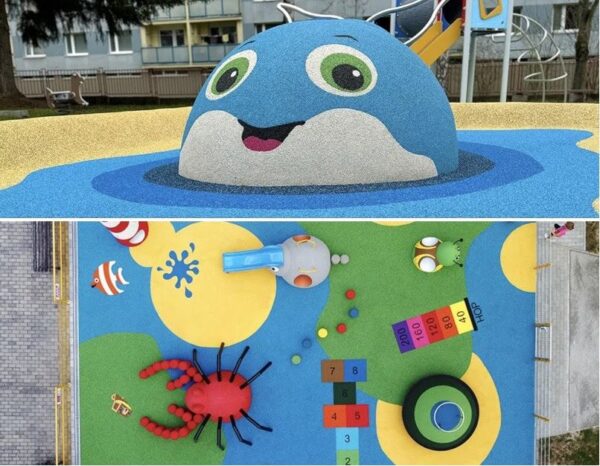
Modern poured-in-place rubber surfacing allows designers to transform the playground surface into a creative design element. With customizable colors, patterns, graphics, and themed designs, surfacing can complement architecture, landscaping, and branding.
For example, RubberBond Solutions provides customizable surfacing options that allow designers to incorporate custom colors that coordinate with property branding or architectural elements. RubberBond Solutions also allows designers to incorporate logos and visual identity features, educational graphics and interactive play zones, nature-inspired patterns and landscape themes, and wayfinding elements that guide movement throughout the space. These design possibilities allow playground surfacing to become an intentional part of the overall environment rather than simply a safety requirement.
By integrating surfacing into the overall playground concept, commercial developers can create distinctive environments that stand apart from traditional play spaces.
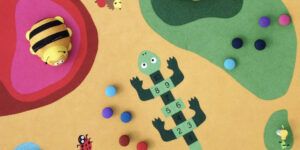
Image Courtesy of RubberBond Solutions
4. Provides Long-Term Durability for High-Traffic Areas
Commercial playgrounds often experience significantly more use than residential backyard play spaces. Apartment communities, hotels, resorts, and public gathering spaces require surfaces that can withstand frequent activity and changing weather conditions.
Poured-in-place rubber is designed for durability, helping maintain performance and appearance over time. Its resilient construction helps it withstand heavy foot traffic, outdoor exposure, and daily wear.
For property owners, selecting a long-lasting surface can help reduce the need for frequent repairs or replacements while protecting the value of the investment.
5. Reduces Maintenance Requirements
Facility managers are responsible for maintaining safe, attractive outdoor spaces while managing operational costs. Materials such as wood chips or engineered wood fiber require regular raking, leveling, and replenishment to maintain consistent coverage. PIP rubber stays securely in place and requires routine cleaning and inspections rather than ongoing material replacement.
This makes it an appealing choice for commercial properties looking for a low-maintenance safety solution.
6. Enhances Property Appeal and User Experience
Outdoor amenities influence how residents, guests, and customers view a commercial property. A thoughtfully designed playground can become a valuable feature that encourages community engagement and enhances the overall experience.
Poured-in-place rubber surfacing creates a polished, professional appearance that can elevate playground aesthetics. Custom colors and designs can help outdoor spaces feel intentional and connected to the larger property design. For multifamily communities and hospitality properties, an attractive playground can become a meaningful differentiator.
7. Performs Across Different Weather Conditions
Commercial playground surfaces must withstand changing environmental conditions throughout the year. Poured-in-place rubber systems are designed to maintain performance in a variety of climates when properly installed.
Unlike some loose-fill materials like wood mulch that can become displaced by rain, wind, or freezing conditions, rubber surfacing provides a stable playing surface. This reliability helps ensure playgrounds remain safer and more usable throughout the seasons.
Create Safer, More Durable, and More Engaging Commercial Playground Spaces!
For commercial building playground projects, the surface beneath the equipment is a critical design decision that impacts safety, accessibility, aesthetics, and long-term performance. Poured-in-place rubber safety surfacing provides a versatile solution that helps property owners create playgrounds that are safer, more attractive, and built to last. By making safety surfacing part of the conversation from the beginning of the design process, developers and designers can create outdoor spaces that deliver lasting value for children, families, and communities.
Sheryl Berkley is the Chief Technology Officer at Rubberecycle Corporation, a leader in top quality rubber surfacing products for playgrounds and commercial establishments since 1996. The company specializes in impact-absorbing playground mulch, tiles, and poured-in-place surfacing. A playground safety expert, Sheryl educates the public on best practices for safe play environments, the benefits of sustainable surfacing materials, and strategies for preventing common injuries. https://www.rubberecycle.com/




