




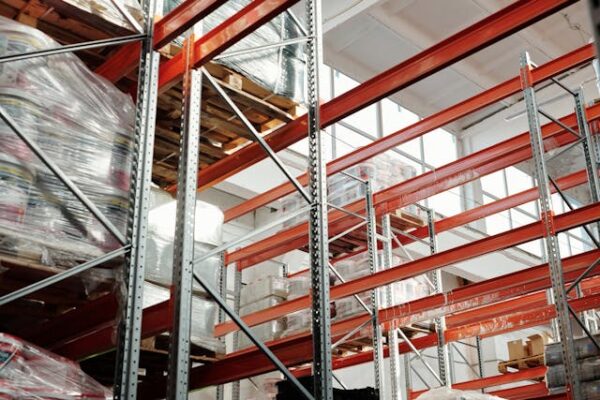
Modern distribution centers must deal with increasing volumes, tight deadlines, and constant pressure on margins. To remain competitive, they can no longer rely on improvised storage methods. High-performance facilities adopt precise strategies based on vertical space optimization, flow fluidity, and system adaptability. This article presents ten proven approaches that transform an ordinary warehouse into a high-performance logistical machine.
Maximizing Density with Deep Storage
Centers handling large quantities of identical products prioritize deep storage to maximize every available square meter. Drive-in pallet racking allows for storing several pallets deep in the same bay, eliminating multiple aisles and increasing the warehouse’s net capacity. This configuration is particularly suitable for products with moderate rotation or seasonal stocks. It requires rigorous LIFO management to avoid blockages. Properly sized, this system can double capacity without expanding the building.
Exploiting Available Height with Vertical Systems
Many warehouses underutilize available ceiling height, leaving precious cubic meters untapped. High-bay racking systems allow for tripling or even quadrupling storage capacity on the same floor footprint. This approach requires adapted forklifts, often reach trucks or VNA (very narrow aisle) trucks. It also requires a building structure capable of supporting high-altitude loads. Modern centers install systems reaching 12 to 15 meters, transforming aerial space into a profitable asset.
Segmenting Zones According to Product Rotation
A common mistake is treating all products uniformly, regardless of their movement frequency. High-performance centers segment their warehouse into ABC zones, placing high-rotation items near loading docks. Medium-rotation products occupy intermediate zones, while slow items move to the most distant locations. This segmentation drastically reduces the distances traveled by order pickers. It requires regular analysis of sales data to adjust placements. The impact on productivity is measured in hours saved each week.
Adopting Dynamic Picking Systems
Dynamic picking systems bring products to the operator, reversing the traditional model where humans move. Gravity conveyors, vertical carousels, and automated systems reduce unnecessary travel and speed up preparation rates. These installations require a significant initial investment but generate measurable gains in hourly productivity. They are particularly suitable for high-rotation SKUs and small orders. Centers that deploy them often see a 40 percent reduction in picking time.
Standardizing Dimensions and Load Carriers
The diversity of pallet sizes and containers complicates space management and slows down operations. Efficient centers standardize load carriers as much as possible, favoring dimensions compatible with their equipment. This standardization facilitates stacking, optimizes truck filling, and reduces handling errors. It also simplifies slotting planning and allows for better use of automated systems. When complete standardization is not possible, creating dedicated zones for atypical formats maintains overall fluidity.
Integrating High-Performance Warehouse Management Systems
Steering Flows with Real-Time Data
A modern warehouse management system does not just track inventory; it orchestrates all movements to maximize efficiency. Current WMS optimize picking routes, suggest storage locations, and anticipate replenishment needs. They eliminate empty travel and reduce human errors through precise instructions. Integration with order management systems allows for perfect synchronization between reception, storage, and shipping. Centers that fully exploit these tools gain between 20 and 30 percent in productivity.
Creating Buffer Zones to Absorb Peaks
Distribution centers live to the rhythm of unpredictable fluctuations, whether from promotions, seasonality, or supply disruptions. High-performance facilities set up flexible buffer zones capable of temporarily absorbing excess volumes without disrupting ongoing operations. These spaces can accommodate floor pallets or mobile racks that deploy according to needs. This flexibility avoids bottlenecks at receiving docks and maintains flow fluidity. It serves as an essential safety valve during peak activity periods.




