










The construction industry is entering a defining decade. Demand for new facilities, infrastructure upgrades and redevelopment projects continues to rise. At the same time, contractors, owners and developers are navigating an increasingly complex environment: tight labor markets, evolving safety and regulatory requirements, supply chain challenges and the growing integration of technology into every phase of a build.
While cranes and capital are visible signs of growth, the industry’s most pressing challenge today is less obvious: developing enough management-ready professionals to lead future projects, teams and organizations.
According to the U.S. Bureau of Labor Statistics, the construction industry is projected to grow by 4.7% by 2033. Yet, employers continue to report difficulty finding graduates who are prepared to step into these roles.
That challenge prompted a new kind of collaboration in Georgia.
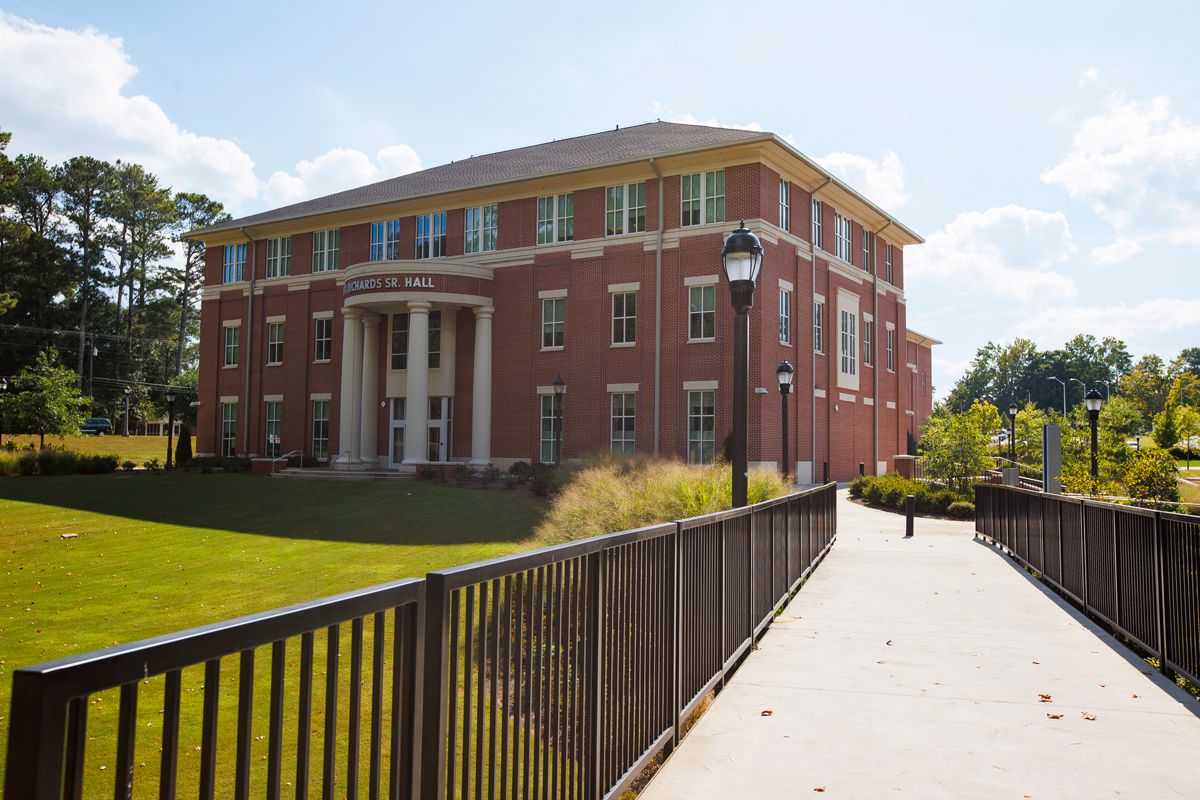
In 2025, Caliber 1 Construction made a $1.5 million investment to help establish a new Construction Management Concentration within the Richards College of Business at the University of West Georgia. The partnership was designed to address a shared concern: how to better align academic preparation with the real-world demands of today’s construction industry—while strengthening the local talent pipeline for the long term.
 A Growing Industry with a Talent Gap
According to a report by the Associated General Contractors of America, construction is one of Georgia’s most vital industries, contributing approximately $45 billion, or 5.2% of the state’s GDP, and continuing to grow. Plus, Georgia Department of Labor data shows the construction sector added 7,100 jobs in 2024 alone, marking growth in 11 of the past 12 years.
Demand is particularly strong for project managers, preconstruction estimators, schedulers and first-line supervisors—roles that require both technical understanding and leadership capability.
Despite this growth, the industry faces a persistent gap. Many graduates enter the workforce with either a technical construction background or a general business education, but not both. As a result, employers often spend significant time and resources bridging the divide.
Closing that gap requires rethinking how construction leaders are educated from the start.
Why Construction Management Belongs in a Business School
When the University of West Georgia evaluated workforce needs in the region, one insight stood out: relatively few construction management programs are housed within AACSB-accredited business schools. Yet construction managers operate, first and foremost, as business leaders.
Placing the Construction Management Concentration within the Richards College of Business was a deliberate decision. Students build a strong foundation in finance, accounting, management, analytics and organizational leadership—then apply those principles directly to construction-focused coursework.
This approach reflects how the industry actually functions. Successful construction leaders must understand job costing, cash flow, contracts and risk management just as well as scheduling software and logistics. Embedding construction education within a business framework prepares graduates to manage complexity, communicate across disciplines and make informed decisions under pressure.
Program Structure: From Classroom to Jobsite
The Construction Management Concentration—admitting students now to start in August 2026—is designed to be both rigorous and practical.
Students complete a core business curriculum alongside construction-specific courses that emphasize project management, estimating, scheduling, safety and operations. Coursework aligns with national benchmarks and incorporates industry-standard tools and technologies, helping students become familiar with real-world systems before entering the workforce.
Central to the new program is a required construction-related internship. Every student gains hands-on experience in active construction environments, applying classroom concepts to real projects while learning from experienced professionals. These internships are complemented by job shadowing opportunities, site visits, guest lectures and mentorship from industry leaders.
Experiential learning is not treated as an add-on—it is integrated throughout the program to ensure students graduate with both confidence and competence.
 The Role of Industry Partnership
The partnership between the University of West Georgia and Caliber 1 Construction reflects a broader shift within the industry toward proactive workforce development.
Industry partners were engaged early in shaping the curriculum to ensure it reflects the skills employers actually need. Ongoing involvement—including internships, mentorship and on-site learning—will help keep the program relevant as construction practices continue to evolve.
The university will also establish an industry advisory council to provide long-term guidance, ensuring the concentration adapts to changes in technology, safety standards, sustainability practices and delivery models. Future plans include exploring non-degree certificates and potential construction-focused offerings within graduate programs, expanding access for both emerging and mid-career professionals.
Supporting Regional Economic Growth
Beyond individual career outcomes, the program is designed to support regional growth. By offering a four-year construction management pathway close to home, the university helps retain talent within west Georgia—reducing hiring costs for employers and strengthening the local construction ecosystem.
Graduates who stay in the region contribute not only to projects, but to the long-term vitality of the communities where they live and work.
This local focus is especially important in fast-growing regions, where infrastructure, housing, healthcare and commercial development must keep pace with population growth.
Preparing for What Comes Next
Construction has always been essential to economic progress. As the industry continues to grow and change, the need for capable, adaptable leaders will only intensify.
The Construction Management Concentration at the University of West Georgia represents one response to that challenge—rooted in collaboration and the future of education. It reflects a shared belief that preparing construction leaders requires more than technical training or business theory alone.
By intentionally integrating business fundamentals, construction expertise, and real-world experience, programs like this help ensure the industry is not only building for today, but preparing for what comes next.
Christopher Johnson, Ph.D., is Dean of the Richards College of Business at the University of West Georgia, where he focuses on career-connected learning and preparing students for the future of work.
Chris Elliott is CEO of Caliber 1 Construction, a commercial general contractor headquartered in Georgia, and a University of West Georgia alumnus actively involved in industry workforce development initiatives.






