





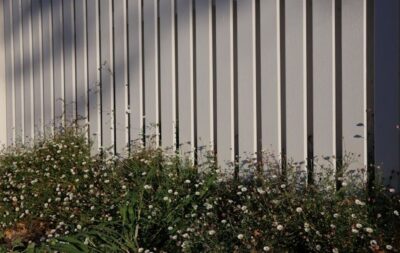
You are not alone. Homeowners are increasingly swapping out old timber for something that not only looks better but also performs better. The natural aesthetic of composite fencing has come a long way from the “plastic-looking” early days of manufactured boards. Composite materials today replicate wood grain, colour variations and even weathered textures with incredible realism. Your neighbours won’t be able to tell the difference.
The best-kept secret in the fencing world…
Composite fencing is a fast-growing market, expanding at 8.7% annually through 2030. Manufacturers have figured out the formula for fencing that actually looks natural while offering the benefits of high-performance materials.
In this guide, we will:
- show you why composite fencing is now giving real wood a run for its money in terms of realistic appearance
- reveal the latest innovations in texture and colour that are changing the game for fence design
- guide you through choosing styles that blend naturally with your surroundings
- share installation tips that maximise natural appeal
The evolution of natural-looking composite fencing
To be blunt, the early days of composite fencing were pretty dismal.
Those first-generation boards were shiny and uniform, shouting “plastic” from a mile off. But that was then. Technology has advanced by leaps and bounds, with modern composite fencing using multi-layer lamination that embeds wood grain patterns into the core material during the manufacturing process.
The result? Boards that feature varied grain patterns, knots and colour inconsistencies that closely match natural timber. Some high-end ranges go so far as to replicate photo-realistic wood textures, scanned in from real wooden planks. The best composite fencing products will even weather like wood, developing a patina over time that is indistinguishable from cedar or oak.
Patterns in the grain that fool the eye
Composite fencing tricks the eye with wood grain patterns.
Leading manufacturers are using 3D embossing technology to create depth in the wood grain. This is not a flat print on the surface but a textured effect you can see and feel when you run your hand along the length of the board.
Different styles offer a range of options from deep wood grain that mimics rough-sawn timber, to subtle grain that creates a weathered appearance, to mixed patterns that avoid visual repetition across a fence line.
Real wood will never have the same grain pattern twice. Premium composite fencing replicates this natural variation by using multiple mould designs in the production process to create a truly random appearance.
Innovations in colour beyond just brown
Those first-generation composite fences only came in three shades of brown, and they all looked like plastic.
Colour technology has made big strides in recent years, with options that replicate the natural hues of real wood. You can now choose from warm cedars with reddish undertones, silver-grey weathered oak finishes, dark walnut colours with streaks of deep brown, or honey-coloured pine alternatives.
But here’s the really cool part…
Many modern composite fencing ranges feature dual-tone colouring. This means each board has subtle colour variation along its length, just as you would see with natural wood where some areas are darker due to knots or higher grain density.
Top-quality composite boards use through-colour technology, so if the board gets scratched or cut, there will not be a different colour underneath showing through. This means the fence will maintain its natural appearance even after years of wear and tear.
Texture techniques for a wood-like feel
Appearance is only half of the battle. It’s how your fence feels that also counts.
Modern composite fencing uses texture techniques that make the boards feel like real timber. This includes brushed finishes, embossed textures that add physical dimension and even hand-scraped effects that mimic reclaimed wood.
Premium ranges take it even further, with distressed finishes, split-grain textures and even sawn-edge effects that give a rustic appearance. These textures also serve a functional purpose – the rougher surface scatters light better and helps the fence visually blend into your garden.
Mixing widths for natural variety
If you want to know the easiest way to make composite fencing look more natural, it’s to vary the width of your boards.
Real wooden fences rarely use perfectly uniform planks. Most modern fencing systems now offer boards in different widths that you can mix and match on the same fence line. Common widths are 90mm to 180mm, but many manufacturers offer wider options too.
Mixing different widths creates a more organic, hand-built look. You can alternate wide and narrow boards or lay them out in a more random pattern. Some installers will even vary the height of boards slightly so some are proud by a few millimetres to break up uniformity.
Horizontal boards emphasise width and create a more contemporary feel, while vertical boards feel more traditional.
Finishing details that fool the eye
The devil is in the details when it comes to composite fencing that looks genuinely natural vs. fake.
Pay careful attention to the capping rails, post caps and trim pieces. The best fencing systems use caps that are perfectly colour-matched and with texture to match the boards. Some systems even feature hidden fixing options where no screws are visible from the viewing side.
Look for post caps that are textured to match your board grain, fascia boards with wrapped edges and colour-matched fixings. Composite posts with wood-grain texture complete the effect, though some people prefer using real timber posts for a hybrid approach.
Working composite fencing into your natural landscaping
Fences do not exist in isolation – they are part of your whole garden.
The natural aesthetic works best when you combine your composite fencing with other elements of your landscaping. Try planting climbing plants such as ivy or clematis to soften the fence line. Add shrubs at the base to blur the transition between fence and garden.
Lighting also makes a huge difference. Install garden lights in such a way that they graze across your fence, highlighting the texture and grain. It makes the fence look even more like natural timber – especially in the evening.
Maintenance for a long-lasting natural look
One of the best-kept secrets of composite fencing is how low maintenance it really is.
Regular cleaning with a mild detergent will keep the texture looking fresh. Pressure washers on high settings can damage the embossed grain, so avoid these. Some manufacturers offer repair kits that blend in seamlessly with the original colour.
The composite fencing market is expected to reach USD 4.12 billion by 2033, largely driven by homeowners who are fed up with the high maintenance of real timber.
Composite will never need sanding, staining or sealing like wood. The natural appearance is built-in and permanent.
Installation tips for maximum natural effect
How you install your composite fencing also affects how natural it looks.
Professional installers recommend randomising your board selection when installing so that you don’t have identical grain patterns next to each other. Keep expansion gaps appropriate but consistent. Stagger the height of boards in horizontal fencing for a more organic feel.
Advanced tricks include mixing textured and smooth boards, angling the posts slightly for a hand-built appearance, and using different post cap styles on longer fence runs. The goal is to avoid that “straight off the production line” uniformity.
Key takeaways to guide your project
Creating a natural-looking composite fence is all about selecting quality materials with authentic textures and colours, avoiding visual repetition by varying board selection, paying close attention to finishing details and integrating your fence with surrounding landscaping elements.
Composite fencing technology has finally solved the problem of appearance. You can get a truly natural wood look that doesn’t rot, warp or fade over time. It’s all in choosing the right products with sophisticated grain patterns, multi-tone colouring and realistic textures.
Your fence should disappear into your garden, looking like a quality timber fence that just happens to last forever.




