










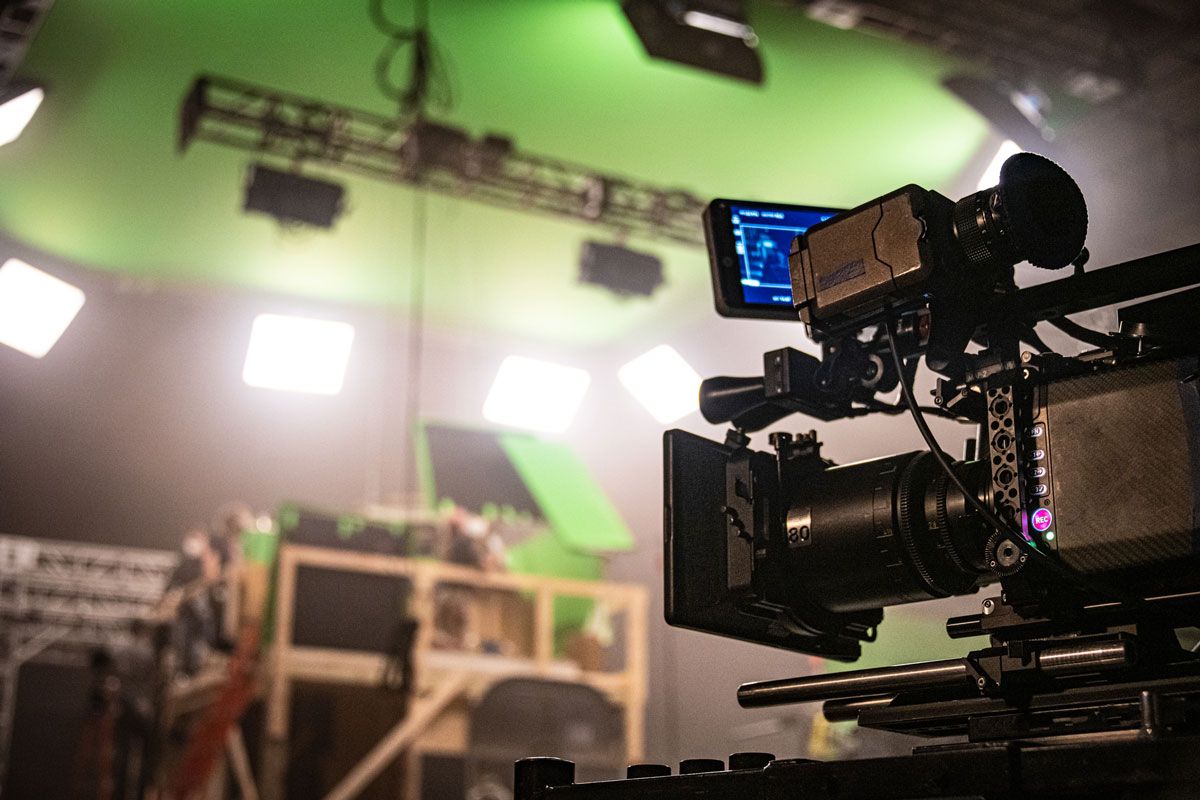
The world of TV and film is changing. The introduction and rapid growth of streaming services producing their own original content has led to an increased demand for production space outside of the traditional offerings owned by TV and movie studios.
We are seeing both new development and expansions to meet the changing needs of the sector in major cities like Los Angeles and New York, but also in secondary markets like New Mexico. Georgia and Ontario, Canada that offer beneficial tax incentives. The boom of the sector also is getting investors’ attention.
According to CBRE’s “2024 Los Angeles Film & Television Report,” as digital media continues to outpace theatrical and home entertainment, demand for production space has surged from 2016 to 2022 to keep up. On average, studio operators reporter 93.5% annual occupancy during those years.
The total amount of filmable indoor space in LA is 7.3 million square feet—roughly three times the amount of production space in the next largest markets: Atlanta (3.4 million-square feet); New York (2.7 million-square feet); and British Columbia (2.7 million-square feet).
With the demand for studio space higher than ever, owners need to remain competitive to attract production companies with superior products and high-quality amenities. The size and particular features of each building will vary depending on location, the site’s existing conditions and other constraints, but these are some tried and true things to consider when developing a studio for TV and movie production.
Soundproofing
“Quiet on the set” is a well-known industry term for a reason. If extraneous noises interfere with scenes, it can cost time and money to re-shoot.
While those on set might have their phones on silent and are standing by with bated breath until the scene finishes, production crews must consider a slew of exterior factors like turbulent weather, low airplanes, nearby construction, and loud vehicles. To ensure the soundstage is sealed from unwanted exterior noises, the building housing the soundstage is enclosed with an acoustically rated exterior envelope.
One common construction method is to use concrete walls with soundproofing components on the interior to protect the production from these sounds seeping into footage.
But, what about noises that come from inside the building, like an air conditioner or water flow through interior piping? HVAC systems in general are noisy, so being able to control the units is critical to any shoot. The easiest way to control the noise of the HVAC system is to turn it off.
The units typically are tied into a bell and light system, which is a system that gets the stage ready for a shoot by turning off the noisy components and notifies everyone that a shoot is about to happen by sounding an audible bell and the visible red lights. There are other options that allow the units to operate during the shoot if designed to avoid the transfer of sound to the stage area.
This typically is achieved by setting the units on an adjacent building (stage support building) and routing the ductwork on the exterior and penetrating through the roof or walls with the sound traps and silencers.
Further, soundstages, which, on average about 10,000 to 50,000 square feet, often have giant rolling doors in several spots – large exterior doors that open to the outside, and also internal ones that allow production crews to split up the space when the full stage is not needed. These are optional, not every stage has these separators.
But it is a perk that many production companies seek. Exterior doors, called elephant doors, are reminiscent of a giant garage door, measuring about 18-feet x 20 feet or larger. These are designed to provide an acoustically controlled environment, engineered to provide sound insulation, blocking out external noise and minimizing disruptions.
Amenities
To stay competitive, studios are creating mini campuses where everything a production crew could need is right at their fingertips. Having all of these different components that make up production in a single location is extremely attractive to those in the industry who are looking for a one-stop-shop.
These campuses could include separate buildings for millwork and set construction, called Mill Buildings, that surround the soundstages and feature unobstructed, 20-foot to 25-foot-tall ceilings and doors, heavy power, dust control and ventilation; enhanced stage support buildings that contain dressing suites for talent, wardrobe, green rooms and laundry areas; and onsite editing rooms, which have an extra layer of soundproofing, built with a double layer to create an isolated capsule and muffle outside noise.
Depending on the location of the studio a huge perk is the exterior space for base camp. A major factor in attracting production companies, base camp is the onsite parking lot where equipment trucks, extra trailers for hair, makeup, wardrobe and production staff are kept. These amenities are most often found in rural or suburban studios due to the extra space surrounding the lot.
Outdoor backlots are another amenity that we’re seeing more of in suburban and rural areas. Large studios with ample outdoor space are building these backlots as a way to realistically film outdoor scenes. They come with their own power supply and any other requirements a production company might need.
Sustainability Features & Disaster Mitigation
Studios rely on massive amounts of heavy power in these soundstages alone to accommodate lighting and other equipment. There are ground and catwalk power systems to allow for flexibility when hooking up lights, fans, and other machines that aid in production. A typical studio has accommodations for 2,000-8,000 amps per stage, depending on the size of the building and stage.
The need for heavy power begs the question—what happens when it goes out, but the show must go on? We are seeing record numbers of brownouts or power outages due to overtaxing the grid. The stages are equipped with the ability to run on generator power in the case of a blackout or power outage.
They all have that capability if needed, and production companies often bring their own supplemental generators. Because of the large power drawn from these properties, many studios also install solar panels, and like to film in a green environment.
While studio offerings can differ based on location, climate, and user demand, these few factors are essential when considering an expansion, renovation or construction of a new studio and production asset.
Vincent Ryan has more than 25 years of experience in the construction industry. His portfolio of projects ranges from nationwide rollouts of retail stores and flagships to large-scale data centers and campus projects. JT Magen / JTM Construction Group is currently working on the expansion of Albuquerque Studios in New Mexico and the buildout of Sunset Studios at Manhattan’s Pier 94.




