









An interesting thing is happening in artificial intelligence (AI), something that most people don’t think about. For most, we think about how AI can help in the workplace or in a factory or manufacturing situation, in logistics and in improving supply lines, human resources, and in reducing human interactions by employing robots and automated processes.
AI can use algorithms to fast track ideas, build reports, resource level and plan production. Or you might think about AI aiding in medical care and surgery, thinking through cures and developing medicines, or even in a diabolical fashion; robots taking over the world.
What’s interesting is that with the advent of AI into everything we know we seldom think of what it takes to power these systems and deliver its efficiencies into our lives. It is projected that AI servers in the next few years will consume the equivalent of several country’s total yearly electricity usage, around 134 terrawatt hours.
Our current electrical grid will not support this usage along with the expanding sales of electric cars, the potential elimination of fossil fuels, cryptocurrency mining and the “ever-love” of green energy by certain elite groups of pushy billionaires who themselves refuse to self-regulate their jet-setting life-styles.
If you think about it, as AI grows and servers are employed to support the exponential growth, then electricity has to be generated on a compounded scale to keep up with the demand. There are just not enough fossil plants being built to support the combined demand. Solar and wind power do not generate enough raw power to offset the growing need. These generation mediums are as artificial as artificial intelligence.
Where then do we turn to satisfy the insatiable demand for AI computing? I’ve always thought that nuclear energy was a solution to all of the so-called woes of fossil, wind and solar generation. Why? Because it is clean and carbon free. Nuclear accidents are at the lowest spectrum of incidence among all of the other generation sources combined.
As much as the general public likes to dwell on Three-mile Island, Russian Chernobyl and Japanese Fukushima melt-downs, nuclear accidents are rare and only 32 deaths have been reported between all three accidents since 1951. Most of those deaths are from the Chernobyl site as a result of radiation sickness among first responders, and one death at Fukushima. There were no deaths in the Three-Mile Island event. In fact many more people died as a result of the Japanese Tsunami and subsequent evacuations than did that nuclear incident; nearly twenty-thousand lives.
Since we are in effect afraid of nuclear energy, no significant number of plants have been built in the last 60 years. That number is actually two. We seem to have started the nuclear narrative off on the wrong foot by using it in time of war before first applying it to our private and industrial power needs. Had it been the other way around and we established nuclear power as a path to power dominance over oil, coal and other means, it is likely that the general public would have embraced it moreover and brushed off the three unfortunate accidents.
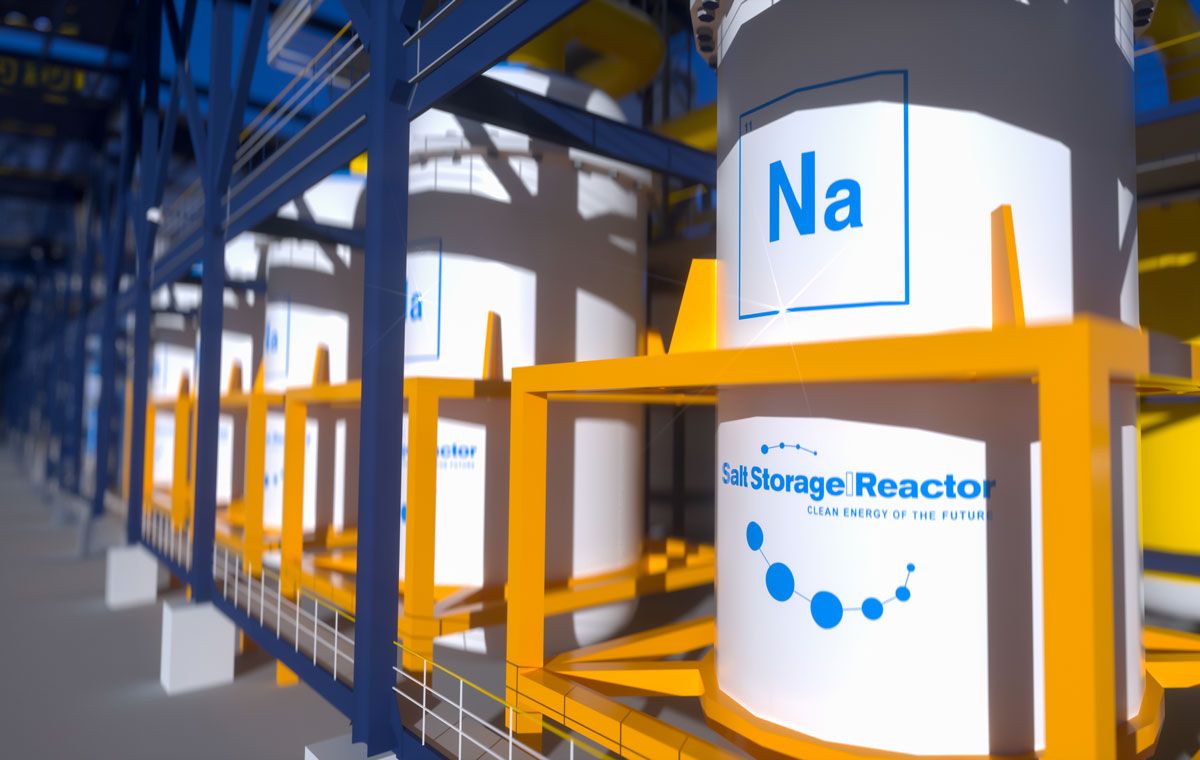
What are we to do with the nuclear option? I say we embrace it now. There are several plans on the drawing boards for new generation nuclear reactors. Bill Gates has a technology of nuclear generation that is deemed safe and efficient. The Natrium reactor utilizes sodium (metal) instead of water. The liquid sodium has a boiling point 8 times higher than water. Through heat transfer, sodium salts are used to heat water to generate more traditional steam to turn a turbine and spin a generator.
The beauty of the Natrium system (SFR) is that it is a fast neutron reactor versus a Light Water Reactor (LWR). This design will allow the reactor to utilize all of the already spent Uranium fuel currently in storage depots at various places around the U.S. and the world. Recycle, recycle, recycle, right? We can jump off there, it gets much more scientific, but it is a promising technology for large scale generation needs.
There are two other similar technologies that efficiently heat gases and molten fluoride and chloride salts. But they utilize fresh U-235 and not the recyclable waste. These other nuclear technologies are promising and are a part of what is considered the next generation IV reactors that are being jointly developed by the United States and other countries.
The drawback is that you are still building a multi-billion dollar project of considerable size and proportion. How about another nuclear option? How about Micro-reactors? If we are to generate the power needed for AI, is nuclear the key? Is it possible to scale down the nuclear models to the benefit of an AI data center?
For the sake of continued development of AI, and to avoid the trap of a bottleneck of ideas but not enough power to produce them, we need to start critically thinking about fitting into this AI power need.
Let’s explore that thought.
It’s funny to think that someday everyone in the future will have their own version of a mini-nuclear power plant in their backyard, like a generator that seems so coveted these days in the never-ending cue of blackouts, power failures and over-taxed grid systems. But we may not be too far from that reality.
They are calling nuclear energy the “Keystone” of AI. Not just what we already know now about the technology as I previously described above and all of its promise, but something much smaller.
SMRs, or Small Modular Reactors, are said to be the “Keystone.” Without this technology, some in the AI field believe all AI will crash. Like a keystone in a stone arch, the walls will come tumbling down.
There can be no advancement of AI’s reach without it. As the larger scale nuclear plants are difficult to build, wrapped up in regulation, testing and bureaucracy, and some take more than ten years to complete, SMRs are seen as the key, or “keystone” to keep the industry from crumbling into AiSH.
SMR’s can be built in 3-5 years and take one-tenth of the land area of a full size nuclear project. SMR’s are designed to reach decommissioning at the same time as the fuel is fully spent, a 25 year life span. They utilize a U238 fuel of which does not require Uranium enrichment processes to create the fission reaction material. The fuel is less radioactive at the end of life of the reactor due to a more efficient burn.
You can see that the speed at which these models can be deployed and the rate of efficiency, safety, costs, and end-of-life concerns are much more tenable than other nuclear options. SMR’s are a most likely candidate for keeping AI on track for the leaps and bounds of the future. One modular unit can produce up to 300MW of electricity.
SMRs can self regulate, they are modular therefore can be built in factories and wholly transported to where they are needed. Such as an AI data center, large factory, military installations, city centers and other major uses. I want to say “set it and forget it,” but I’ll hold on to that thought until I see one in operation. But for now, there are some important people heading up investment challenges to support this “Keystone” of AI.
For the sake of continued development of AI, and to avoid the trap of a bottleneck of ideas but not enough power to produce them, we need to start critically thinking about fitting into this AI power need. The alternative I guess is to just remain the same, be comfortable in our current state of technology. That sounds good to me as I start projecting a road to retirement. But for the future of our kids and theirs, AI if used for good, can do a lot of it.
But if used as some see it, for evil purposes, for control, advancing socialist ideologies and monitoring the public, I’d rather see it crumble. So, watch out for your Roomba, it’s listening. If it starts following you around the house, run! (Actually, just shut off the power.)
Jon Armour is a contributing editor/author to the line of Design and Construction publications and has 35 years of combined experience across the construction, real estate, and IT Infrastructure industry. He is certified Project Management Professional (PMP), certified Construction Manager, Program Manager, and a published author of a popular Western Genre fiction novel. He lives in Magnolia, Texas.




