








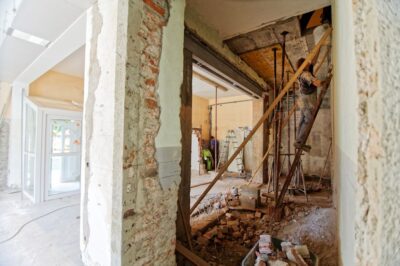
Renovation projects can be exciting, especially since they’re often carried out to reposition assets or improve performance. In many cases, renovation is faster and more cost-effective than starting from scratch.
However, many projects uncover hidden weaknesses, especially when it comes to water management. Does that explain why the worldwide stormwater management market had a value of $57.4 million in 2024? It is projected to grow considerably through 2030, highlighting the demand for sustainable drainage and flood mitigation.
If anything, contemporary renovations must factor in effective water control so the infrastructure remains robust. This article will share three sustainable water management solutions that will prove to be useful for commercial renovations.
Upgrade Downspouts and Gutters to Protect the Foundation
Did you know that many stormwater problems begin at the roof? Old or undersized gutters and downspouts can overflow during heavy rainfall. As a result, water flows straight towards the foundation of the building.
As NDS shares, downspouts direct water to the base of a home, thereby causing the basement or crawl space to flood. The same also leads to costly foundation damage. In commercial and mixed-use buildings, similar drainage issues may threaten slab foundations and underground parking.
This is particularly true of those with residential spaces located above. When you upgrade the roof drainage systems, it becomes a cost-effective way to prevent structural issues.
Plus, it connects naturally to overall stormwater management residential solutions, mainly in developments where upper-level apartments sit above commercial units. Proper drainage ultimately protects the entire building envelope, not just one tenant space.
So, listed below are some practical upgrade steps contractors and designers can implement:
- Larger gutters or downspouts may be constructed to handle rainfall intensity.
- Underground piping or extensions may be required to allow water to discharge several feet away from the foundation.
- Instead of letting water spill near the foundation, stormwater storage systems can safely route it elsewhere.
- Systems should be designed for inspection and cleaning to prevent clogging and overflow.
The thing of utmost importance is to address drainage early during renovations. This will support both the commercial and residential components of a project.
Incorporate Permeable Surfaces to Reduce Runoff
Permeable surfaces are a practical way to manage stormwater directly on-site. This makes them ideal for renovation projects, especially in urban or mixed-use areas.
These surfaces do not behave as traditional concrete or asphalt. They allow water to pass through, thereby reducing runoff and easing the load on city drainage systems. A 2025 field study monitoring a permeable sidewalk in Taipei City found that even after four years, these systems reduced runoff by 28.8%.
This means they remain effective over time, provided they are properly maintained. As for commercial renovation projects, permeable surfaces offer the following benefits:
- There is a diverse variety to choose from, including permeable concrete, pavers, modular grid systems, etc.
- A properly layered stone and fabric base ensures the pavement stays stable and allows water to infiltrate.
- Water management gets easier as these surfaces slow down rainwater and lower runoff into public drains.
- Regular cleaning, like sweeping or pressure washing, prevents clogging and maintains high infiltration levels.
Besides water management, permeable pavements protect landscaping and contribute to green building certifications. Overall, they may be considered a smart long-term solution for renovation projects.
Build Rain Gardens and Bioswales for Retention at the Site
Rain gardens and bioswales are green stormwater infrastructure. The interesting thing about them is that they help manage rainfall at the site where the latter accumulates. This means you will not have to rely solely on pipes and drains.
A rain garden is typically a shallow, planted depression that captures runoff from roofs or paved areas. It allows water to slowly infiltrate the soil. On the other hand, a bioswale is a gently sloped, vegetated channel designed to filter stormwater as it slows down its flow.
Since these systems filter and treat water, besides moving it, they’re attractive for renovation projects with pedestrian zones. In a recent study, bioretention systems were found to have reduced stormwater runoff volume by 63%.
Under real urban conditions, peak flows dropped by as much as 74%. Since rain gardens and bioswales are a part of bioretention systems, they can be trusted in built environments. On that note, here are some important design and performance factors to consider:
- Position rain gardens near downspouts or low points where water naturally collects. Bioswales can be installed along parking lots or driveways.
- Select the right plants, preferably native species with deep roots. They can withstand both periods of heavy rain and dry spells.
- Use soil that drains well so water can soak instead of pooling.
- Remove leaves, trash, and built-up sediments periodically throughout the year. You must also replace damaged plants when needed to keep the system running smoothly.
Eventually, let the fact that insurers, lenders, and investors scrutinize flood exposure and drainage performance for underwriting motivate you. Yes, water management upgrades made during renovations can influence premiums and financing terms.
This means your next stormwater strategy could very well become a financial lever. In a capitalist market, that translates into efficient risk management and a solid competitive edge. So, what are you waiting for? Perhaps it is time to future-proof your balance sheet!






